Rafale deal affected because state-run HAL was in poor shape under UPA: Nirmala Sitharaman
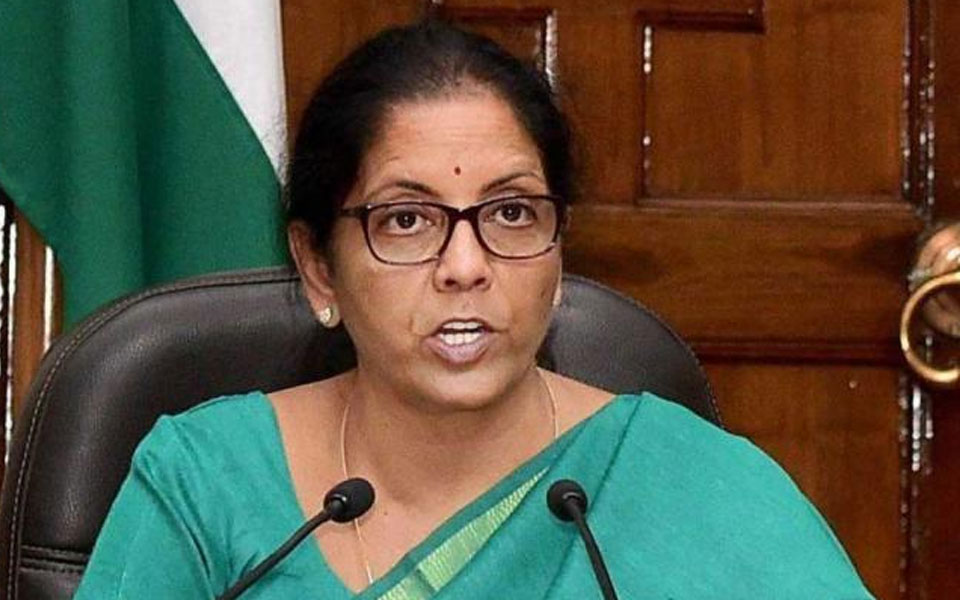
New Delhi : Negotiations for procuring 126 Rafale jets under the United Progressive Alliance (UPA) government failed because state-run aerospace company Hindustan Aeronautics Ltd. (HAL) didn’t have the capability to produce the aircraft in India in collaboration with French company Dassault Aviation, Defence Minister Nirmala Sitharaman said Thursday.
Sitharaman said A K Antony, who was defence minister in the UPA government, made an unprecedented intervention in 2013 when the cost negotiation committee was finalising the deal but that put the final nail in the coffin.
Dassault Aviation, after rounds of negotiations with HAL, felt that the cost of jets will escalate significantly if they were to be produced in India, she said during an interaction with PTI editors and reporters at the news agency’s headquarters in Delhi.
“Dassault could not progress in the negotiations with HAL because if the aircraft were to be produced in India, a guarantee for the product to be produced was to be given. It is a big ticket item and the IAF (Indian Air Force) would want the guarantee for the jets. HAL was in no position to give the guarantee,” she said.
Sitharaman said the weapon systems, avionics and other key add-ons to the Rafale aircraft, expected to be delivered beginning September 2019, will be “much superior” than that negotiated by the UPA government, and her government is getting the planes for 9% cheaper than what was earlier agreed upon.
The UPA government started negotiating with French Dassault Aviation to buy 126 Medium Multi-Role Combat Aircraft (MMRCA) in 2012 .
The plan was for Dassault Aviation to supply 18 Rafale jets in fly-away condition while 108 aircraft were to be manufactured in India by the company along with HAL. However, the deal could not be sealed.
The Congress party, which led the UPA government, has asked the government to explain why HAL was not involved in the new deal.
Sitharaman said the UPA-era deal collapsed, as HAL did not have the capability to produce 108 aircraft in India.
“Even during negotiation with HAL, Dassault felt that the cost with which the HAL will produce will be far higher than the aircraft produced in France. That was the reality,” she said.
“Why could not the then defence minister say that we will pump in all the required resources into the HAL. He could have done it. That was not done,” Sitharaman said, adding that the current government was initiating steps to strengthen the company.
In 2016, the Modi government signed a government-to-government deal with France for purchase of 36 Rafale jets at a cost of Rs 58,000 crore. The Congress has been alleging irregularities in the deal.
Rebutting charges of corruption in the deal, the defence minister also asserted that people of the country have put a closure on the issue as they trust Prime Minister Narendra Modi.
“There is a trust in the prime minister. He is not going to be corrupt. So with all this, I think mentally, people of India have reached a closure on it, saying there is no corruption here,” she said.
Sitharaman ruled out calling the opposition parties for a meeting to allay their concerns over the Rafale deal, saying they are “throwing an allegation” without any basis as well as showing no concern for operational preparedness of the air force.
She said the Congress was running short of issues and corruption was a plank on which it utterly failed.
“It is one of the cleanest governments India has ever seen. On corruption, the Congress is very frustrated. The party will have to learn from this government.
“I am saying this with a certain sense of confidence and not arrogance. The defence ministry is being run without any middleman and in a transparent way. We have proved that defence procurement can happen without middlemen,” she said.
On Antony’s intervention, she said he held back the file at a stage where he did not have any role to play. However, she did not elaborate on reasons for Antony’s action.
The Congress has repeatedly criticised the deal for the 36 Rafale jets, alleging that the government was procuring each aircraft at a cost of over Rs 1,670 crore as against Rs 526 crore finalised by the UPA government.
Sitharaman said the Rs. 526 crore figure refers to the bare aircraft, capable of just flying and landing, and does not take into account the avionics, arsenal and other associated technologies that make it a complete fighting machine.
courtesy : hindustantimes.com
Let the Truth be known. If you read VB and like VB, please be a VB Supporter and Help us deliver the Truth to one and all.
CM Siddaramaiah alleges ‘criminal conspiracy’ in Sringeri recount, vows legal action
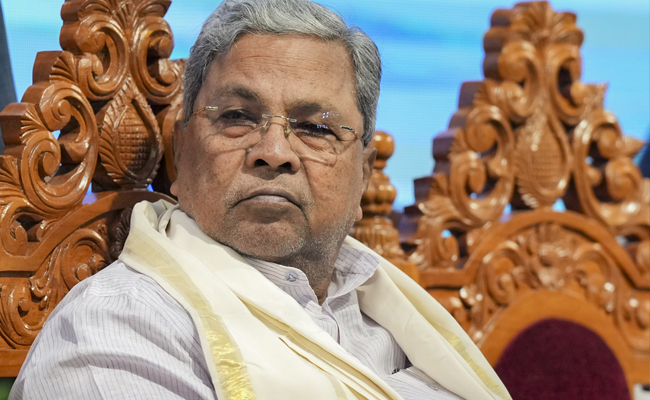
Bengaluru (PTI): Alleging a “criminal conspiracy” by BJP candidate D N Jeevaraj in the Sringeri Assembly poll recounting, Karnataka CM Siddaramaiah on Tuesday said the outcome was manipulated after valid postal ballot votes in favour of Congress leader T D Raje Gowda were tampered with during the recounting process.
Following a Karnataka High Court order on an election petition filed by Jeevaraj, challenging Raje Gowda’s election, the reverification and recounting were conducted on Saturday.
After the reverification and recount of postal ballots for the Sringeri Assembly constituency, votes polled in favour of Raje Gowda were reduced by 255, the returning officer said.
A report on the matter has been submitted to the Election Commission of India for further action, the officer added.
Congress leader Raje Gowda had won the 2023 Assembly polls from Sringeri by 201 votes, defeating his nearest rival Jeevaraj.
Addressing a press conference in Bengaluru, Siddaramaiah said the High Court had directed the recounting of postal ballots and that irregularities were noticed during the exercise conducted on May 2.
“This is a clear case of criminal conspiracy,” Siddaramaiah said, alleging that valid votes cast in favour of Raje Gowda were altered after being accepted by counting agents of all parties, including Congress, BJP, and JD(S).
He claimed that during the recounting of postal ballots, 255 votes were initially accepted as valid by all agents but were later tampered with by subordinate officials.
“There is a second mark on the votes polled in favour of Raje Gowda. They had accepted these as valid votes. Subsequently, another mark was made by officials. This is a clear case of criminal conspiracy,” he said.
When asked who was behind the alleged conspiracy, the CM replied, “It was hatched by Jeevaraj and others. It is planned.”
Siddaramaiah further alleged that the returning officer acted improperly by declaring the result despite the presence of an Election Commission observer during the recounting.
“Immediately after the counting, the returning officer announced the result. He should not have done so; this is against the law,” he said.
He pointed out that Raje Gowda had originally won by 201 votes, but after the recounting, the BJP candidate was declared the winner by 52 votes.
“The BJP has committed a criminal act of conspiracy. This is not vote chori but vote dacoity,” he alleged.
The CM said a police complaint had already been filed by Raje Gowda’s election agent, Sudhir Kumar, and emphasised the need for electoral integrity.
“We want transparency and free and fair elections. That is what our Constitution mandates,” he added.
Stating that the government would pursue legal remedies, Siddaramaiah said, “We are preparing an appeal challenging the returning officer’s announcement in a court of law.”
Responding to a separate query on elections in other states, the CM said there appeared to be an anti-incumbency factor in West Bengal, while results in Tamil Nadu were “surprising,” adding that Vijay’s party was emerging as the largest there.
Following the victory of party candidates in Bagalkote and Davanagere South, Siddaramaiah expressed confidence about future electoral prospects in Karnataka.
“Even in 2028, we will win the Assembly elections. We will come back,” the CM said.
Siddaramaiah added that he would order a forensic examination into the alleged tampering of postal ballots.