Rafale row: Reliance Entertainment confirms it paid 1.4 million Euros for film by Hollande’s partner
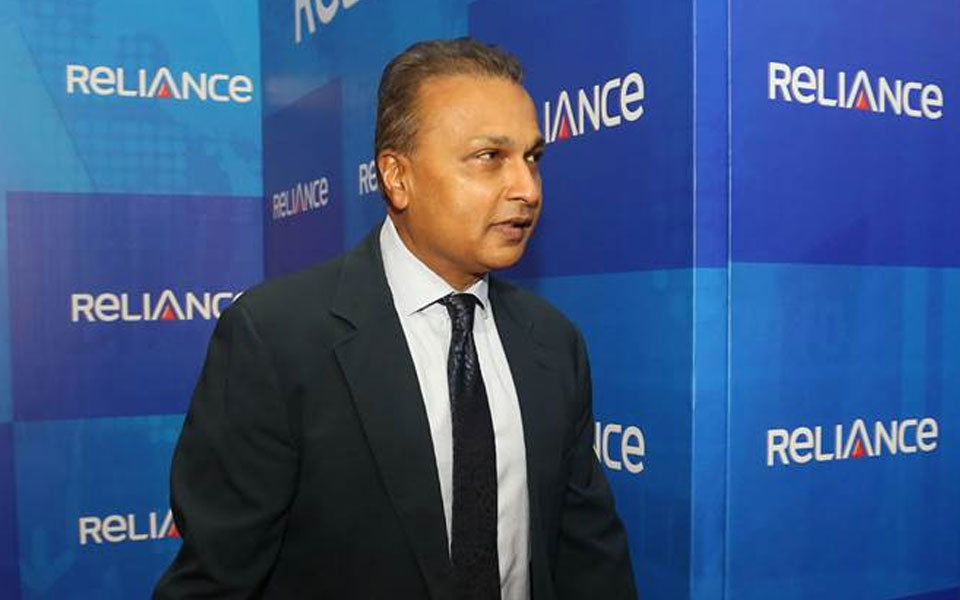
Anil Ambani’s Reliance Entertainment has confirmed that it financed 15 per cent of the budget of Tout La-Haut, the French film produced by Julie Gayet, the partner of France’s then President Francois Hollande.
Reliance Entertainment had paid 1.48 million Euros through one of its partners, French financing firm Visvires Capital, towards the production of the film, the company said in a statement.
“Reliance Entertainment had paid the aforesaid only EUR 1.48 million to Visvires Capital on 5th December 2017, as customary only about two weeks before the release of the film on 20th December 2017,” the company said in a statement.
Besides films, the Reliance Group has made several other successful co-investments with Visvires Capital, including inter alia in Sula Wines and Grover Vineyards, prior to the film co-financing, the statement said.
VisVires Capital is founded by Ravi Viswanathan, a Singapore-based French businessman of Indian origin who is a longstanding friend of Ambani.
“Reliance Entertainment has not signed any agreement with Ms. Julie Gayet or her company, Rouge International, and nor has any payment ever been made by Reliance Entertainment to either of them in relation to the film, nOmber One,” the company statement quoted a spokesperson while giving these details.
‘nOmber One’ was the title of the film when it was announced; it was released under the title ‘Tout La-Haut’.
Anil Ambani’s company also said that it received EUR 300,000 from the film’s French producer for providing physical production services for extensive location shooting in difficult mountainous terrains in Ladakh. Directed by Serge Hazanavicius and featuring French actor Kev Adams, Tout La-Haut was shot in Nepal and Ladakh, besides France.
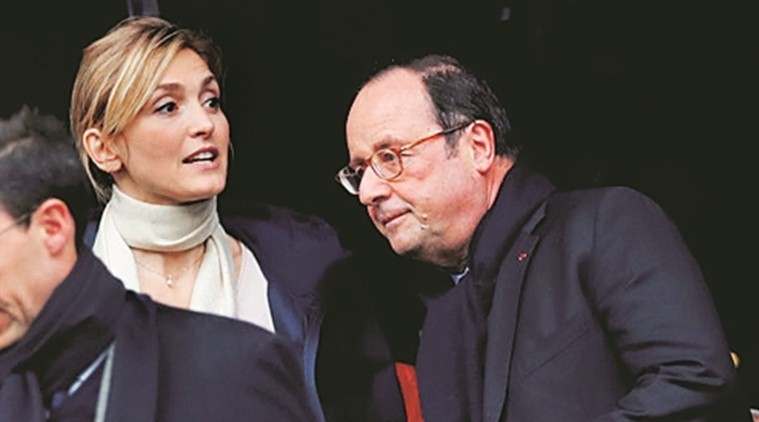
Anil Ambani’s Reliance Entertainment entered into a deal to produce a film with Hollande’s partner and actor Julie Gayet. In this photo, Hollande with Gayet. (Reuters)
Last month, The Indian Express reported that Reliance Entertainment had announced on January 24, 2016, that it had entered into an agreement with Gayet’s firm, Rouge International, to jointly produce a French film. Two days later, Prime Minister Narendra Modi and Hollande signed an MoU in New Delhi for the purchase of 36 Rafale fighter jets from France in flyaway condition.
Responding to that report, Hollande had told a French newsportal, Mediapart.fr, on September 21, “We didn’t have a say in that. It was the Indian government that proposed this service group (Reliance), and Dassault who negotiated with Ambani. We didn’t have a choice, we took the interlocutor who was given to us.”
In response to a question by news agency AFP on September 21, Hollande said Reliance Group’s name had appeared as part of a “new formula” in negotiations over the Rafale deal, which was decided by the Modi government after it came to power. Asked if he knew whether India put pressure for the Reliance Group to work with Dassault, Hollande said he was “unaware” and “Dassault alone is capable of answering”, as per AFP.
He had contradicted the Indian government’s claim that the deal between Dassault and Reliance was a commercial pact between two private parties and the government had nothing to do with it.
The deal for 36 jets in a government-to-government agreement was announced by Modi on April 10, 2015 during his visit to Paris, which led to the cancellation of the 126-aircraft deal being negotiated by the previous government. The deal was eventually signed on September 23, 2016 in Delhi between then Defence Minister Manohar Parrikar and his French counterpart.
Under the offsets clause, France is to invest 50 per cent of the total order cost in local contracts in India, worth Rs 30,000 crore. The offset obligations of the deal are to be discharged from September 2019 to September 2023, as per the contract.
The Rafale offset was the first project of this magnitude won by Reliance Defence, which placed it at the centre of a major political row. Opposition parties, including the Congress, have alleged that undue favours had been granted to Ambani’s firm in this deal, a company without any defence manufacturing experience.
Courtesy: indianexpress.com
Let the Truth be known. If you read VB and like VB, please be a VB Supporter and Help us deliver the Truth to one and all.
Speaker Khader dismisses BJP's charges of 'delay' in swearing-in of Jeevaraj as MLA
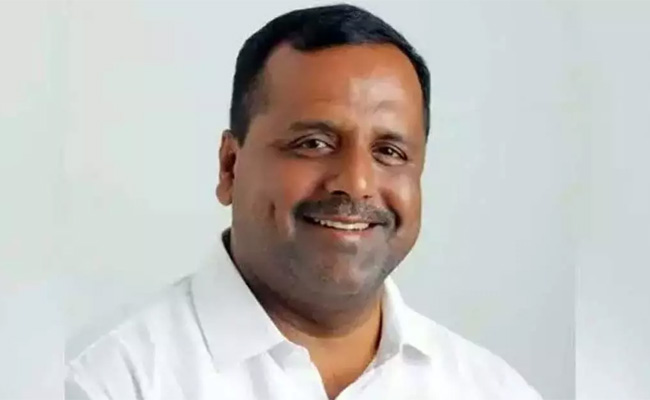
Bengaluru (PTI): Karnataka Assembly Speaker U T Khader on Wednesday rejected opposition BJP's allegations of delaying the swearing-in of D N Jeevaraj as MLA, asserting that the process was being handled strictly in accordance with constitutional provisions and rules.
BJP candidate Jeevaraj, who had lost the 2023 Sringeri Assembly election to Congress leader T D Raje Gowda, was declared elected late Sunday night after reverification and recounting of postal ballots in compliance with a High Court order.
The recount reduced 255 votes from Gowda's tally, overturning his earlier victory margin of 201 votes and reversing the result.
The recount followed an election petition filed by Jeevaraj.
Addressing reporters, Khader maintained that there was no delay in administering the oath to Jeevaraj, who was declared elected from the Sringeri Assembly constituency after a High Court-ordered recount of postal ballots.
“Where have we delayed? The application was submitted at 11 am. If an application is given in the morning and by evening someone says it’s delayed — how is that a delay?” he said, dismissing the allegations.
The Speaker said the matter involved 'technical issues' that required examination before fixing a date for oath-taking.
“When such a matter comes, we also need to examine it and take a decision as per rules. If an application is given in the morning, at least 24 hours must be given,” he said.
Khader stressed that his role was bound by the Constitution and not influenced by political considerations.
“When an elected MLA asks for time, we must give it under the Constitution and law. Can we refuse? No, we have to give it,” he said, rejecting suggestions that he was acting under party pressure.
He also underlined the need for trust in democratic institutions amid the controversy.
“A democracy and parliamentary system must function on trust. Without that, how can democracy be strengthened? Trust is essential,” he said, cautioning against creating suspicion around constitutional positions.
On claims that the delay was linked to the ongoing political and legal dispute over the recount, Khader said the issue did not fall within his purview.
“My responsibility is to act as per the Constitution and rules. I will ensure that whatever is due to them is done as soon as possible,” the Speaker explained.
He said he had already communicated his position when contacted and would formally inform the concerned parties. “There is no delay, nor any intention to delay. I will discharge my duties as per the Constitution,” he said.
Khader also pointed to possible legal complications in hastily administering the oath.
“If I give the oath to one person and tomorrow the court declares someone else the winner, what happens then? Will it automatically cancel? Will confusion arise?” he asked, indicating the need for due diligence.
On concerns that Jeevaraj had lost over two years of tenure, the Speaker said representation was linked to that constituency rather than an individual.
“Whoever becomes the MLA represents the constituency. Benefits are not given to an individual,” he said, adding that issues of alleged irregularities should be examined by the Election Commission.
The remarks come after the Leader of Opposition BJP in the Karnataka Assembly, R Ashoka on Wednesday accused the Speaker of 'deliberately' delaying the oath and approached Governor Thaawarchand Gehlot seeking intervention, even suggesting that the Governor administer the oath if required.
Chief Minister Siddaramaiah termed the process 'Vote Dacoity' by Jeevaraj and said an FIR has been registered against the newly elected Sringeri MLA.
Defending the recount process, Jeevaraj denied allegations of tampering, while the High Court has stayed an FIR filed against him in connection with the postal ballot issue.