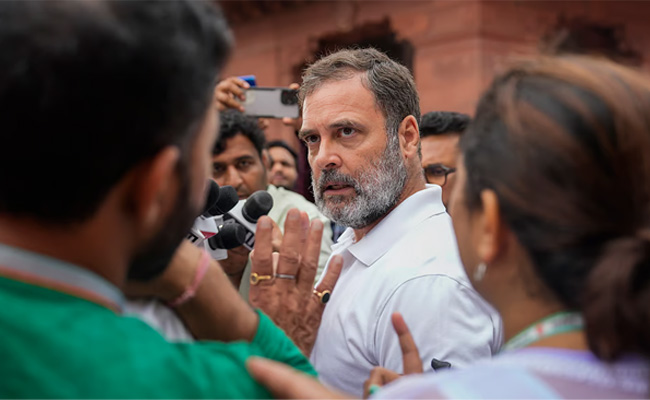
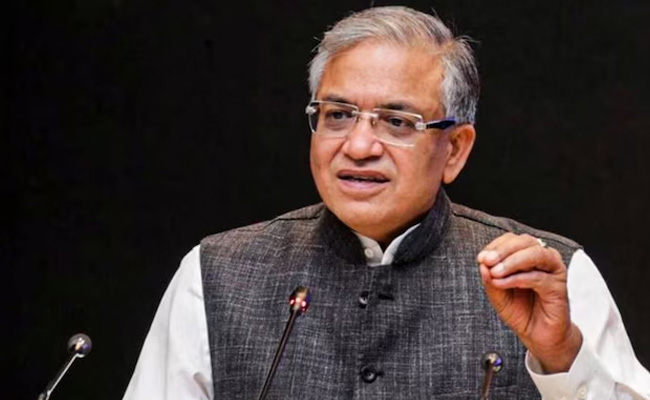
Rahul earns 10 push-up 'punishment' for late arrival at Cong training camp in MP
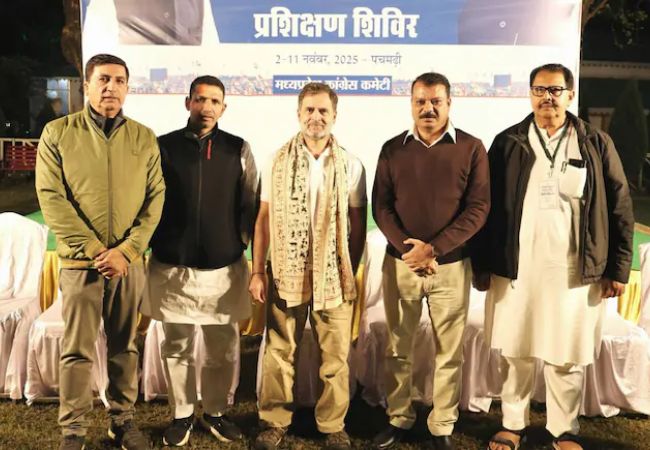
Narmadapuram (PTI): Senior Congress leader Rahul Gandhi's late arrival at a Congress training camp in Pachmarhi in Madhya Pradesh by two minutes on Sunday earned him a 'punishment' of ten push-ups, a party leader said.
Congress leaders said Gandhi complied with the "ten push-ups punishment rule" set by AICC Training Department head Sachin Rao for participants if they arrived late at the camp underway under the Sangathan Srajan Abhiyan (SSA). The drive will end on November 11.
"This is nothing new or surprising for our leader, Rahulji, to do. In our camp, we follow the discipline strictly. There is a democracy in the party where all members are equal and treated as equals. There is no bossism in our party like in the BJP”, MP Congress media coordinator Abhinav Barolia told PTI while confirming the "push-up punishment".
Gandhi later flew to Bihar for campaigning, Barolia added.
When contacted, Rao said he didn't have the liberty to talk about what happened in the camp.
This was the second visit of the leader of the opposition to Madhya Pradesh in five months as part of an exercise to strengthen the party organisation.
The SSA was announced during the extended Congress Working Committee (CWC) meeting in Belagavi held in December last year. The drive was launched on June 3 this year from Bhopal.
"We have not been in power in Madhya Pradesh for a long time, and under Mission 2028, we are working toward forming the government in the state once again," a Congress leader said.
Let the Truth be known. If you read VB and like VB, please be a VB Supporter and Help us deliver the Truth to one and all.
Lebanon appoints new representative for talks with Israel, rejects linkage to Iran
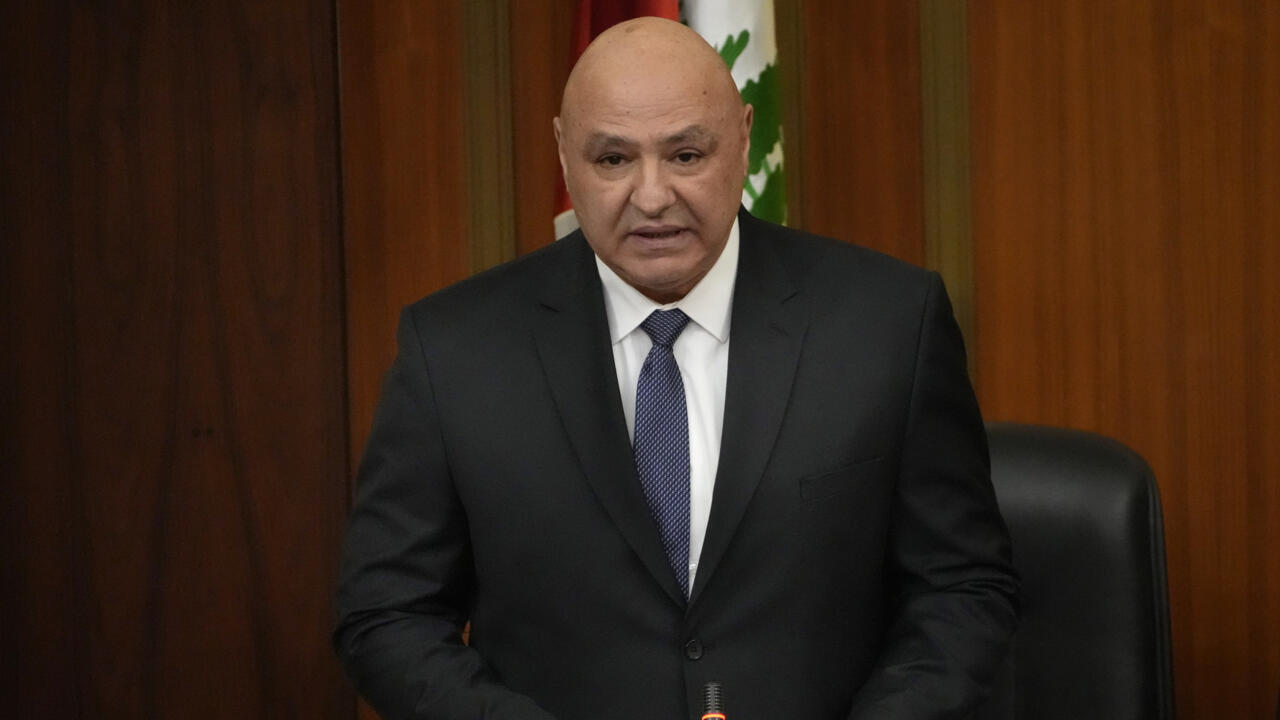
Beirut: Lebanon’s has moved to underline its independent position in ongoing regional developments, amid attempts to link the country to the broader conflict involving Iran, the United States and Israel.
President Joseph Aoun, while announcing the appointment of former US ambassador Simon Karam as Lebanon’s representative in talks with Israel, made it clear that Karam would be the sole representative for Lebanon and that there would be no substitute.
The move comes in response to what the Lebanese officials see as efforts by Iran to tie Lebanon’s situation to the wider regional conflict. Iran had indicated that there would be no ceasefire involving the US, Israel and Iran unless it also included a ceasefire in Lebanon.
Some groups, including Hezbollah and its supporters, had expressed support for linking the situations, citing concerns that the Lebanese government has limited leverage in negotiations with Israel. Lebanon is not formally a party to the conflict, and its army is considered weak.
However, others, including Prime Minister Nawaf Salam, have opposed this approach. They view Iran’s stance as an attempt to influence Lebanon’s internal affairs and see it as undermining the country’s sovereignty.
Officials backing the government’s position say the move is aimed at reaffirming Lebanon’s sovereignty and ensuring that decisions about peace and ceasefire within the country are not dictated externally.
They also see it as a safeguard, so that any breakdown in talks between the US, Israel and Iran does not automatically lead to renewed conflict in Lebanon.