Rahul flags Brazilian model’s photo on multiple Haryana voter IDs, alleges large-scale voter fraud
New Delhi: Congress leader Rahul Gandhi on Wednesday intensified his ‘vote chori’ (vote theft) charge against the Bharatiya Janata Party (BJP) and the Election Commission, alleging large-scale voter fraud in the 2024 Haryana Assembly elections.
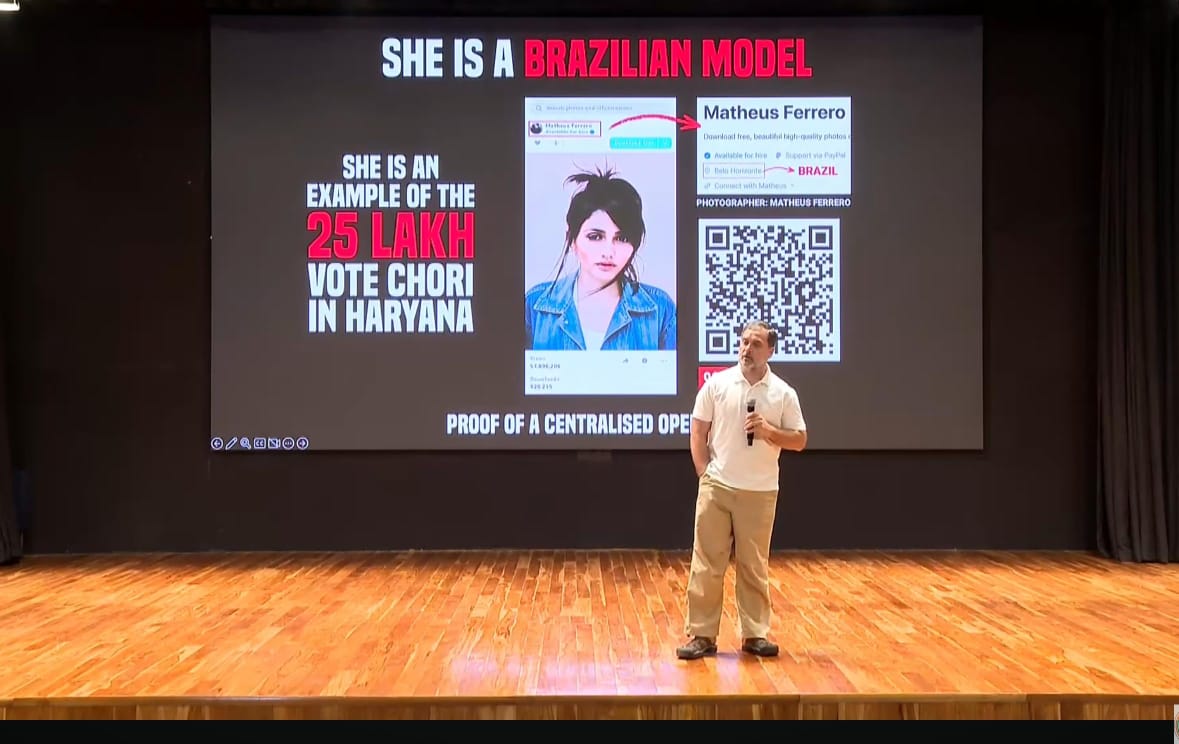
Gandhi, citing what he described as “100 percent proof,” claimed that around 25 lakh fake votes, constituting nearly 12 percent of the State’s electorate, were cast, terming it a case of “systematic manipulation” that allegedly turned a potential Congress victory into defeat.
The Leader of Opposition in Lok Sabha also presented slides highlighting alleged discrepancies in the voter rolls, including a striking example in which the photograph of a Brazilian model purportedly appeared on multiple voter identity cards issued under different names — Seema, Sweety, and Saraswati — which, he claimed, were used to cast votes 22 times. "The lady is one of 25 lakh such people. What is a Brazilian person doing on voters list in Haryana,” he asks.
"The Election Commission can remove duplicates in a second. Why don't they do it? Reason: they are helping the BJP," he added.
Gandhi also showed a clip from the press conference of Haryana Chief Minister Nayab Singh Saini, just days after the polling and questioned why he appeared so confident and "smiling" despite several exit polls predicting a clear win for the Congress.
(This is a developing story)
Let the Truth be known. If you read VB and like VB, please be a VB Supporter and Help us deliver the Truth to one and all.
VP, PM greet civil servants on Civil Services Day
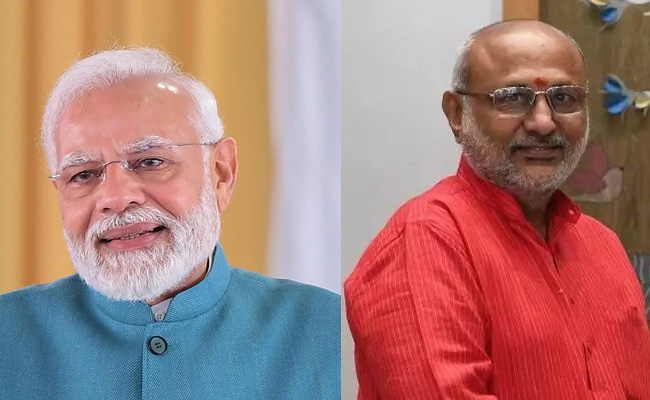
New Delhi (PTI): Vice President C P Radhakrishnan and Prime Minister Narendra Modi on Tuesday greeted civil servants on the occasion of Civil Services Day and said it is time to further strengthen the resolve to work towards good governance and nation building.
The Vice President said as the enduring pillar of India's administrative framework, the efforts of the civil servants in strengthening governance and delivering public services are of immense significance.
The prime minister said from the grassroots to policy-making, the efforts of civil servants touch countless lives and contribute to India's progress
"On the occasion of Civil Services Day, I extend my warm greetings to all civil servants and convey my sincere appreciation for your dedication and exemplary service to the nation," Radhakrishnan said in a post on X.
ALSO READ: 5.2-magnitude quake jolts Manipur
He said the theme for this year, "Viksit Bharat: Citizen-Centric Governance and Development at the Last Mile", aligns with the vision of Viksit Bharat 2047 and underscores the Government's commitment to transparent, accountable, and citizen-centric governance, with a strong emphasis on last-mile delivery and inclusive development.
"Let us all celebrate the day and continue to work collectively towards building an inclusive and developed India," he said.
The Vice President will deliver the keynote address at the Civil Services Day celebrations at Vigyan Bhawan here on Tuesday.
In his message, Modi greeted all civil servants on Civil Services Day and said this is an occasion to further strengthen the resolve to work towards good governance and nation building.
"May our civil servants continue to serve with excellence, compassion and innovation, upholding the highest standards of duty," he said.
The prime minister said service to the nation is the foundation of a 'Developed India'.
"On the glorious occasion of Civil Services Day, let us reaffirm our resolve to build a strong, prosperous, and sensitive India by bringing the person standing at the last line into the mainstream of development," he said.
The central government celebrates April 21 every year as 'Civil Services day' as an occasion for civil servants to rededicate themselves to the cause of citizen and renew their commitments to public service and excellence in work.
This date is chosen to commemorate the day when the first Home Minister of Independent India, Sardar Vallabhbhai Patel, addressed the probationers of Administrative Services Officers in 1947 in Delhi, and referred to civil servants as the 'steel frame of India'.