Rafale deal: Rahul Gandhi demands probe against PM, calls him 'corrupt man'
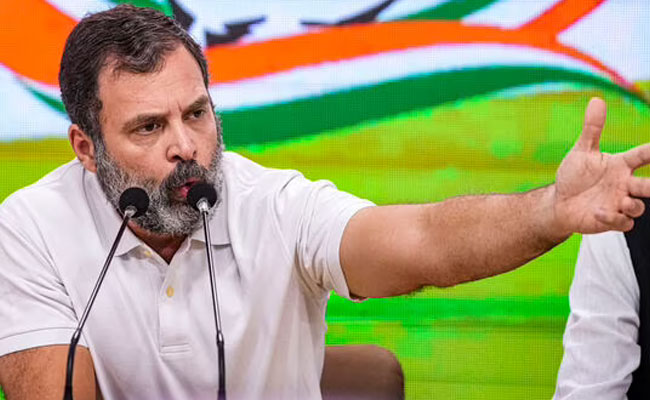
New Delhi, Oct 11: Congress president Rahul Gandhi Thursday demanded an investigation against Prime Minister Narendra Modi on role in the Rafale deal, alleging that he was a "corrupt man" who helped Anil Ambani pocket Rs 30,000 crore in the purchase of 36 aircraft.
Gandhi's demand for a probe came a day after a report in French publication that said Dassault Aviation, the manufacturer of Rafale, had to choose Ambani's firm Reliance Defence as its offsets partner in India as a trade-off for getting the deal.
The Congress president did not provide any evidence to back his allegations against the prime minister.
The government has been insisting it had no role in Dassault's choice of Reliance Defence.
The Congress president also described Defence Minister Nirmala Sitharaman's three-day trip to France from Thursday as part of a "huge cover-up" by the government on the Rafale deal.
"Why has suddenly the defence minister rushed to France? What is the emergency?" Gandhi asked at a press conference.
"The reality is the prime minister is corrupt. The prime minister of India is a corrupt man," he said.
Modi came to power on the promise of fighting corruption, the Congress leader said, adding that he wanted to tell the youth of the country that the prime minister was involved in corruption.
On Wednesday, French investigative publication Mediapart, citing an internal document of Dassault Aviation, reported that the aerospace giant was forced to enter into a joint venture with Reliance Defence as part of a trade-off to bag the contract for the 36 Rafale jet deal.
Dassault Aviation said in a statement that it has "freely chosen to make a partnership with India's Reliance Group".
Last month, Mediapart quoted former French president Francois Hollande as saying that France was given "no choice" on selection of the Indian partner for Dassault and the Indian government proposed the name of the Indian company to partner with the French aerospace giant.
The report triggered a massive political row with Congress escalating its attack on the government and the government firmly rejecting the charges.
Both Dassault and Reliance Defence have already announced setting up of a joint venture to manufacture aerospace components and fulfil offset obligations for the Rafale deal.
Under India's offset policy, foreign defence entities are mandated to spend at least 30 per cent of the total contract value in India through procurement of components or setting up of research and development facilities.
The Congress has been alleging massive irregularities in the deal, saying the government was procuring each aircraft at a cost of over Rs 1,670 crore as against Rs 526 crore finalised by the UPA government when it was negotiating the procurement of 126 Rafale jets.
The opposition parties have alleged Reliance Defence was formed just 12 days before the announcement of the Rafale deal in 2015. Reliance group has rejected the charges.
The Congress has also been demanding answers from the government on why state-run aerospace major HAL was not involved in the deal as finalised during the UPA.
In its reaction following the Mediapart report, Dassault Aviation said, "In compliance with the Indian regulations (Defence Procurement Procedure) and as frequent with such a contract, Dassault Aviation has committed to offsets in India worth 50 per cent of the value of the purchase."
"In order to deliver some of these offsets, Dassault Aviation has decided to create a joint-venture. Dassault Aviation has freely chosen to make a partnership with India's Reliance Group," it said.
The French aerospace major said partnerships have also been signed with other companies such as BTSL, DEFSYS, Kinetic, Mahindra, Maini and SAMTEL.
"Other negotiations are ongoing with a hundred-odd other potential partners," it said.
Let the Truth be known. If you read VB and like VB, please be a VB Supporter and Help us deliver the Truth to one and all.
Sujit Nair raises concerns over speculation of DMK-AIADMK understanding to block TVK
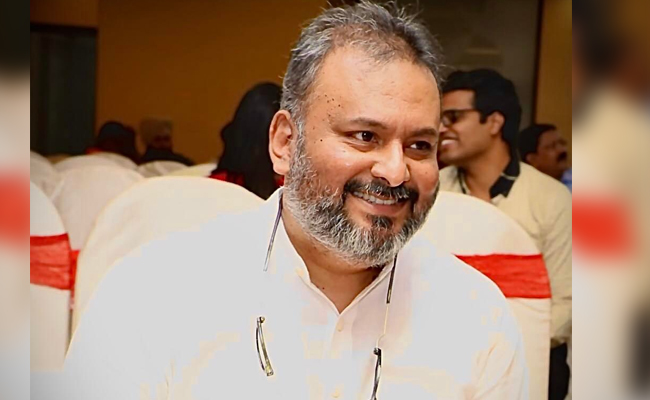
Chennai: Journalist and political commentator Sujit Nair has expressed concern over speculation that the Dravida Munnetra Kazhagam and the All India Anna Dravida Munnetra Kazhagam could explore a post-poll understanding to prevent Vijay-led Tamilaga Vettri Kazhagam from forming the government in Tamil Nadu.
In a social media post, Sujit Nair said the election verdict in Tamil Nadu reflected a clear public demand for political change and argued that the mandate should be respected irrespective of political preferences.
Referring to reports and political discussions surrounding a possible understanding between the DMK and AIADMK, he said he hoped such developments remained only speculative conversations and did not turn into reality.
Nair stated that if such an alliance were to take shape, it would raise serious questions about ideological politics in the country. He said TVK had emerged through a democratic electoral process and that the legitimacy to govern in a parliamentary democracy comes from the people’s verdict.
According to him, attempts to prevent an electoral winner from forming the government through unexpected political arrangements may be constitutionally valid, but many people could view them as politically opportunistic.
He further said that such a move could particularly affect the political image of the DMK, which has historically projected itself around ideology, social justice and opposition politics. Nair said that in ideological terms, the DMK appeared closer to TVK than to the AIADMK, and joining hands with its long-time political rival only to remain in power could weaken its broader political narrative.
He added that the same questions would apply to the AIADMK as well, as the party had spent decades positioning itself against the DMK and such an arrangement could create discomfort among its cadre and supporters.
Drawing a comparison with Maharashtra politics in 2019, Nair said he had expressed similar views when the Shiv Sena formed an alliance with the Indian National Congress and the Nationalist Congress Party after the Assembly elections.
He said post-poll alliances between long-standing political rivals often create a public perception that ideology and electoral mandates become secondary when political power equations come into play.
Nair also said such developments increase public cynicism towards politics and reinforce the belief among voters that ideology is often sidelined after elections.
He maintained that the Tamil Nadu verdict was emphatic and said respecting both the spirit and substance of the mandate was important for the credibility of democratic politics.