Rahul Gandhi accuses PM Modi of shedding crocodile tears on Covid deaths
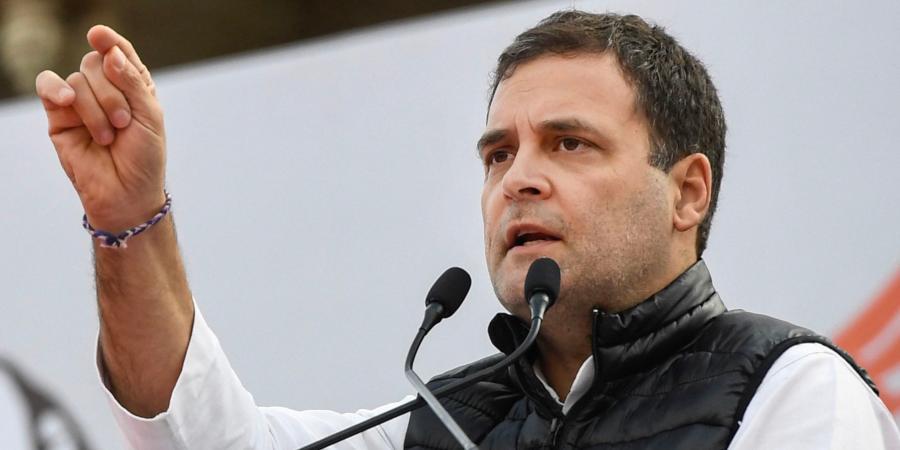
New Delhi, May 22: Congress leader Rahul Gandhi on Saturday said a crying prime minister is the government of India's response to "the highest Covid deaths" in the country, devoid of vaccines and having the lowest GDP.
Gandhi made the frontal attack against Prime Minister Narendra Modi over the grim pandemic situation in the country, leading two other senior Congress leaders, P Chidambaram and Jairam Ramesh, too to join him in the attack.
"No Vaccines. Lowest GDP. Highest Covid deaths... GOI's response? PMCries," he said in an acerbic tweet on Friday, while also accusing Prime Minister Narendra Modi of shedding crocodile tears while paying homage to the people who died of COVID-19.
"Crocodiles are innocent," said the Congress leader in another tweet, in a dig at Prime Minister Modi turning emotional during his digital interaction with doctors in his Lok Sabha constituency Varanasi on Friday.
On his Twitter handle, Gandhi also shared a chart on the global economic condition and pandemic situation, tweeted by the Union government's former Chief Economic Advisor Kaushik Basu.
The chart showed India's GDP at minus eight against 3.8 of Bangladesh, 1.9 of China and O.4 of Pakistan.
In the same chart, India was shown suffering 212 deaths for each million of its population due to COVID-19 against 0.4 deaths in Vietnam and two in China.
"Due to the mismanagement of the Modi system, India has the black fungus epidemic along with the Covid pandemic," Gandhi said in yet another tweet, targeting the prime minister.
"Along with the shortage of medicines for Covid, India also has a huge shortage of medicines for this big disease. The prime minister will soon be making a 'taali-thaali' (clapping and beating of plates) announcement to deal with the disease," he said in a tweet in Hindi.
Another Congress leader Jairam Ramesh too attacked the government over the alleged poor pace of anti-Covid vaccination, saying the country needs vaccines, not crocodile tears .
"Claim -- Jan 2021: Modi Govt will vaccinate 30 cr Indians fully by July end.
Reality -- 22nd May: 4.1 cr Indians got both doses.
Claim -- 21st May: India will fully vaccinate all adults by the end of 2021.
Reality -- 21st May: Only 14 lakh vaccinated whole day," he said on Twitter.
"We need vaccines, not crocodile tears," Ramesh added in his tweet.
Senior Congress leader P Chidambaram also cautioned the government saying both the IMF and WHO have cautioned India against the consequences of the slow pace of vaccination.
"The claim of the Union health minister of getting 216 crore vaccine doses by December 31 to vaccinate the entire adult population by that date must be backed by hard data. So far, it is not," he said in a series of tweets.
"We need data on the capacity of domestic producers, orders placed vaccine-wise, import contracts concluded, agreed schedule of delivery etc. Nothing has been disclosed so far, he said in a tweet.
"The final warning to the government is that if vaccination is not accelerated, it will not be possible to prevent a third wave," he said.
Chidambaram said the Modi government cannot say we did not anticipate these consequences"'.
"The government has been duly forewarned," he said.
The Congress has been critical of the government's vaccination policy and slow pace of inoculations.
Crocodiles are innocent.
— Rahul Gandhi (@RahulGandhi) May 22, 2021
मगरमच्छ निर्दोष हैं।
No Vaccines
— Rahul Gandhi (@RahulGandhi) May 22, 2021
Lowest GDP
Highest Covid deaths...
GOI’s response?
PMCries. pic.twitter.com/b8TbfwnrlI
Let the Truth be known. If you read VB and like VB, please be a VB Supporter and Help us deliver the Truth to one and all.
Allahabad HC orders probe into 'reinstatement' of teacher in UP's Barabanki
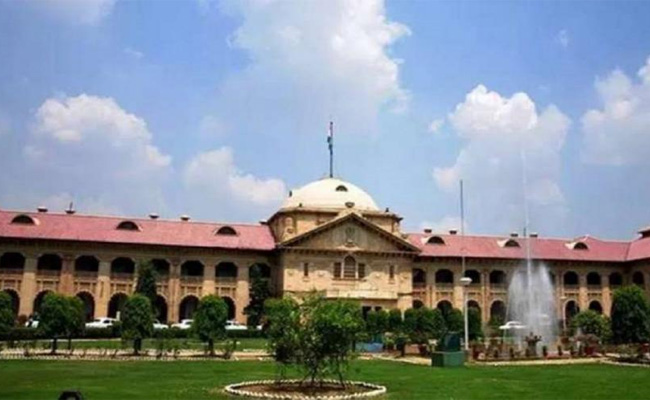
Lucknow (PTI): The Lucknow Bench of the Allahabad High Court on Friday ordered a probe by the special task force (STF) into alleged irregularities in the rejoining of a teacher at City Intermediate College in Barabanki, observing that the reinstatement appeared to be prima facie illegal.
The court also directed the recovery of the salary paid to the teacher during the disputed period.
A bench of Justice Rajeev Singh passed the order on a petition filed by the college management committee. The court expressed doubts over the roles of the District Inspector of Schools (DIOS), Barabanki, the college principal and the teacher concerned and hence, directed a detailed inquiry into the matter.
Taking note of alleged manipulation of records and misleading submissions, the court ordered the immediate transfer of the Barabanki DIOS to ensure a fair probe. It also directed the initiation of disciplinary proceedings against the then joint director of education of the Ayodhya division.
In its order, the court found that the teacher, Abhay Kumar, was initially appointed as an assistant teacher in 2018 but joined an Eklavya Model Residential School in Chhattisgarh as a lecturer in June 2024 without obtaining permission from the management. His subsequent request to retain the lien was rejected.
Despite this, he was allowed to rejoin the Barabanki College in September 2025 on the directions of the joint director of education and the DIOS, and was even paid the salary for October 2025. The court termed the rejoining "wholly illegal" and lacking any legal basis.
The bench also expressed concern over lapses in communication within the education department and directed the Uttar Pradesh chief secretary to ensure that official orders are communicated through email and WhatsApp as well, to prevent disputes.
The matter is next listed for hearing on May 28 when a compliance report is sought.