Rahul Gandhi meets Kerala tribal woman who cracked civil service exams
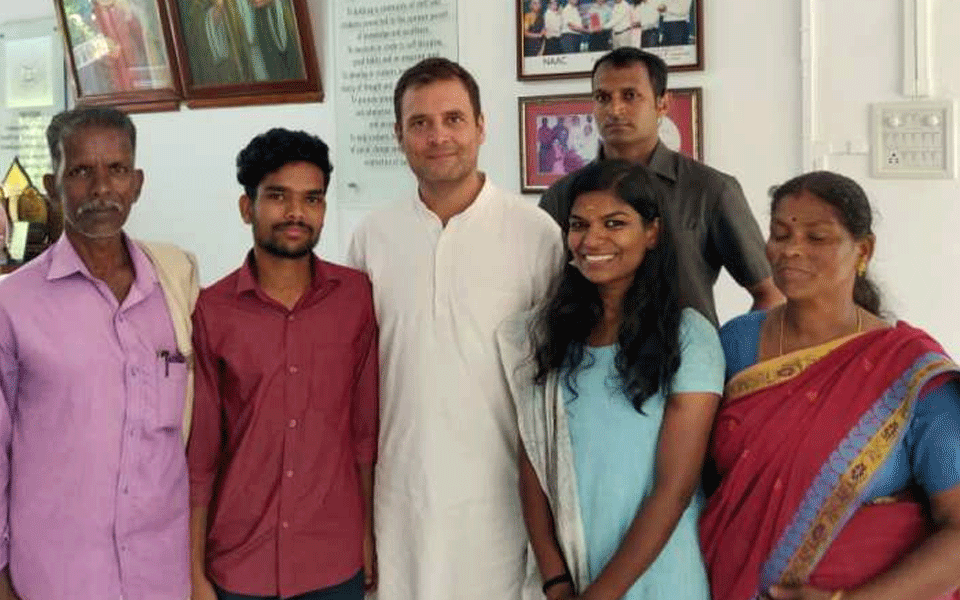
Thiruvammbady : Congress chief Rahul Gandhi Wednesday met Sreedhanya Suresh, the first tribal woman from Kerala to clear the All India civil services exams, and was all praise for her.
He met her at the guest house at Sulthan Bathery at Wayanad and had lunch with her.
Addressing an election rally here in Wayanad district, Gandhi said the Mahatma Gandhi National Rural Employment Guarantee Scheme (MNAREGS), the congress's pet project, had helped the 22-year-old woman make it to the civil service as her parents, who are workers, had benefited from the scheme.
Hailing from a poor background in Wayanad, Sreedhanya had bagged the 410th rank in the Civil Services Examination, 2018.
"She is self confident and a woman who confronted adversities," Gandhi said.
Attacking Prime Minister Narendra Modi for his criticism against the MNAREGS scheme, the AICC chief said it was the initiative launched by the UPA government that had helped Sreedhanya crack the top examination.
"She said because her parents worked in MNAREGS, she could appear for the civil service examination," Gandhi said, adding that he had lunch with the proud woman.
MNAREGS had created one Sreedhanya and thousands of Sreedhanyas would be created in Kerala and other southern states through the NYAY', theminimum income guarantee scheme proposed by the Congress if voted to power, Gandhi said.
When the civil service exam results were announced recently, Rahul Gandhi had tweeted that "Sreedhanyas hard work & dedication have helped make her dream come true.
I congratulate Sreedhanya and her family and wish her great success in her chosen career." Gandhi is contesting from Wayanad Lok Sabha constituency in the coming Parliament elections besides his home turf Amethi.
Let the Truth be known. If you read VB and like VB, please be a VB Supporter and Help us deliver the Truth to one and all.
11-year-old dies by suicide after sexual assault in Bareilly; accused arrested

Bareilly (UP) (PTI): A 26-year-old man has been arrested for allegedly sexually assaulting an 11-year-old girl, who later died by suicide due to trauma, police said on Wednesday.
The post-mortem report confirmed sexual assault and multiple injuries on the minor's body, including bite marks and nail scratches. The cause of death was found to be hanging, they said.
According to ASP (South) Anshika Verma, the incident came to light on 27 April, when the girl, a Class 8 student, was found hanging at her home in Deoria Abdullaganj village under the Mirganj police station area. Initially, the family reported the death as suicide and was reluctant to pursue police action.
"The autopsy report changed the course of the investigation. It confirmed sexual assault and noted severe physical trauma. The cause of death was confirmed as hanging," Verma said.
A breakthrough in the case came from the statement of the victim's younger sister, who told police that the accused, Zeeshan (26), a resident of the same village, frequently loitered near the minor's school and allegedly gave her small sums of money to keep his interactions with her a secret, she said.
Police said that on the day of the incident, the accused allegedly lured the minor and assaulted her. Distressed by the incident, the child later took her own life while her mother was away, police said.
"Based on technical surveillance, CCTV footage, and statements from the family, we established Zeeshan's involvement. He was arrested near the Mirganj weekly market on Tuesday," they said.