Rahul Gandhi targets PM Modi on Manipur, Rafale; BJP calls him 'frustrated dynast'
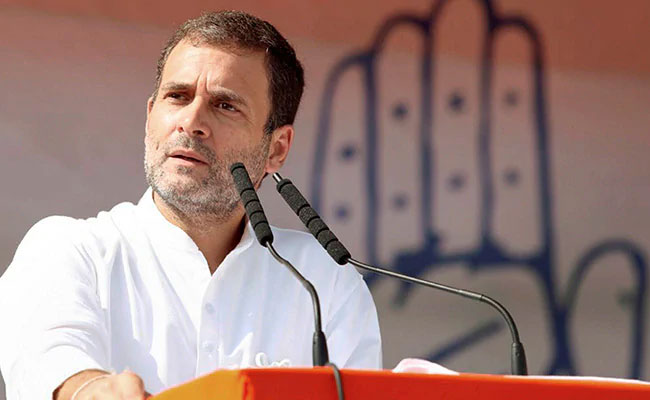
New Delhi (PTI): Rahul Gandhi on Saturday took a swipe at Prime Minister Narendra Modi alleging that the Rafale deal got him a "ticket to the Bastille Day Parade" while the BJP, hitting back at the Congress leader, dubbed him a "frustrated dynast" and accused him of sullying the ambitious 'Make in India' drive.
Union minister Smriti Irani reacted furiously to the Congress leader's barb at the prime minister over the Rafale purchase and the tense situation in Manipur.
Gandhi tweeted, "Manipur burns. EU Parliament discusses India's internal matter. PM hasn't said a word on either! Meanwhile, Rafale gets him a ticket to the Bastille Day Parade."
Attacking the former Congress president, Irani tweeted, "A man who seeks international intervention in India's internal matters, a frustrated dynast who sullies the 'Make in India' ambition mocks India when our PM receives a National honour. Rejected by people, he seethes as defence contracts no longer land at the doorstep of the dynasty."
Irani had defeated Gandhi in his family pocket borough of Amethi in the 2019 Lok Sabha polls.
Modi was the guest of honour at the Bastille Day parade on Friday during his two-day visit to France where he was also accorded the Grand Cross of the Legion of Honour, France's highest civilian and military honour.
The BJP alleged that Rahul Gandhi "is leaning on foreign powers, from America to Europe, to settle domestic political scores" and "collaborating with global syndicates that are working to undermine" India's interests.
BJP spokesperson Gaurav Bhatia said the Rafale issue was settled long back by the Supreme Court and asked Gandhi to stop "casting aspersions on constitutional institutions".
It was Gandhi who had to tender an apology for misattributing some comments to the highest court, he noted. The court has asked him to be more responsible but he and responsibility cannot go together, Bhatia said.
It is disgraceful that when the prime minister has been honoured in France, "some people are indulging in breast-beating", he said.
The BJP spokesperson targeted the opposition parties over the recent violence during panchayat polls in West Bengal and the death of a BJP worker in Bihar allegedly in a police lathi-charge.
He criticised the Congress' remarks on the Manipur situation and stressed that effective steps were being taken to restore peace in the northeastern state.
Amid the war of words, Congress general secretary Jairam Ramesh also again lashed out at the government over its handling of the situation in Manipur.
Ramesh said, "In January 1977 Richard Nelson a noted economist at Yale University published a very influential essay called The Moon and the Ghetto. It became required reading for people like me in graduate school. Nelson poses the question: why is it that a technologically dynamic America is able to land man on the moon but is unable to meaningfully address its problems at home, especially in the inner cities."
"It is a deeply thought-provoking analysis not without its relevance to us too," the Congress leader said.
"We can go to the moon but are unable or unwilling to deal with the basic issues our people face at home. An Indian version of the Nelson essay may read, The Moon and Manipur," Ramesh added.
BJP's IT department head Amit Malviya linked the EU's comments on Manipur to Gandhi's visit to the state.
He claimed, "It can't be a mere coincidence that EU Parliament proposed to debate the conflict in Manipur, which it has no business venturing into, soon after Rahul Gandhi visits the state."
Gandhi goes to London and seeks foreign intervention in India's internal matters, he said and accused the former Congress president of politicising the "unfortunate conflict" in Manipur.
Interestingly, the EU Parliament didn't hold any debate or discussion on the recent riots in France, Malviya said.
He alleged the Manipur issue is "completely a legacy" of the Congress.
"It is quite obvious that Rahul Gandhi is leaning on foreign powers, from America to Europe, to settle domestic political scores. He is openly, brazenly and willingly collaborating with global syndicates, that are working to undermine India's strategic and geopolitical interests," he alleged.
India on Thursday described as a reflection of a "colonial mindset" a resolution adopted at the European Parliament on the situation in Manipur.
External Affairs Ministry spokesperson Arindam Bagchi said such interference in India's internal affairs is "unacceptable".
Manipur has been witnessing violent clashes, especially between the Kuki and the Meitei communities for close to two months. Opposition parties have accused the government of failing to contain the violence.
Let the Truth be known. If you read VB and like VB, please be a VB Supporter and Help us deliver the Truth to one and all.
RS Chairman accepts merger of 7 AAP MPs with BJP
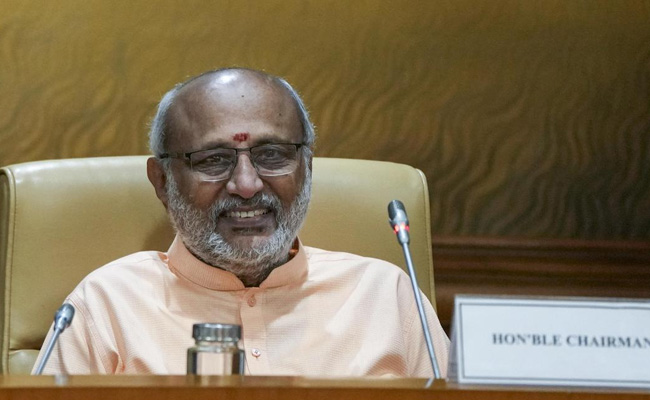
New Delhi (PTI): Rajya Sabha Chairman C P Radhakrishnan on Monday officially accepted the merger of seven Aam Aadmi Party (AAP) MPs with the BJP, reducing the strength of Arvind Kejriwal's party in the Upper House to three.
After this transition, the BJP's strength in the Upper House has increased to 113.
Raghav Chadha, Ashok Mittal, Harbhajan Singh, Sandeep Pathak, Vikramjit Sahney, Swati Maliwal, and Rajinder Gupta are the seven MPs who have merged.
ALSO READ: J-K: Six held with drugs, assets worth Rs 73 lakh attached in Udhampur
The Rajya Sabha website now shows that the seven MPs are part of the BJP list of members.
The seven MPs had on Friday petitioned the Rajya Sabha Chairman to be treated as BJP MPs after the merger and the same has been accepted, sources said.
The AAP had on Sunday moved a petition before the RS Chairman seeking the termination of the membership of the seven MPs, who had switched sides.
Aam Aadmi Party MP Sanjay Singh said he has submitted a petition to Chairman Radhakrishnan seeking the disqualification of the seven party MPs in the Upper House, who recently quit the AAP and announced their merger with the BJP.
On Friday last, the AAP suffered a jolt when the seven Rajya Sabha MPs quit and announced merger with the BJP, alleging that the Kejriwal-led party had strayed from its principles, values and core morals.