Rahul targets Jaishankar, says his silence is 'damning'
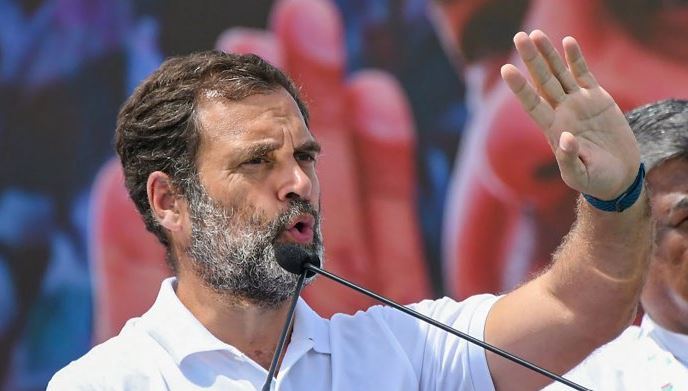
New Delhi (PTI): Congress leader Rahul Gandhi on Monday launched a fresh attack on External Affairs Minister S Jaishankar, saying his silence on the number of aircraft India "lost" after Pakistan was "informed" about the military action under Operation Sindoor is "damning".
The Congress leader had earlier also targeted the government on the issue, suggesting that the Indian side informed Pakistan ahead of the military strikes on terrorist infrastructure in Pakistan and Pakistan-occupied Kashmir (PoK).
"EAM Jaishankar's silence isn't just telling, it's damning. So I'll ask again: How many Indian aircraft did we lose because Pakistan knew?" he asked in a post on X.
"This wasn't a lapse. It was a crime. And the nation deserves the truth," Gandhi also said.
Gandhi had earlier shared an undated video clip of Jaishankar and wrote, "Informing Pakistan at the start of our attack was a crime. EAM has publicly admitted that GOI (government of India) did it."
"Who authorised it? How many aircraft did our air force lose as a result," the Leader of the Opposition in Lok Sabha had asked.
The Ministry of External Affairs had described as "utter misrepresentation" claims that Jaishankar acknowledged that India alerted Pakistan before the launch of Operation Sindoor on May 7.
"The external affairs minister had stated that we had warned Pakistan at the start, which is clearly the early phase after Operation Sindoor's commencement," the external publicity (XP) division of the ministry said.
"This is being falsely represented as being before the commencement. This utter misrepresentation of facts is being called out," it said in a brief statement.
Under Operation Sindoor, India, on early May 7, destroyed nine terror infrastructures in Pakistan and Pakistan-Occupied-Kashmir (PoK) in retaliation against the Pahalgam terror attack.
All subsequent retaliations by Pakistan were carried out under the operation.
The two sides reached an understanding on cessation of hostilities on May 10 after four days of confrontations.
Let the Truth be known. If you read VB and like VB, please be a VB Supporter and Help us deliver the Truth to one and all.
Cong performed better in Kerala, anti-incumbency trends influenced WB, TN: CM Siddaramaiah
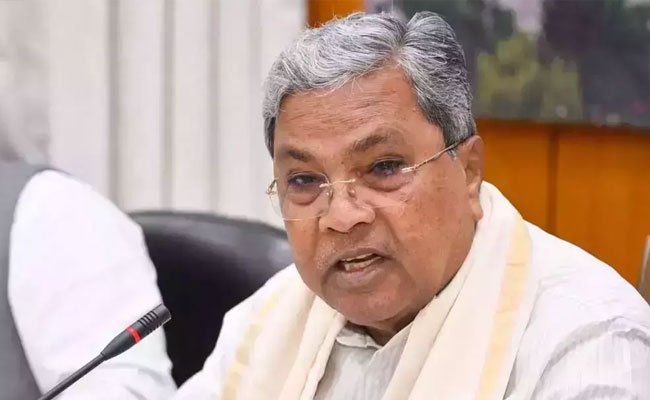
Bengaluru (PTI): Karnataka Chief Minister Siddaramaiah on Monday said the Congress had largely met or exceeded expectations in several States, even as results in some regions reflected shifting voter sentiments.
Speaking to reporters in Bengaluru, he said the party accepted the mandate in Assam while performing better than anticipated in Kerala.
He also pointed to possible anti-incumbency trends influencing outcomes in West Bengal and Tamil Nadu.
“In Assam, we got the expected result, and we accept the people’s mandate. In Kerala, we have won more seats than expected. We anticipated around 76 to 80, but we have gone up to around 95,” Siddaramaiah said.
In West Bengal and Tamil Nadu, there may have been an anti-incumbency trend, and that could have influenced the results, he added.
Siddaramaiah also extended his congratulations to a new political entrant in Tamil Nadu, noting the emergence of a different electoral dynamic in the State.
“I congratulate the new entrant who has achieved success there,” he added.
Deputy Chief Minister D K Shivakumar said electoral outcomes in some States had diverged from the party’s internal assessments, reflecting evolving voter expectations.
“We expected a certain trend, but the results have been different. Political reading was wrong in some places,” he said.
“People were looking for change in some States, and that has been reflected in the results,” Shivakumar, who is also the Congress Karnataka unit president, said.
Referring to Kerala, he said the Congress-led alliance had benefited from public sentiment.
“There was already an expectation based on local body elections, and people had shown confidence in us. That has translated into a strong result,” the Deputy Chief Minister said.
On Tamil Nadu, he acknowledged that the scale of political shift had come as a surprise.
“We expected to secure around 30 to 40 per cent of the vote share, but such a major shift was not anticipated. It shows that voter expectations were different,” he said.
Shivakumar added that electoral outcomes underscored the need for better political assessment in future.
“We have to understand these changes carefully. Political reading cannot go wrong like this,” he said.