Railway unions stop local trains at CSMT to oppose FIR against engineers in accident case
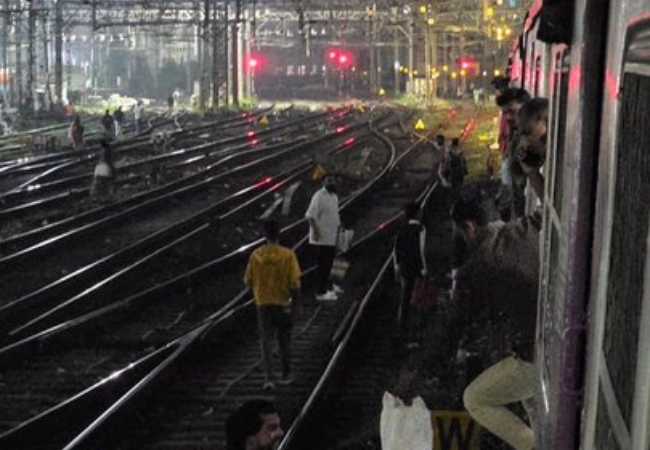
Mumbai (PTI): Unions representing Central Railway’s employees stopped suburban local train operations at the busy Chhatrapati Shivaji Maharaj Terminus for nearly an hour on Thursday evening to oppose the FIR against engineers in the Mumbra accident case.
Train services resumed after senior officials assured the protesters they would pursue the matter with the state authorities.
Central Railway’s Chief Public Relations Officer Swapnil Nila told PTI that the employees protesting at CSMT, where daily passenger footfall touches several lakhs, did not allow motormen and train managers to operate trains between 5.50 pm and 6.45 pm.
The protesters were pacified and local train services resumed after about an hour, said Nila.
The Government Railway Police have registered an FIR against two railway engineers in the June 9 Mumbra train accident, which claimed five lives.
The GRP action prompted National Railway Mazdoor Union and Central Railway Mazdoor Union to stage the protest on Thursday, demanding the FIR be revoked.
The NRMU staged a protest outside the Divisional Railway Manager's office at CSMT after a march, while CRMS staged protest in the suburban concourse of the busy station, just outside the motormen and train managers or guards lobby.
The employees participating in the protest shouted slogans against the police and warned of action if the case is not withdrawn.
Many daily wage labours of railway contractors also participated in the protest, several of them wearing reflective safety jackets.
Non availability of suburban services during evening peak hours led to heavy rush on both mainline and harbour corridors of Central Railway.
Commuters filled the CSMT premises as they waited for train services to resume. Major stations including Kurla, Ghatkopar, Dadar, Thane, and Vashi witnessed heavy rush of passengers.
Several passengers travelled onboard outstation trains due to heavy rush and disrupted suburban services. Some rushed to the Metro-3 station in the vicinity.
“A friend from the UK is here, and we wanted to board a local train. We came out of the CSMT after waiting for trains to start for nearly 20 minutes,” said Thane resident Anshuman R.
Passenger activists strongly condemned the stoppage of suburban trains.
They accused railway authorities of holding passengers to ransom to pressure the GRP into scrapping the FIR.
The probe into the June 9 Mumbra train accident, which claimed five lives, has found that railway staffers replaced a piece of track four days prior to it, but left it unwelded, which resulted in the tragedy.
Let the Truth be known. If you read VB and like VB, please be a VB Supporter and Help us deliver the Truth to one and all.
Lebanon appoints new representative for talks with Israel, rejects linkage to Iran
Beirut: Lebanon’s has moved to underline its independent position in ongoing regional developments, amid attempts to link the country to the broader conflict involving Iran, the United States and Israel.
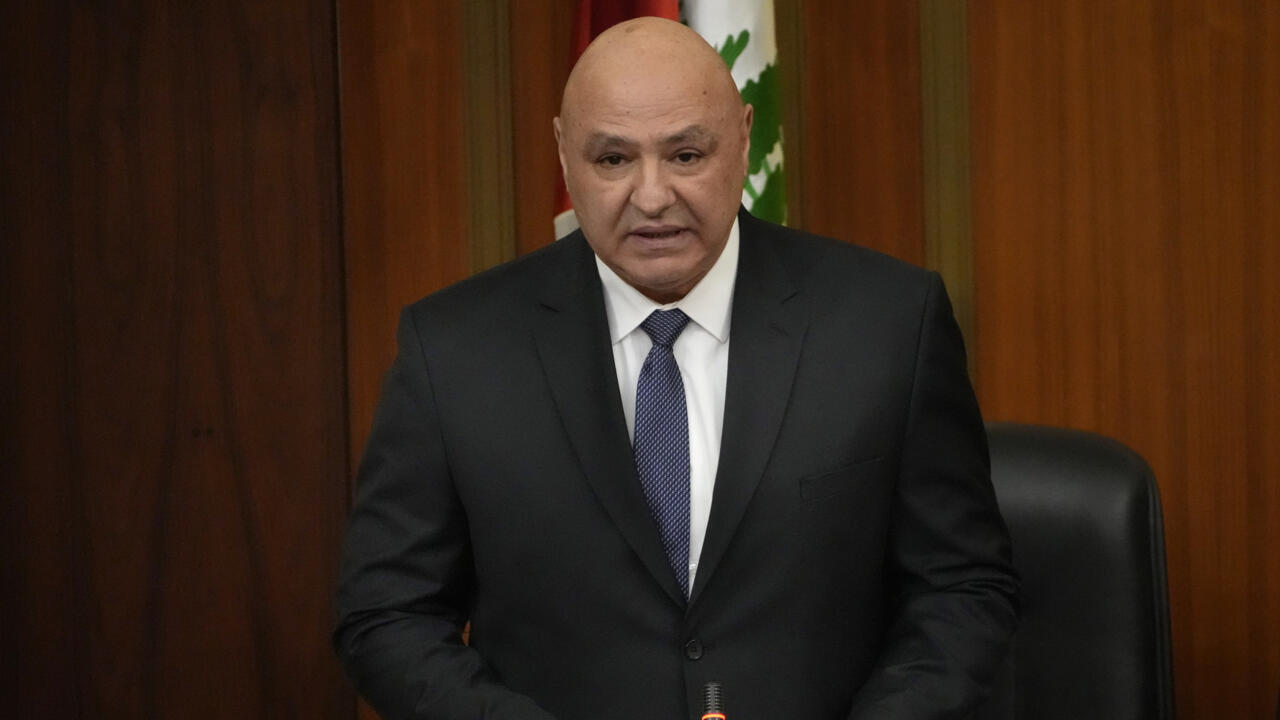
President Joseph Aoun, while announcing the appointment of former US ambassador Simon Karam as Lebanon’s representative in talks with Israel, made it clear that Karam would be the sole representative for Lebanon and that there would be no substitute.
The move comes in response to what the Lebanese officials see as efforts by Iran to tie Lebanon’s situation to the wider regional conflict. Iran had indicated that there would be no ceasefire involving the US, Israel and Iran unless it also included a ceasefire in Lebanon.
Some groups, including Hezbollah and its supporters, had expressed support for linking the situations, citing concerns that the Lebanese government has limited leverage in negotiations with Israel. Lebanon is not formally a party to the conflict, and its army is considered weak.
However, others, including Prime Minister Nawaf Salam, have opposed this approach. They view Iran’s stance as an attempt to influence Lebanon’s internal affairs and see it as undermining the country’s sovereignty.
Officials backing the government’s position say the move is aimed at reaffirming Lebanon’s sovereignty and ensuring that decisions about peace and ceasefire within the country are not dictated externally.
They also see it as a safeguard, so that any breakdown in talks between the US, Israel and Iran does not automatically lead to renewed conflict in Lebanon.