Railways announces fare hike effective from Jan 1
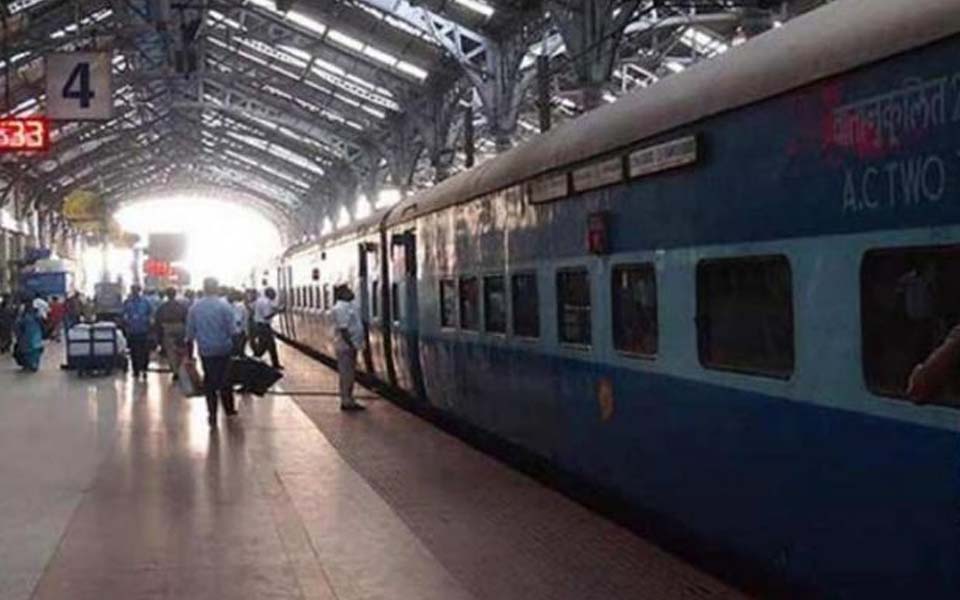
New Delhi, Dec 31: On the New Year's eve, the railways announced fare hike across its network, excluding suburban trains, effective from January 1, 2020, according to an order issued on Tuesday.
While suburban fares remain unchanged, ordinary non-AC, non-suburban fares were increased by 1 paise per km of journey.
The railways also announced a two paise/km hike in fares of mail/express non-AC trains and four paise/km hike in the fares of AC classes.
The fare hike is also applicable to premium trains such as Shatabdi, Rajdhani and Duronto, according to the order.
In the Delhi-Kolkata Rajdhani, which covers a distance of 1,447 km, the hike at the rate of 4 paise per km will be around Rs 58.
According to the order, there will not be any change in the reservation fee and superfast charge and the hike in fares will not be applicable to tickets already booked.
The last such hike was announced in 2014-2015 when fares of all classes of trains were raised by 14.2 per cent and freight charges by 6.5 per cent. However, since then, the railways introduced the flexi-fare scheme which significantly raised fares on select trains and launched trains like Vande Bharata Express and Tejas Express which have relatively higher fares. Trains with dynamic pricing like Suvidha Express were also introduced.
The railways in a statement said the revenue generated by the "marginal" increase in fare will be used for the modernisation of the network.
"Indian Railways has continuously endeavored to augment passenger experience through modernization of coaches and provision of improved facilities over stations. Further, the burden of 7th Pay Commission on Indian Railway has necessitated rationalization of fares.
"In order to expand passenger amenities and facilities at various railway stations and trains, it has become imperative to increase the fare marginally without over burdening any class of passengers. Fast modernization of Indian Railways will be achieved through this fare revision," it said.
It also said the suburban passengers have been left out of the hike keeping the "affordability concerns of daily commuters". This class constitutes 66 per cent of total passenger segment of the railways.
The increase in fare will be on tickets bought on or after January 1, 2020 and no excess fare (difference of fare) will be charged from passengers who have booked tickets before this date.
The hike will have no effect on the catering charges, officials said.
In order to expand passenger amenities and facilities at Railway stations and in trains, it has become imperative to increase the train fare marginally without over burdening any class of passengers. Fast modernization of Indian Railway will be achieved through this fare revision pic.twitter.com/OXBEq0PSdl
— Ministry of Railways (@RailMinIndia) December 31, 2019
Let the Truth be known. If you read VB and like VB, please be a VB Supporter and Help us deliver the Truth to one and all.
Telangana survey flags 89,000 child labourers, highlights caste disparities in employment
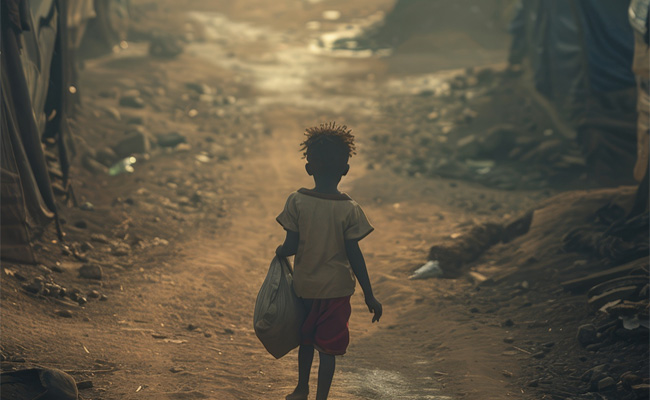
Hyderabad: A caste-based survey conducted by the Telangana government for 2024–25 has identified around 89,000 children engaged in labour across the state, with a large share belonging to Scheduled Caste (SC) and Scheduled Tribe (ST) communities.
The findings are part of the Socio, Economic, Educational, Employment, Political and Caste (SEEEPC) Survey, which covered about 3.5 crore people across 242 caste groups. According to the report, nearly one per cent of individuals below 18 years are involved in daily wage work. While the percentage appears small, officials noted that the absolute number reflects a serious concern.
The survey found that 11 per cent of identified child labourers belong to the ST Lambadi community, while 14 per cent are from the SC Madiga community. The highest incidence was reported among the ST Kolam group, where 7.2 per cent of minors are engaged in daily wage labour.
The data also revealed wider socio-economic disparities. Nearly half of the Scheduled Caste population is dependent on daily wage work, while only around 5 per cent are employed in the private sector, compared to about 30 per cent among General Castes.
State Welfare Minister Ponnam Prabhakar said the findings show that SC and ST communities remain three times more backward than General Castes, while Backward Classes are about 2.7 times more disadvantaged.
The report further noted that, on average, 31.3 per cent of people in the 25–65 age group depend on daily wage work. Among communities, the BC-A Odde group recorded the highest share at 55 per cent. In contrast, only 2.6 per cent of OC Brahmins rely on such work.
Several SC and ST communities, including Kolam, Beda, Madiga, Koya, Gond, Yerukulas and Mala Sale, were found to have among the highest proportions of daily wage earners. On the other hand, most General Caste communities and some Backward Class groups such as Goldsmiths and BC-C Christians showed lower dependence on daily wage employment.
The survey also pointed to inequalities in access to formal employment. Communities such as OC Rajus, OC Brahmins and Kapus were found to have a higher presence in private sector jobs, with up to 27 per cent of their population employed in such roles.