Rajasthan CM Ashok Gehlot undergoes angioplasty
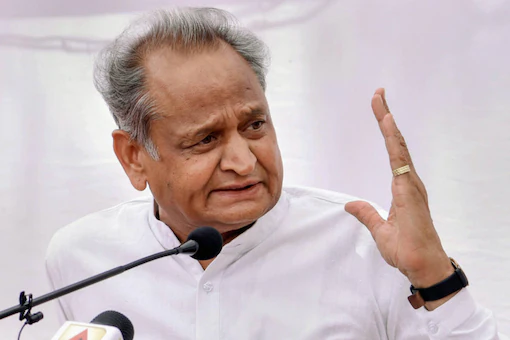
Jaipur, Aug 27: Rajasthan Chief Minister Ashok Gehlot on Friday underwent angioplasty at a government hospital here.
The 70-year-old Congress leader had tested positive for the novel coronavirus infection in April this year and after recovery in May, he was facing post-Covid issues.
There was 90 per cent blockage in one of his coronary arteries and one stent was placed successfully. The CM is absolutely fine now, Sudhir Bhandari, principal, SMS Medical College, told reporters.
Angioplasty is a procedure to open clogged heart arteries.
Bhandari said Gehlot had complained of heaviness in his chest and pain in neck following which an ECG was conducted, and the reports came normal.
However, we monitored everything very closely and advised the chief minister to get a CT angiography done. He agreed and the procedure was done. Since there was 90 per cent blockage, one stent was placed, he explained.
He said Gehlot expressed confidence and faith in the team and infrastructure of the SMS hospital.
The chief minister is cheerful and asymptomatic, Bhandari said, adding that Gehlot has been advised complete rest for two-three days.
The doctor also said that Gehlot was registered as a common citizen in the Rajasthan Government Health Scheme (RGHS) and got the angioplasty done.
Later, in a medical bulletin, Bhandari noted that the procedure (angioplasty) was uneventful and the CM was recovering well post procedure.
The SMS Medical College principal further stated that from admission till stenting, the Congress leader's complete care was supervised by Rajasthan Health Minister Raghu Sharma.
Meanwhile, Prime Minister Narendra Modi wished Gehlot a swift recovery and good health.
Congress leader Rahul Gandhi also wished him a speedy recovery.
Earlier in the day, Gehlot had tweeted that he would undergo the angioplasty procedure.
"Post Covid19, I was having health issues and since yesterday, I was having severe pain in my chest. Just got my CT Angiography done in SMS hospital and Angioplasty will be done. I am happy that I am getting it done at SMS Hospital. I am fine and will be back soon. Your blessings and well wishes are with me," he said.
Responding to the tweet, Modi said, "Praying for your good health and swift recovery, @ashokgehlot51 Ji."
Gehlot was accompanied to the hospital by minister Raghu Sharma, party chief whip Mahesh Joshi, Congress MLA Rafiq Khan and other officials from his office.
Congress president Sonia Gandhi, Rahul Gandhi, AICC general secretary K C Venugopal, Chhattisgarh Chief Minister Bhupesh Baghel and former Rajasthan CM Vasundhara Raje spoke to Gehlot.
Got the news of the Chief Minister Ashok Gehlot being unwell. I pray to God for his speedy recovery, Raje tweeted.
Rajasthan Governor Kalraj Mishra also spoke to the CM over phone and wished him speedy recovery.
Former deputy CM Sachin Pilot called Sharma and the chief minister's son Vaibhav Gehlot and enquired about the CM's health condition.
BJP state president Satish Poonia, deputy leader of opposition Rajendra Rathore and other leaders also wished Gehlot a speedy recovery.
Punjab Chief Minister Amarinder Singh expressed hope that his Rajasthan counterpart will recover soon.
"Send my good wishes to Chief Minister Rajasthan Ashok Gehlot Ji for a speedy recovery after his angioplasty procedure. Get well soon," he said on Twitter.
*NGO- Angio
— Ashok Gehlot (@ashokgehlot51) August 27, 2021
Let the Truth be known. If you read VB and like VB, please be a VB Supporter and Help us deliver the Truth to one and all.
Rs 30,000 cr loss a month: Oil companies bleed as fuel prices on hold amid global energy spike
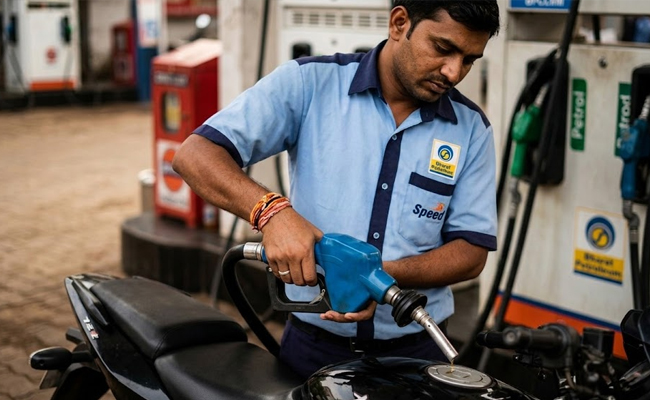
New Delhi (PTI): About Rs 700-1,000 crore loss per day. Rs 30,000 crore every month. India's state oil companies are quietly absorbing a massive financial hit to keep petrol, diesel and LPG prices unchanged even as global energy markets face a turmoil that is bigger than all previous crises combined.
While countries from Japan to United Kingdom have raised petrol and diesel prices by up to 30 per cent since the start of the West Asia conflict, fuel prices in India continue at two-year-old levels.
The war disrupted India's import of 40 per cent of crude oil (raw material for making petrol and diesel), 90 per cent cooking gas LPG and 65 per cent natural gas (used to generate electricity, make fertilizer, turned into CNG and piped to household kitchens for cooking), but state-owned oil companies have maintained uninterrupted fuel supplies with no rationing or shortage at any point in the last 10 weeks.
But this has come at a cost - Rs 30,000 crore under-recovery or loss every month for the three oil marketing companies - Indian Oil Corporation (IOC), Bharat Petroleum Corporation Ltd (BPCL) and Hindustan Petroleum Corporation Ltd (HPCL), two sources with direct knowledge of the matter said.
The under-recoveries - the gap between input costs and realised retail prices - rose sharply in March/April before tapering a bit. Daily under-recoveries during April were estimated at about Rs 18 per litre on petrol and Rs 25 per litre on diesel, translating into average losses of Rs 700-1,000 crore a day for OMCs, they said.
At a news briefing on developments in West Asia, Sujata Sharma, Joint Secretary in the Ministry of Petroleum and Natural Gas, said prices in the international markets, on which India relies to meet 88 per cent of its oil needs, have been volatile and supplies impacted.
Crude oil prices which were around USD 70 per barrel two months ago, are now at USD 120, she said. "It has been government's endeavour to keep prices stable so far and that there is no price increase for consumers," she said. "This has hit finances of OMCs... monthly under-recoveries are of the order of Rs 30,000 crore."
She, however, refused to say if retail petrol and diesel prices will continue to hold.
"As I said, the endeavour so far has been to see that there is no price increase," she said.
The three oil marketing companies (OMCs) have worked overtime to keep the supply lines running even when demand spiked due to panic buying.
The government intervention included excise duty reductions and absorption of part of the fuel cost burden. The special additional excise duty on petrol was cut to Rs 3 per litre from Rs 13, while excise duty on diesel was reduced to zero from Rs 10 per litre.
The under-recoveries would have swelled to nearly Rs 62,500 crore had the government not cut excise duty on petrol and diesel by Rs 10 per litre each.
The government, Sharma said, has taken a hit of Rs 14,000 crore a month in cutting the excise duty.
The Centre's effective absorption at peak crude prices was estimated at around Rs 24 per litre for petrol and Rs 30 per litre for diesel.
The February 28 strikes by the United States and Israel on Iran triggered a sharp escalation in West Asia tensions. Energy prices surged as the conflict widened and shipping risks intensified in the Strait of Hormuz - the shipping lane through which India and other countries imported crude oil, LPG and natural gas from Gulf countries. Tanker movement was disrupted.
The companies also faced additional costs from emergency crude sourcing, higher freight charges due to vessel diversions, elevated marine insurance premiums and refinery optimisation expenses. Despite these pressures, fuel and LPG supplies remained uninterrupted across the country.
The surge in crude prices and the decision to shield consumers from higher retail prices placed significant strain on OMC balance sheets and refining margins, sources said.
They added that the measures reflected a policy decision to prioritise consumer stability and economic continuity during a global energy shock.
Sources warned that a prolonged period of elevated crude prices could lead to higher working capital borrowings and force some recalibration of capital expenditure plans. However, investments linked to refining expansion, energy security infrastructure, ethanol blending, biofuels and transition fuels would continue with government backing, they said.
India's approach contrasted with measures adopted by several other economies, where fuel prices rose sharply after the conflict-driven energy shock.
Petrol prices increased by about 34 per cent in Spain, 30 per cent in Japan, Italy and Israel, 27 per cent in Germany and 22 per cent in the United Kingdom, according to estimates. Several countries also introduced rationing, conservation advisories, emergency relief packages or fuel caps.
In India, petrol prices remained Rs 94.77 per litre and diesel at Rs 87.67, with no rationing, mobility restrictions or supply disruptions, they added.
Sharma said the revenues that OMCs earn are used to buy crude oil, build infrastructure to process it into fuel and create channels that will take the fuel to consumers.
Their capex spending is all dependent on the revenues they earn, she added.