Ram temple will be built only when Congress comes to power: Harish Rawat
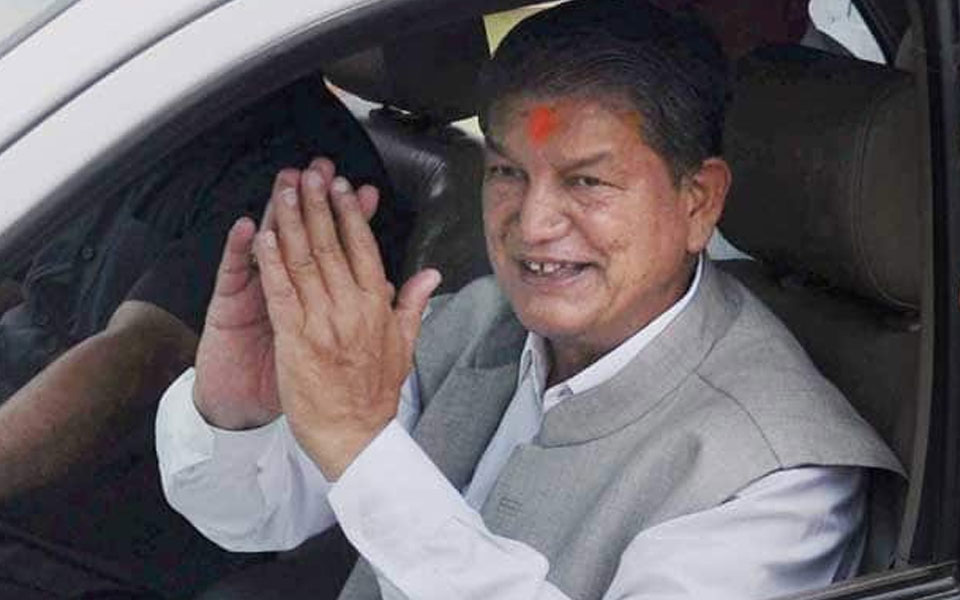
Dehradun, Jan 18 : Describing the BJP as a party with no regard for ethics, senior Congress leader Harish Rawat said a Ram temple will be built in Ayodhya only when his party comes to power at the Centre.
"The BJP is a party of unethical people. Those who have no regard for ethics and dignity cannot be devotees of Maryada Purushottam Ram," the AICC general secretary said on Thursday.
"We believe in ethics and in the Constitution. A Ram temple will come up in Ayodhya only when the Congress comes to power. That is for sure," Rawat told reporters in Rishikesh.
Accusing the BJP of trying to topple the government in Karnataka, he said, "The BJP is out to dislodge rival parties from power by hook or by crook, by misusing money, muscle power and institutions like the Enforcement Directorate, the CBI and the Income Tax Department as political tools."
Rawat exuded confidence that the Congress-JD(S) ruling combine will win all 27 seats in Karnataka in the upcoming Lok Sabha polls.
"The game that the BJP is playing in Karnataka will cost it dearly in the Lok Sabha elections when people will give it a befitting reply, with the Congress-JD(S) alliance bagging all 27 seats there," he said.
Political turmoil began in Karnataka on Monday amid reports that the BJP was allegedly making a renewed bid to dislodge the state's seven-month-old coalition government.
Both the ruling coalition and BJP have been levelling charges of horse trading against each other.
Let the Truth be known. If you read VB and like VB, please be a VB Supporter and Help us deliver the Truth to one and all.
Rickelton's ton in vain as SRH beat MI by 6 wickets
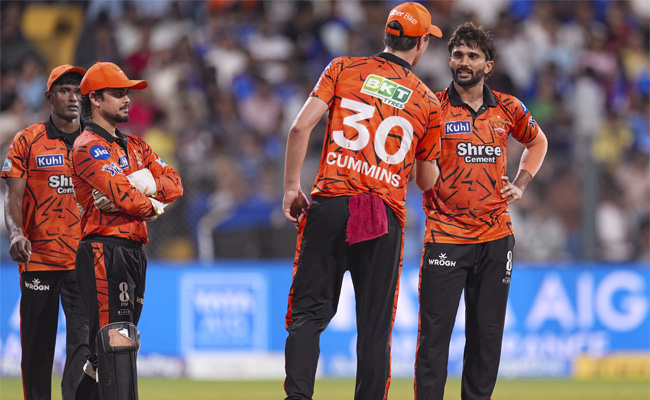
Mumbai (PTI): Ryan Rickelton's whirlwind unbeaten ton was overshadowed by Heinrich Klaasen's unbeaten 65 as Sunrisers Hyderabad defeated Mumbai Indians by six wickets in an IPL match here on Wednesday.
Chasing an imposing 244-run target, Travis Head (76 off 30) and Abhishek Sharma (45 off 24) shared 129 runs for the opening wicket to set the platform for SRH.
Klaasen (65 not out off 30 balls) then displayed his all-round hitting abilities to guide SRH home with the help of Nitish Kumar Reddy (21) and Salil Arora (30 not out off 10) in 18.4 overs.
Earlier, Rickelton's knock powered MI to 243 for five.
MI rode on a 93-run stand between Rickelton (123 not out off 55 balls) and Will Jacks (46 off 22) in 7.1 overs for the opening stand to power the side.
MI skipper Hardik Pandya scored a valuable 31 off 15 balls before being dismissed.
Praful Hinge (2/54), Eshan Malinga (1/29), Sakib Hasan (1/39) and Nitish Kumar Reddy (1/31) were the wicket-takers for SRH.
Brief Scores:
Mumbai Indian: 243 for 5 in 20 overs (Ryan Rickelton 123 not out; Praful Hinge 2/54).
Sunrisers Hyderabad: 249 for 4 in 18.4 overs (Travis Head 76, Heinrich Klaasen 65 not out; AM Ghazanfar 2/51).