Ramdev says 'very difficult' to predict next PM
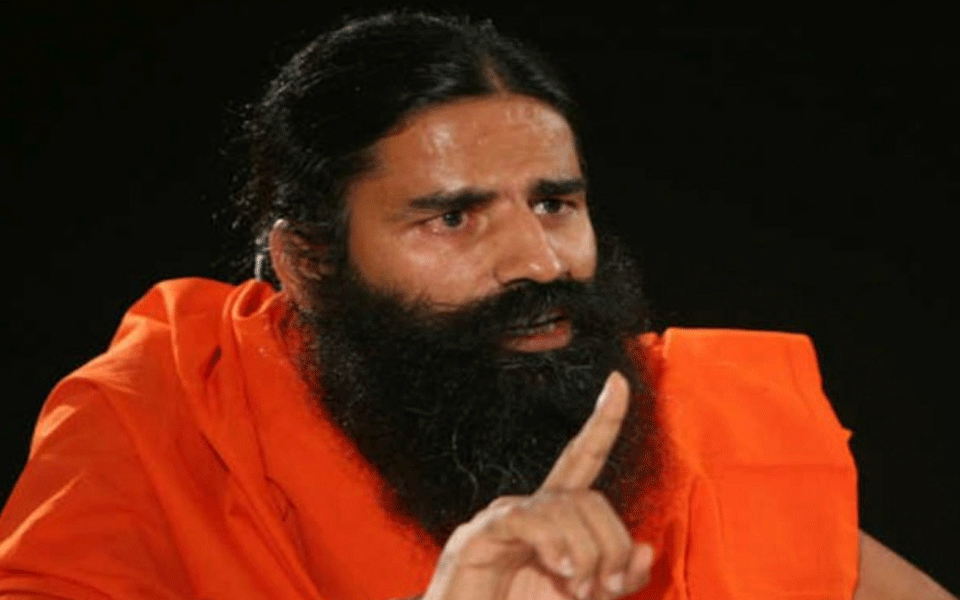
Madurai, Dec 26 :Yoga guru Baba Ramdev has said it was "very difficult" to predict the country's next Prime Minister in view of the current political situation.
Noting that he was "not focussed" on politics, the 53-year-old yoga guru said he would not support or oppose anyone in the 2019 Lok Sabha elections.
Talking to reporters at the airport here Tuesday, Ramdev said, "We can't say who will become the next prime minister (after the 2019 general elections)."
"We do not have a political or religious agenda... We want to make a spiritual India and world... Not Hindu India or communal India," he added.
His comments come days after the Bharatiya Janata Party (BJP) suffered a big blow as it lost power in its earlier ruled Chhattisgarh, Madhya Pradesh and Rajasthan.
The Congress won convincingly in Chhattisgarh, less so in Rajasthan and edged out the saffron party in a cliffhanger in Madhya Pradesh.
Referring to the Ayodhya dispute, Ramdev claimed that the BJP would lose trust if the 'Ram Mandir' was not built in Ayodhya now.
The yoga guru was in the state to attend a national executive meeting of Bharat Swabhiman in Rameswaram.
On Bollywood actor Naseeruddin Shah's remarks on mob violence in Uttar Pradesh, he said, "accusing India of religious intolerance amounts to degrading the country's pride".
The charge that country was religiously intolerant was tantamount to "ungratefulness, disrespect and treason," he added.
Apparently referring to the recent violence in Uttar Pradesh's Bulandshahr, Shah had said that at many places in the country the "death of a cow is being given more importance than the killing of a policeman".
The veteran actor had also expressed anxiety over the well-being of his children, who he said, have not been brought up as followers of any particular religion.
The violence, which occurred earlier this month over an incident of alleged cow slaughter, had claimed two lives, including that of a police inspector.
Later talking to reporters in Rameswaram, Ramdev said he was neither against any political party nor supporting any political party.
He said the three-day yoga programme being organised herefrom tomorrow was an effort to make "a prosperous and spiritually rich India."
Similar Yoga programmes were being held through out the world by their organisation.
Around 5,000 participants from across the country would participated in the programme, he said adding it was "non- political".
"Yoga is for people of all the religion. It is purely a spiritual programme... it is a scientific way of living," he added.
Let the Truth be known. If you read VB and like VB, please be a VB Supporter and Help us deliver the Truth to one and all.
Trump administration says its war in Iran has been 'terminated' before 60-day deadline
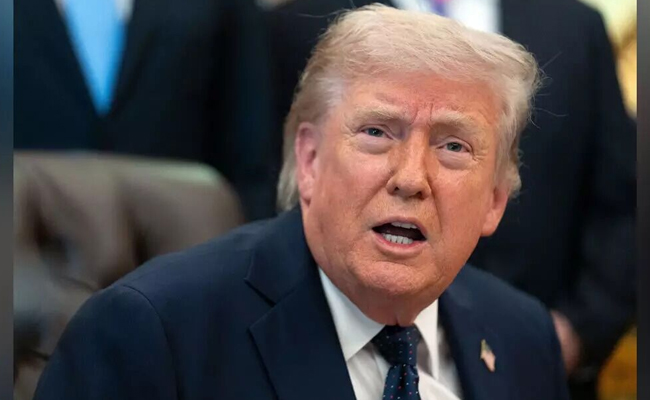
Washington (AP): The Trump administration is arguing that the war in Iran has already ended because of the ceasefire that began in early April, an interpretation that would allow the White House to avoid the need to seek congressional approval.
The statement furthers an argument laid out by Defense Secretary Pete Hegseth during testimony in the Senate earlier Thursday, when he said the ceasefire effectively paused the war. Under that rationale, the administration has not yet met the requirement mandated by a 1973 law to seek formal approval from Congress for military action that extends beyond 60 days.
A senior administration official, who spoke on condition of anonymity to discuss the administration's position, said for purposes of that law, “the hostilities that began on Saturday, Feb 28 have terminated.” The official said the US military and Iran have not exchanged fire since the two-week ceasefire that began April 7.
While the ceasefire has since been extended, Iran maintains its chokehold on the Strait of Hormuz, and the US Navy is maintaining a blockade to prevent Iran's oil tankers from getting out to sea.
Under the War Powers Resolution, the law that sought to constrain a president's military powers, President Donald Trump had until Friday to seek congressional authorisation or cease fighting. The law also allows an administration to extend that deadline by 30 days.
Democrats have pushed the administration for formal approval of the Iran war, and the 60-day mark would likely have been a turning point for a swath of Republican lawmakers who backed temporary action against Tehran but insisted on congressional input for something longer.
“That deadline is not a suggestion; it is a requirement,” said Sen Susan Collins, R-Maine, who voted Thursday in favour of a measure that would end military action in Iran since Congress hadn't given its approval. She added that “further military action against Iran must have a clear mission, achievable goals, and a defined strategy for bringing the conflict to a close."
Richard Goldberg, who served as director for countering Iranian weapons of mass destruction for the National Security Council during Trump's first term, said he has recommended to administration officials to simply transition to a new operation, which he suggested could be called “Epic Passage,” a sequel to Operation Epic Fury.
That new mission, he said, “would inherently be a mission of self-defence focused on reopening the strait while reserving the right to offensive action in support of restoring freedom of navigation.”
“That to me solves it all,” added Goldberg, who is now a senior adviser at the Foundation for Defense of Democracies, a hawkish Washington think tank.
During testimony before the Senate Armed Services Committee on Thursday, Hegseth said it was the administration's “understanding” that the 60-day clock was on pause while the two countries were in a ceasefire.
Katherine Yon Ebright, counsel at the Brennan Center's Liberty and National Security Program and an expert on war powers, said that interpretation would be a “sizeable extension of previous legal gamesmanship” related to the 1973 law.
“To be very, very clear and unambiguous, nothing in the text or design of the War Powers Resolution suggests that the 60-day clock can be paused or terminated,” she said.
Other presidents have argued that the military action they've taken was not intense enough or was too intermittent to qualify under the War Powers Resolution. But Trump's war in Iran would certainly not be such a case, Ebright said, adding that lawmakers need to push back against the administration on that kind of argument.