Rashtrapati Bhavan, Parliament light up in red to raise awareness about dyslexia
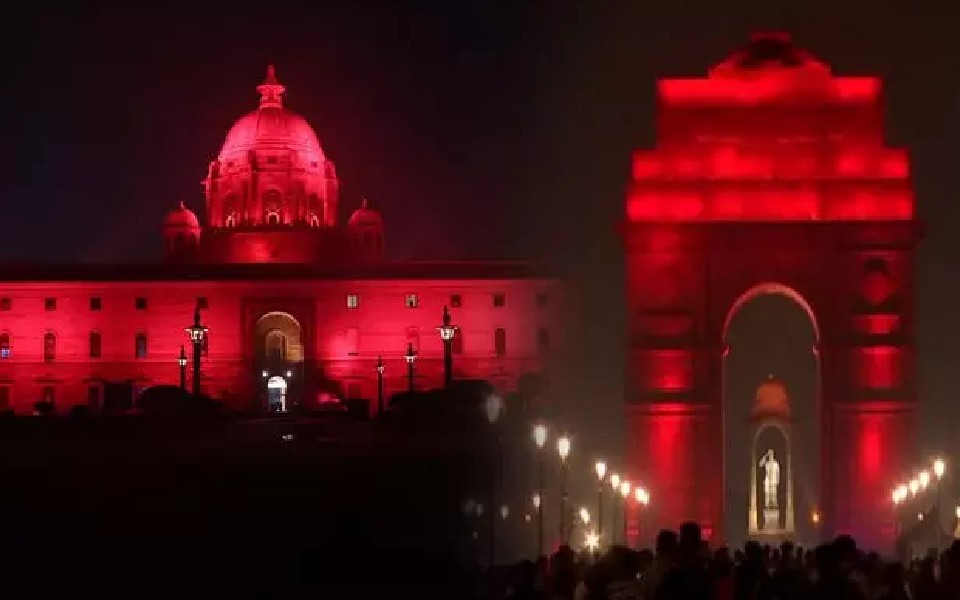
New Delhi, Oct 28: The Rashtrapati Bhavan, South Block, and the Parliament were bathed in red to raise awareness about dyslexia.
The illumination marked the nation-wide 'Act4Dyslexia campaign' aimed at raising awareness about learning disabilities, which are estimated to affect 20 per cent of India’s population, including 35 million students, ChangeInkk Foundation, which organised the event, said Monday in a statement.
"In a bold step towards spreading awareness about dyslexia, the highest offices of the government and key monuments in Delhi — including Rashtrapati Bhavan, North and South Block, Parliament, and India Gate — in collaboration with UNESCO MGIEP & ChangeInkk Foundation were illuminated on Sunday in red, the colour for dyslexia awareness," Noopur Jhunjhunwala, the Foundation's co-founder and Trustee, said.
The event aligns with similar illuminations across major cities, including Patna, Ranchi, Jaipur, Kohima, Shimla, and Mumbai, spotlighting the need to remove stigma and foster greater understanding of dyslexia and other learning disabilities, she said.
"By lighting up our cities and walking together, we hope to inspire a shift towards a more inclusive society where every individual, irrespective of learning disabilities, not only survives but thrives," Jhunjhunwala, a mother of a 16-year-old dyslexic teenage girl, said.
Often misunderstood as the "slow-learner syndrome," the people afflicted with learning disabilities struggle with comprehend, speak, read, write, spell, or to do mathematical calculations but are also associated with skills vital for higher-order thinking, including logical reasoning, critical thinking, problem-solving, and innovation.
Notably, 40 per cent of self-made millionaires have dyslexia, and many renowned inventors, like Albert Einstein, were dyslexic, according to the ChangeInkk foundation.
Founded by a family of dyslexics, the foundation is a leading non-profit that aims to unlock the potential of 200 million Indians with Specific Learning Disabilities (SLD), the statement said.
Specific Learning Disabilities, including dyslexia, were officially recognised under the Rights of Persons with Disabilities Act of 2016, which mandates equal opportunities in education, employment, and other aspects of life.
The National Education Policy 2020 reinforces this mandate, emphasising inclusive education from foundational to higher education levels, the statement said.
"This year, the campaign has expanded significantly, with over 1,600 walks organised across the country — spanning state capitals, districts, blocks, villages, and school levels during this month so far," Jhunjhunwala said, adding, October is observed as dyslexia awareness month.
The initiative engaged over 4 lakh participants, who collectively took over 2 billion steps toward driving awareness for 'Act4Dyslexia', she added.
These walks, which began on October 8, were led by state education departments, parent groups, and educational institutions in collaboration with over 150 organisations, she said.
The walks will end on October 30.
Let the Truth be known. If you read VB and like VB, please be a VB Supporter and Help us deliver the Truth to one and all.
Sujit Nair raises concerns over speculation of DMK-AIADMK understanding to block TVK
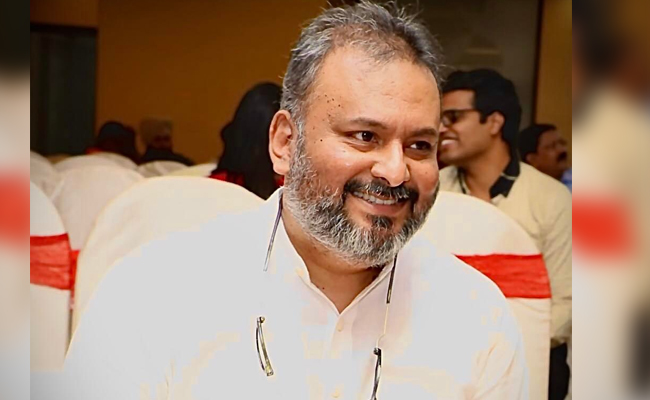
Chennai: Journalist and political commentator Sujit Nair has expressed concern over speculation that the Dravida Munnetra Kazhagam and the All India Anna Dravida Munnetra Kazhagam could explore a post-poll understanding to prevent Vijay-led Tamilaga Vettri Kazhagam from forming the government in Tamil Nadu.
In a social media post, Sujit Nair said the election verdict in Tamil Nadu reflected a clear public demand for political change and argued that the mandate should be respected irrespective of political preferences.
Referring to reports and political discussions surrounding a possible understanding between the DMK and AIADMK, he said he hoped such developments remained only speculative conversations and did not turn into reality.
Nair stated that if such an alliance were to take shape, it would raise serious questions about ideological politics in the country. He said TVK had emerged through a democratic electoral process and that the legitimacy to govern in a parliamentary democracy comes from the people’s verdict.
According to him, attempts to prevent an electoral winner from forming the government through unexpected political arrangements may be constitutionally valid, but many people could view them as politically opportunistic.
He further said that such a move could particularly affect the political image of the DMK, which has historically projected itself around ideology, social justice and opposition politics. Nair said that in ideological terms, the DMK appeared closer to TVK than to the AIADMK, and joining hands with its long-time political rival only to remain in power could weaken its broader political narrative.
He added that the same questions would apply to the AIADMK as well, as the party had spent decades positioning itself against the DMK and such an arrangement could create discomfort among its cadre and supporters.
Drawing a comparison with Maharashtra politics in 2019, Nair said he had expressed similar views when the Shiv Sena formed an alliance with the Indian National Congress and the Nationalist Congress Party after the Assembly elections.
He said post-poll alliances between long-standing political rivals often create a public perception that ideology and electoral mandates become secondary when political power equations come into play.
Nair also said such developments increase public cynicism towards politics and reinforce the belief among voters that ideology is often sidelined after elections.
He maintained that the Tamil Nadu verdict was emphatic and said respecting both the spirit and substance of the mandate was important for the credibility of democratic politics.