Ration card is for public distribution system, not address proof: Delhi HC
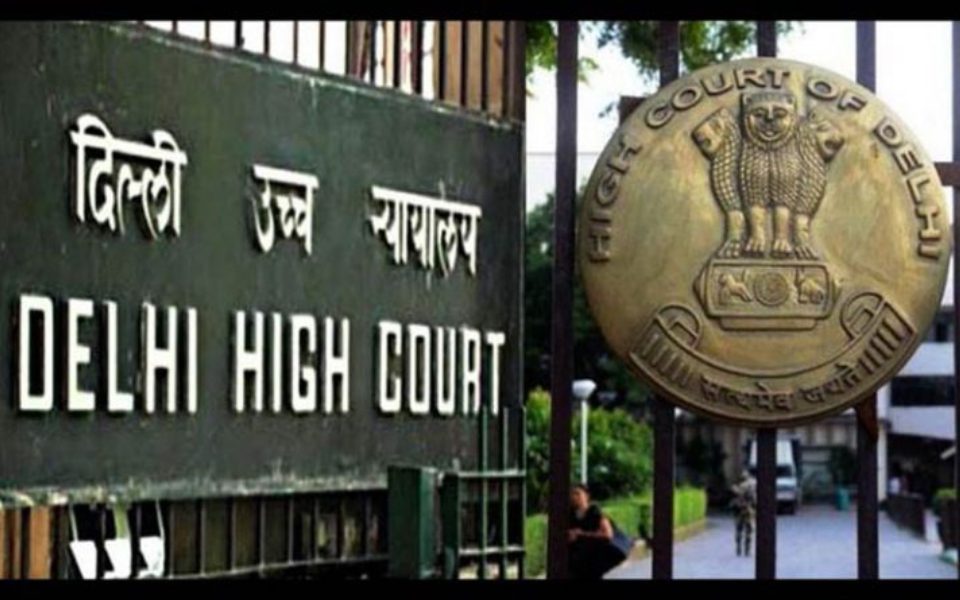
New Delhi, Mar 7: A ration card is issued exclusively for obtaining essential commodities under the public distribution system and it cannot be considered a proof of address or residence, the Delhi High Court has said.
Justice Chandra Dhari Singh, while dealing with petitions by erstwhile residents of Kathputli Colony seeking an alternative accommodation under the rehabilitation scheme following the re-development of the area, held that the requirement of a ration card as a mandatory document to claim benefit under the scheme was arbitrary and illegal.
"As per the definition of the Ration Card, the intent of issuing the same is that it aims to distribute the essential food items by way of the fair price shops. Therefore, it does not amount to becoming an identity proof of residence for any Ration Card holder," said the court in a recent order.
"There is no mechanism set up by the authority issuing Ration Cards to ensure that the holder of the ration card is staying at the address mentioned in the ration card.
"The aim of the ration card is to ensure that the citizens of this country are provided foodgrains at a reasonable price. Hence, it is not a reliable source of proof of address since the scope is limited to distribution of food items by way of the Public Distribution System," the court observed.
The petitioners contended that authorities breached their trust and played fraud on Kathputli Colony slum dwellers by suddenly changing the eligibility criteria in 2015 after the demolition of the entire colony as they wrongly mandated the requirement of a separate ration card for the first-floor dwellers of jhuggi.
The court noted that a gazette notification issued by the Ministry of Consumer Affairs, Food and Public Distribution in 2015 itself disallows the use of a ration card as a document of identity or proof of residence, and in Delhi, fresh ration cards were not being issued on account of it having exhausted its state-wise ceiling of number of eligible households as per the 2011 census.
Remarking that authorities should have "introspected" into the intent and motive behind the issuance of ration cards as well as the harassment and pain caused to the petitioners, the court stated, "The requirement of a Ration Card as a mandatory document to be produced before the respondent as a proof to claim that first floor of the jhuggi is a separate dwelling unit is arbitrary and illegal".
"The respondent should have exercised due caution and care before adhering to such a requirement. It should take a fair and realistic view of the circumstances before it.. the actions of the respondent are in clear violation of the petitioners' right to shelter as enshrined under Article 21 of the Constitution of India," stated the court.
The court directed authorities to allocate an alternative dwelling unit in favour of the petitioners, subject to the condition that they produce other relevant documents as per the Delhi Slum & JJ Rehabilitation and Relocation Policy, 2015 and meet necessary requirements.
"This court is also of the view that the petitioners' right to housing shall be kept at the highest pedestal. It is one of the safeguards provided in our Constitution and the legacy has been carried forward by the writ Court by way of various judicial precedents which reiterate the same," the court asserted.
Let the Truth be known. If you read VB and like VB, please be a VB Supporter and Help us deliver the Truth to one and all.
Late flourish masks CSK’s batting woes on lively Chepauk track, hosts post 158/7

Chennai (PTI): Bowlers calling the shots in a format dominated by big hitters is a rarity, but that script played out at Chepauk on Sunday as Gujarat Titans exploited a lively, bounce-friendly surface to stifle Chennai Super Kings before the hosts managed a late flourish to reach 158 for 7.
On a pitch that offered sharp carry, stroke-making demanded discretion and adaptability. Instead, CSK’s batters often opted for high-risk shots without fully assessing conditions, and paid the price with a flurry of miscued dismissals.
Invited to bat, CSK never quite found rhythm but skipper Ruturaj Gaikwad’s maiden half-century (74 not out) of the current IPL season lent a semblance of respectability to the total in a season where 200-plus scores have become commonplace.
Gaikwad's knock came off 60 balls with six fours and four sixes after a laboured start.
The tone was set early by GT pacer Mohammed Siraj, who extracted steep bounce and forced errors.
Sanju Samson (11) began watchfully, negotiating the first over before opening up against Kagiso Rabada to bring up his 5000 IPL runs milestone. However, Rabada’s bounce soon accounted for him as a hard slash outside off resulted in a faint edge that Jos Buttler pouched safely.
The dismissal triggered a collapse. Urvil Patel (4) fell in the same Rabada over attempting an ambitious pull, while Sarfaraz Khan (0) succumbed to Siraj’s extra lift, mistiming a short ball to offer a simple catch.
At 28 for 3 inside the Powerplay, CSK were already in trouble.
Gaikwad and Dewald Brevis (2) needed to rebuild, but the latter’s impatience against spinner Manav Suthar led to his downfall, holing out after failing to get to the pitch of the ball.
The mounting wickets forced Gaikwad into a shell — an approach that, while understandable, further stalled the momentum. His reluctance to improvise allowed dot balls to pile up, with CSK reaching 50 only in the 12th over.
The skipper eventually broke free, taking on Arshad Khan and Jason Holder with a couple of towering sixes, but the acceleration came too late.
Shivam Dube, dropped thrice on 6, 11 and 22, struggled for fluency before Arshad cleaned him up.
Kartik Sharma (15) and Jamie Overton (18) provided late impetus with a few lusty hits, but the damage had already been done.
On a pitch that rewarded discipline and smart shot selection, Titans' bowlers executed their plans to perfection, while CSK’s batters failed to read the conditions in time, a lapse that ultimately defined the innings.