Ravish Kumar denies deepfake allegations by Dainik Bhaskar journalist over fighter pilot inquiry
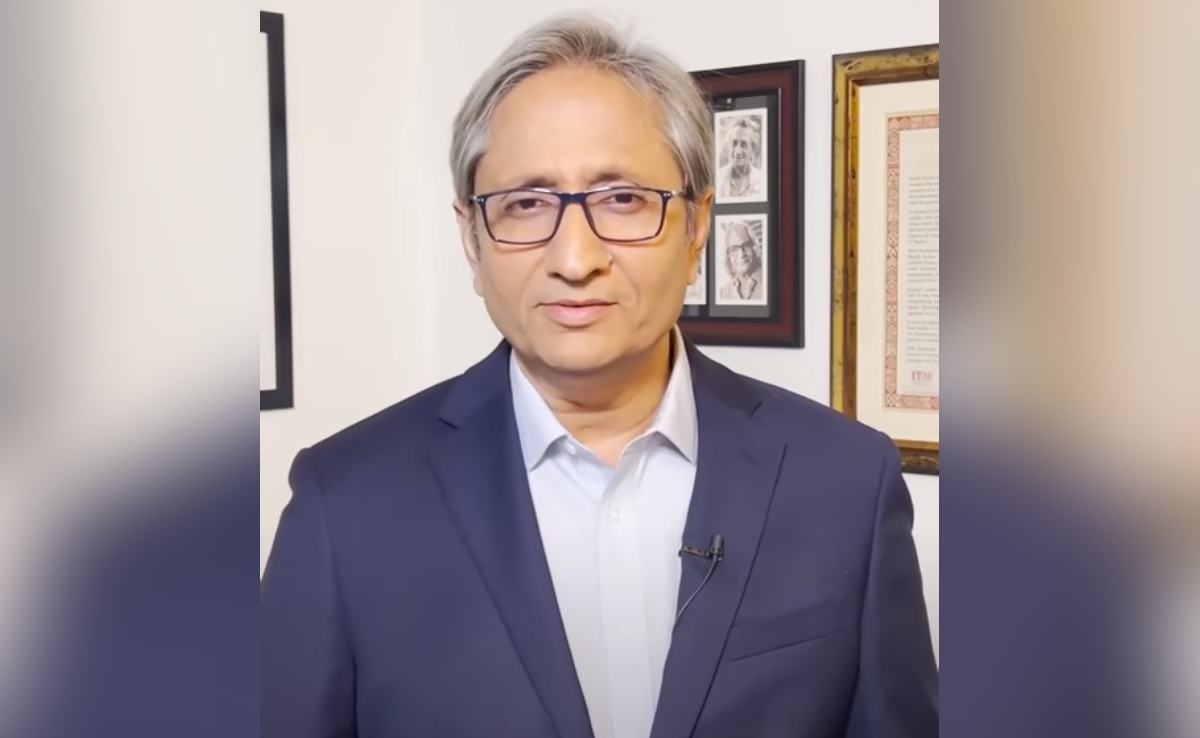
New Delhi: A controversy has erupted on social media following accusations made by Mukesh Kaushik, a journalist with Dainik Bhaskar, against journalist Ravish Kumar. Kaushik alleged that Kumar and other YouTubers were questioning the whereabouts of Squadron Leader Shivangi Singh, a Rafale fighter pilot, after "Operation Sindoor" on May 7th, 2025.
Mukesh Kaushik shared his claims on Facebook, along with a screenshot of a Dainik Bhaskar article dated June 8th, 2025. The article reported that the Indian Air Force had dismissed Pakistani claims regarding the pilot and confirmed that Squadron Leader Singh remains on active duty. The report also mentioned that some Indian YouTubers, particularly in her hometown of Banaras, had raised concerns about her visibility.
Ravish Kumar strongly refuted these allegations through a post on X. He asserted that he had never raised any questions about Squadron Leader Shivangi Singh and that the video in question is a "deep fake." Kumar stated that he is not even familiar with the name and had previously clarified that he did not create any such video, labeling it as a manipulated fabrication.
Kumar criticised Mukesh Kaushik for propagating "fake news on fake news" by associating his name with the deceptive video. He implied that Kaushik should have been able to discern the deep fake and perhaps lacked awareness of Kumar's official online presence on YouTube and Twitter.
Ravish Kumar further accused Kaushik of falsely attributing the spread of misinformation to him. He suggested that Kaushik should examine the deep fake video more carefully and recommended he read a Washington Post report to understand the actions of certain media outlets.
दैनिक भास्कर के पत्रकार मुकेश कौशिक ने लिखा है कि मैंने स्क्वाड्रन लीडर शिवानी सिंह को लेकर सवाल उठाए हैं। मैं न तो इस नाम से परिचित हूँ और न सवाल उठाए हैं। किसी ने डीप फेक का इस्तेमाल कर मेरे नाम और चेहरे से वीडियो बनाया है। कल ही ट्वीट किया था कि मैंने शिवानी सिंह पर कोई वीडियो… pic.twitter.com/cAhrrUmCGs
— ravish kumar (@ravishndtv) June 9, 2025
Earlier, Ravish Kumar had also posted about the existence of deep fake videos using his image and voice, alerting his followers and YouTube to the issue.
ये डीप फेक है। मैंने ऐसा कोई वीडियो नहीं बनाया है। ऐसे कई वीडियो चैनल बन गए हैं जो मेरी आवाज़ और तस्वीर का इस्तेमाल करते हैं । @YouTube @YouTubeIndia https://t.co/oiGiIrg403
— ravish kumar (@ravishndtv) June 7, 2025
The exchange also drew reaction from other journalists, with Shyam Meera Singh expressing his opinion that Mukesh Kaushik's post reflected frustration with Ravish Kumar's popularity.
जो “लहजा और ताप” मुकेश कौशिक जी ने इस्तेमाल किया है उससे पता लगता है वे आपकी लोकप्रियता से कितने कुंठित हैं। मीडिया में ऐसे लोगों की कमी नहीं है जिन्हें नाली की मक्खियाँ भी छूने नहीं आतीं, मगर उनका दुख हिमालय पर्वत से बड़ा है।
— Shyam Meera Singh (@ShyamMeeraSingh) June 9, 2025
Let the Truth be known. If you read VB and like VB, please be a VB Supporter and Help us deliver the Truth to one and all.
NCW chief condemns rape-murder of 4-year-old girl in Pune, calls for swift action
New Delhi (PTI): National Commission for Women (NCW) Chairperson Vijaya Rahatkar has condemned the alleged rape and murder of a four-year-old girl in Maharashtra's Pune, calling it "deeply distressing" and a "blot on humanity".
The girl was allegedly raped and killed by a 65-year-old labourer, who has a criminal record, in Bhor tehsil of Pune on Friday. The accused allegedly lured the child to a cattle enclosure on the pretext of giving her food. After raping her, he killed her by hitting her with a stone, according to police.
The accused has been arrested.
In a post on X on Saturday, Rahatkar said the incident in the Nasrapur area in Pune was heartbreaking and has shaken society.
"The brutal torture and murder of a four-year-old innocent girl in Nasrapur (Bhor, Pune) is deeply painful, heartbreaking, and shocking. It is a blot on humanity," she said.
She said Pune Rural police has arrested the accused and noted that Maharashtra Chief Minister Devendra Fadnavis and Deputy Chief Minister Sunetra Pawar have assured strict action in the case.
Rahatkar said the NCW has taken cognisance of the matter and written to the National Commission for Protection of Child Rights (NCPCR), requesting the body to ensure necessary and prompt action.
It has also been recommended that the case be pursued under stringent provisions of the Protection of Children from Sexual Offences (POCSO) Act and be closely monitored from the filing of the chargesheet to proceedings in a fast-track special court to ensure time-bound justice, she added.
Ensuring justice for the victim and stringent punishment for the accused is a collective responsibility, the NCW chairperson underlined.
In a post on X, the NCW said it has taken suo motu cognisance of the extremely "heinous" incident.
"This heinous crime causes profound pain and outrage, and it highlights serious concerns regarding the safety of young girls," it said.
Strongly condemning this grave "inhuman act", the NCW said such crimes constitute a serious violation of children's rights and raise questions about society's security system.