RBI allows loan restructuring for individuals, MSMEs hit by fresh COVID-19 wave
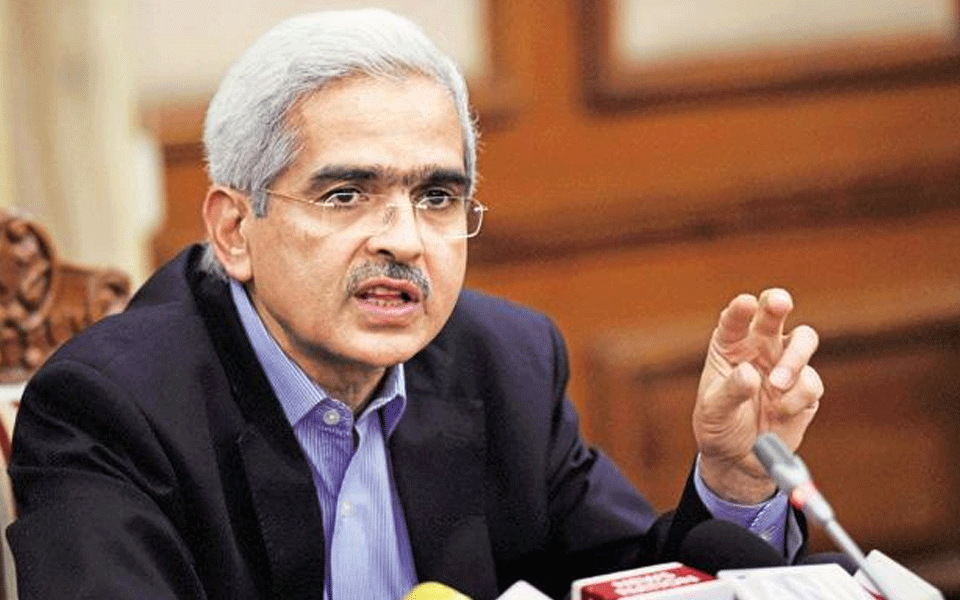
Mumbai: Reserve Bank on Wednesday announced a slew of measures including loan restructuring for individual and small businesses hit hard by fresh COVID-19 wave.
To augment supply of goods for COVID care, the central bank opened Rs 50,000 crore on-tap window to ease access to emergency health services to boost provision of immediate liquidity for ramping up COVID-19 related healthcare infrastructure and services in the country.
"Banks are being incentivised for quick delivery of credit under the scheme, through extension of priority sector classification to such lending... and these loans will continue to be classified under priority sector till repayment or maturity, whichever is earlier," RBI Governor Shaktikanta Das said an unscheduled press briefing.
This liquidity window is being opened till March 31, 2022, he said, adding that under the scheme, banks can provide fresh lending support to a wide ranging of entities including vaccine manufacturers, importers and suppliers of vaccine and medical devices, hospitals and dispensaries and suppliers of oxygen and ventilators importers and also patients for treatment.
With regard to restructuring he said, borrowers that are individuals and micro, small and medium enterprises (MSMEs) having an aggregate exposure of up to Rs 25 crore would be considered for the new scheme.
This would be for those who have not availed restructuring under any of the earlier frameworks, including the Resolution Framework 1.0 of RBI dated August 6, 2020, and who are classified as standard as on March 31, 2021, shall be eligible for the Resolution Framework 2.0, he said.
Under the proposed framework, bank may be invoked up to September 30, and shall have to be implemented within 90 days after invocation, he added.
RBI has also introduced Rs 10,000-crore special long-term repo operation for small finance banks. Under this, loans up to Rs 10 lakh to MSMEs will be considered as priority sector lending, Das said.
Das also announced relaxation in overdraft facility for state governments to enable them to better manage their fiscal situation in terms of their cash flows and market borrowing.
Now the maximum number of days of overdraft, that are only in a quarter, have been increased from 36 to 50 days.
RBI also announced rationalisation of certain components of the extent know-your-customer (KYC) norms for enhancing customer convenience.
These include extending the scope to video KYC known as video based customer identification process, he said.
Further, keeping in view the COVID-19 related restrictions in various parts of the country, RBI regulated entities have been asked that for the customer accounts were periodic KYC updating is new or pending, "no punitive restriction on operation of customer accounts" will be imposed till December 31, 2021, unless warranted, due to any other reason.
Let the Truth be known. If you read VB and like VB, please be a VB Supporter and Help us deliver the Truth to one and all.
Allahabad HC orders probe into 'reinstatement' of teacher in UP's Barabanki
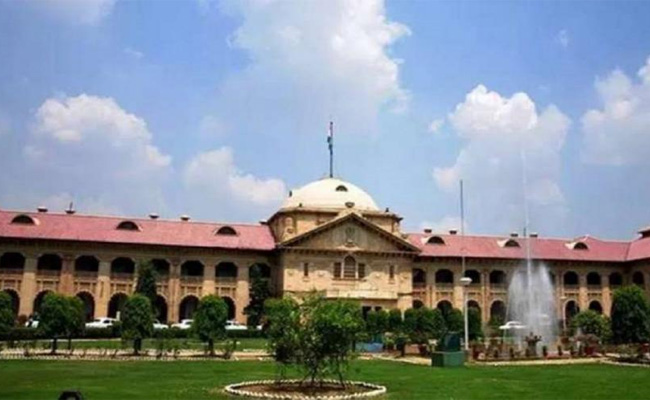
Lucknow (PTI): The Lucknow Bench of the Allahabad High Court on Friday ordered a probe by the special task force (STF) into alleged irregularities in the rejoining of a teacher at City Intermediate College in Barabanki, observing that the reinstatement appeared to be prima facie illegal.
The court also directed the recovery of the salary paid to the teacher during the disputed period.
A bench of Justice Rajeev Singh passed the order on a petition filed by the college management committee. The court expressed doubts over the roles of the District Inspector of Schools (DIOS), Barabanki, the college principal and the teacher concerned and hence, directed a detailed inquiry into the matter.
Taking note of alleged manipulation of records and misleading submissions, the court ordered the immediate transfer of the Barabanki DIOS to ensure a fair probe. It also directed the initiation of disciplinary proceedings against the then joint director of education of the Ayodhya division.
In its order, the court found that the teacher, Abhay Kumar, was initially appointed as an assistant teacher in 2018 but joined an Eklavya Model Residential School in Chhattisgarh as a lecturer in June 2024 without obtaining permission from the management. His subsequent request to retain the lien was rejected.
Despite this, he was allowed to rejoin the Barabanki College in September 2025 on the directions of the joint director of education and the DIOS, and was even paid the salary for October 2025. The court termed the rejoining "wholly illegal" and lacking any legal basis.
The bench also expressed concern over lapses in communication within the education department and directed the Uttar Pradesh chief secretary to ensure that official orders are communicated through email and WhatsApp as well, to prevent disputes.
The matter is next listed for hearing on May 28 when a compliance report is sought.