RBI bars banks from levying penal interest, allows them to impose "reasonable" penal charges
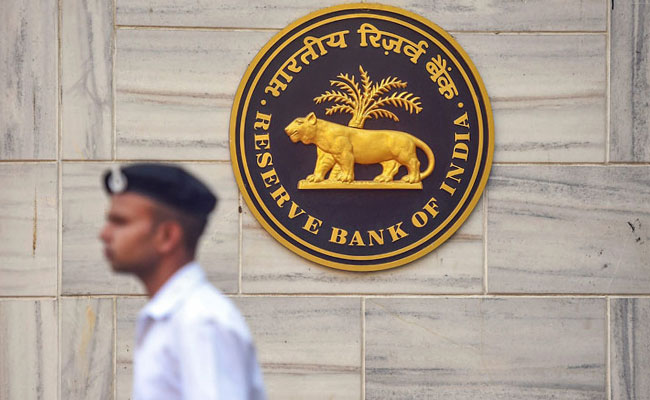
Mumbai (PTI): Concerned over the practice of banks and Non-Banking Financial Companies (NBFCs) using penal interest as a revenue enhancement tool, the Reserve Bank on Friday came out with modified norms, under which lenders would be able to levy only "reasonable" penal charges in case of default in repayment of loans.
The banks and other lending institutions will not be allowed to levy penal interest with effect from January 1, 2024, the RBI said in its notification on 'Fair Lending Practice-Penal Charges in Loan Accounts'.
"Penalty, if charged, for non-compliance of material terms and conditions of loan contract by the borrower shall be treated as 'penal charges' and shall not be levied in the form of 'penal interest' that is added to the rate of interest charged on the advances," RBI said in a notification.
It further said the quantum of penal charges "shall be reasonable and commensurate with the noncompliance" of material terms and conditions of loan contract without being discriminatory within a particular loan/product category.
Also, there shall be no capitalisation of penal charges -- no further interest computed on such charges.
However, the instructions will not apply to credit cards, external commercial borrowings, trade credits and structured obligations which are covered under product-specific directions, the RBI said.
The RBI said that many entities regulated by it use penal rates of interest, over and above the applicable interest rates, in case of defaults/non-compliance by the borrower.
"The intent of levying penal interest/charges is essentially to inculcate a sense of credit discipline and such charges are not meant to be used as a revenue enhancement tool over and above the contracted rate of interest," the Central bank said.
However, supervisory reviews have indicated divergent practices amongst the entities regulated by entities with regard to levy of penal interest/charges leading to customer grievances and disputes, it said, while issuing the modified norms.
Let the Truth be known. If you read VB and like VB, please be a VB Supporter and Help us deliver the Truth to one and all.
Two injuries, one DNF, a DQ as India end messy World Relays campaign

Gaborone (Botswana) (PTI): Amoj Jacob and Ragul Kumar got injured during the men's 4x400m and 4x100 races respectively as India ended their World Athletics Relays campaign in disappointment on the second day of competitions here on Sunday.
The Indian camp had high hopes of making the 2027 World Championships in the men's 4x400m relay but the team did not finish (DNF) the race as Jacob suffered cramps and pulled out of the race after taking the baton from the first leg runner Dharamveer Choudhary. Rajesh Ramesh and Vishal TK were to run in the third and fourth legs.
Those teams which could not qualify for the 2027 Beijing World Championships by reaching the final round of each of the six relay events on Saturday were given another chance in the second qualification round on Sunday.
The top two teams in each of the two heats (in all six relay events) booked the Beijing ticket on Sunday.
India will now have to try and qualify for the World Championships through the Top Lists of the World Athletics, which is a long and tedious process.
In the men's 4x100m race, third leg runner Ragul Kumar fell down the track after failing to hand over the baton inside the exchange zone to fourth leg runner Gurindervir Singh, which clearly showed the lack of coordination among the runners.
Harsh Santosh Raut and Animesh Kujur ran the first two legs.
The Indian quartet was disqualified and Kumar was seen being taken away from the Field of Play with the help of the volunteers.
It was a comedy of errors in the case of the women's 4x100m race, which saw the baton being dropped during an exchange between first leg runner Tamanna and second runner Nithya Gandhe, though the Indians finished the race in 53.09 seconds.
Gandhe started running quite a distance, but after realising that the baton was not in her hand, she turned and ran back to pick it up.
The only silver-lining for the Indian contingent was the national record time in the mixed 4x100m relay race, though the quartet of Ragul Kumar, Nithya Gandhe, Animesh Kujur and Sneha SS finished sixth in heat number two with a time of 41.35 seconds, bettering the previous national mark of 42.30 seconds set in March in Chandigarh.
The mixed 4x400m relay quartet of Theerthesh P Shetty, Kumari Saloni, Nihal William and Rashdeep Kaur ended at fifth in heat number one with a time of 3 minutes and 19.40 seconds.
On Saturday, all the five Indian relay teams had failed to make it to the respective final rounds and thus missed out on the 2027 World Championships berths.