RBI data shows 88% fall in funds flow to commercial sector in April-September
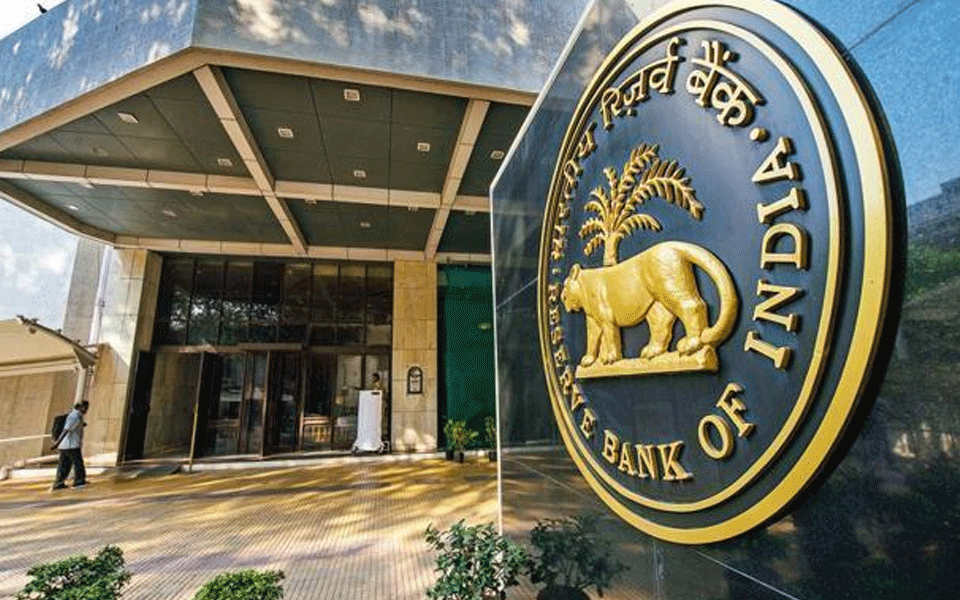
New Delhi: Fund flows from lending institutions to the commercial sector have declined as much as 88% till mid-September in this financial year, the Reserve Bank of India said in a report on Friday. Such flows collapsed from Rs 7.36 lakh crore between April and mid-September 2018 to Rs 90,995 crore in the same period this year.
This indicates a slowdown in investment activity, which can be attributed to risk aversion and demand slowdown, the central bank said in the Monetary Policy Report for October. Global uncertainties have also weakened domestic investment activity, according to the report.
In the April to mid-September period in 2018, non-banking financial companies lent Rs 41,200 crore to the commercial sector, but this year, the flow reversed – Rs 1.26 lakh crore moved from the commercial sector to the NBFCs. Non-food credit flow from banks also reversed, from Rs 1.65 lakh crore going to the commercial sector to Rs 93,688 crore going to the banks. Among non-banking lenders, public issues by non-financial entities rose over nine times to Rs 58,326 crore.
India’s economy has been faltering in the last few quarters. Economic growth rate slipped to 5% in the April-June quarter, the lowest in over six years, and the outlook is not too good. The Reserve Bank of India on Friday lowered the economic growth rate forecast to 6.1% for this year from 6.9%. International agencies have also revised the projections down.
Core sectors such as automobiles and manufacturing have witnessed a progressive slowdown because of weakened consumer demand and dearth of investments. The government has announced multiple measures to boost the economy in recent weeks.
Courtesy: scroll.in
Let the Truth be known. If you read VB and like VB, please be a VB Supporter and Help us deliver the Truth to one and all.
Man arrested with Rs 2.54-crore heroin in Mumbai

Mumbai (PTI): Police have arrested a man and seized over 500 grams of heroin worth Rs 2.54 crore in the illicit market from him in Mumbai, officials said on Friday.
The police's Anti-Narcotics Cell (ANC) made the drug seizure in Santacruz in the western suburbs. The operation was conducted by the Kandivali unit of the ANC on Thursday as part of a special crackdown against drug trafficking in the area, they said.
Acting on specific inputs, an ANC team conducted a raid in Santacruz (East) and intercepted a man. During a search, the team recovered 508 grams of high-grade heroin from his possession, an official said.
The seized contraband, a highly addictive, opioid drug derived from morphine, is estimated to be worth Rs 2.54 crore in the international market, he informed.
Following the seizure, a case was registered against the man under relevant sections of the Narcotic Drugs and Psychotropic Substances (NDPS) Act, 1985, and he was formally placed under arrest in the early hours of Friday.
The police are currently investigating the source of the drug and trying to identify the intended recipients of the consignment, he said.