RBI hikes lending rate by 35 bps to 6.25 pc; home, auto loans to be expensive
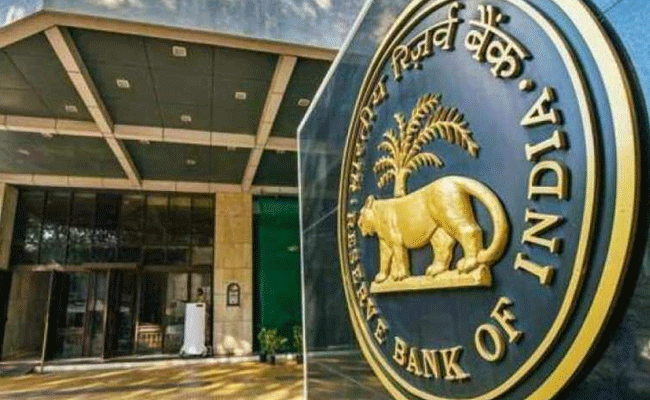
Mumbai (PTI): The Reserve Bank on Wednesday expectedly raised the benchmark lending rate by 35 basis points (bps) - the fifth increase since May - saying it remains focussed on bringing down the inflation to a tolerable limit.
The move to raise the rate will make loans -- including housing, auto -- and corporate credit expensive.
Terming the Indian economy a bright spot in the otherwise gloomy world, the Reserve Bank of India (RBI) lowered its estimate of GDP growth to 6.8 per cent in the fiscal ending March 31, 2023, from an earlier forecast of 7 per cent.
It, however, kept the inflation forecast unchanged at 6.7 per cent for the current fiscal and projected it to come down below the upper tolerance limit of 6 per cent in the fourth quarter of the current financial year.
The Consumer Price Index (CPI) based inflation, which RBI factors in while fixing its benchmark rate, stood at 6.7 per cent in October. Retail inflation has been ruling above the RBI's comfort level of 6 per cent since January this year.
RBI Governor Shaktikanta Das said the central bank remains nimble and flexible in its approach to deal with the price situation.
The six-member monetary policy committee (MPC) headed by RBI Governor raised the key lending rate or the repo rate by 35 basis points to 6.25 per cent.
With the latest hike, the repo rate or the short-term lending rate at which banks borrow from the central bank has now crossed 6 per cent.
This is the fifth consecutive rate hike after a 40 basis points increase in May and 50 basis points hike each in June, August and September. In all, the RBI has raised the benchmark rate by 2.25 per cent since May this year.
Consequently, the standing deposit facility (SDF) rate is adjusted to 6 per cent and the marginal standing facility (MSF) rate and Bank rate to 6.50 per cent.
The MPC also decided to remain focused on the withdrawal of the accommodative stance to ensure that inflation remains within the target going forward while supporting growth.
The panel also decided by a majority -- 5 out of 6 members -- voted to increase the policy repo rate by 35 basis points while Jayanth R Varma voted against the hike.
Das also said the overall liquidity remains in surplus, with average daily absorption under the liquidity adjustment facility (LAF) at Rs 1.4 lakh crore during October-November compared to Rs 2.2 lakh crore in August-September.
On the inflation outlook, the governor said it is expected to be at 6.7 per cent for the current fiscal.
Concerning economic growth, the RBI has slashed its GDP forecast to 6.8 per cent from an earlier estimate of 7 per cent for the current fiscal.
"Growth remains resilient in such a hostile environment...inflation in India is lower than other countries," he said, adding even at the lower GDP growth rate, India will remain among the fastest-growing major economies.
In its last bi-monthly policy review released in September, the RBI had slashed the economic growth projection for the current financial year to 7 per cent from 7.2 per cent earlier on account of extended geopolitical tensions and aggressive monetary policy tightening globally.
Let the Truth be known. If you read VB and like VB, please be a VB Supporter and Help us deliver the Truth to one and all.
Congress using hijab issue to pacify minority anger, alleges Karnataka LoP R Ashoka
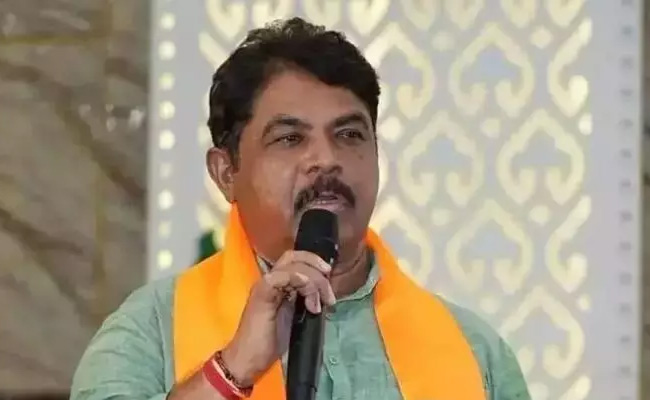
Bengaluru: Leader of Opposition in the Assembly R. Ashoka has accused the Congress government of using the hijab issue to placate what he described as discontent among minority voters after the Davanagere by-election.
In a post on X on Wednesday, Ashoka alleged that the state government, instead of addressing issues such as price rise, corruption, farmers’ distress and law and order, was attempting to retain its minority vote base by reviving the hijab issue.
Referring to the 2022 dress code introduced by the BJP government, which prohibited hijab in schools and colleges, Ashoka said the Karnataka High Court had upheld the policy and emphasised the importance of discipline in educational institutions.
He questioned the Congress government’s move to revisit the issue and asked whether setting aside the court-backed policy to benefit one community could be described as secularism.
Ashoka further alleged that while the government was willing to permit hijab, it continued to prohibit saffron shawls.
He accused the government of dividing students on religious lines rather than treating schools and colleges as spaces of equality.
Drawing a comparison with Mamata Banerjee’s government in West Bengal, Ashoka claimed that excessive appeasement politics had harmed the state and warned that the Congress in Karnataka could face a similar political response.
He said voters in Karnataka would teach the Congress a lesson for what he termed “vote-bank politics” and for compromising constitutional and judicial principles.