RBI keeps interest rates unchanged amid uncertainty over Trump's tariffs
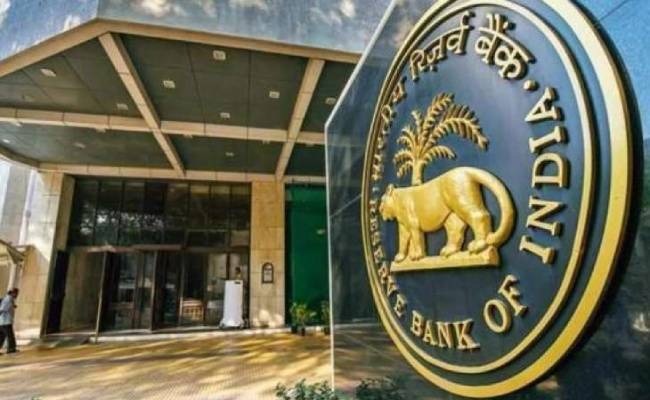
Mumbai(PTI): The Reserve Bank of India (RBI) on Wednesday kept its policy interest rate unchanged at 5.5 per cent for the second consecutive time, citing concerns over tariff uncertainties.
Announcing the fourth bi-monthly monetary policy of the current fiscal, RBI Governor Sanjay Malhotra said the Monetary Policy Committee (MPC) unanimously decided to keep the short-term lending rate or repo rate unchanged at 5.5 per cent with a neutral stance.
While GST rate rationalisation will have a sobering impact on consumption and growth, tariff related developments may slow down the economic expansion in the second half of the current fiscal, he said.
Since February 2025, the RBI has reduced the policy rate by 100 basis points. In its previous policy review in June, it had trimmed the repo rate by 50 basis points to 5.5 per cent.
The central bank has been tasked by the government to ensure that Consumer Price Index (CPI) based retail inflation remains at 4 per cent with a margin of 2 per cent on either side.
Based on the recommendation of the MPC, the RBI reduced the repo rate by 25 bps each in February and April, and 50 basis points in June amidst easing retail inflation.
The retail inflation is trending below 4 per cent since February this year. It eased to a six-year low of 2.07 per cent in August, aided by an easing of food prices and favourable base effect.
Let the Truth be known. If you read VB and like VB, please be a VB Supporter and Help us deliver the Truth to one and all.
Strictest action promised after students forced to remove sacred thread at Bengaluru CET exam centre
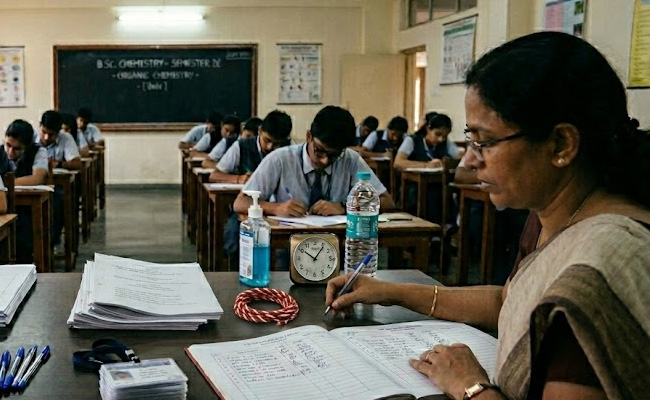
Bengaluru (PTI): Bengaluru Urban Deputy Commissioner Jagadeesha G on Monday said the government has decided to take the “strictest possible action” against those responsible for allegedly forcing some students to remove their ‘janivara’ (sacred thread) before entering the venue of the CET exam last week.
He said a committee of senior officials constituted to inquire into the incident reported that, prima facie, it appears the students were “intentionally” made to remove the ‘janivara’.
The city police have already booked three staff members of a private college in Bengaluru for allegedly forcing some students to remove their ‘janivara’ before entering the venue of the Common Entrance Test (CET-2026) last week.
Similar incidents last year in Shivamogga and Bidar had triggered controversy, following which the Karnataka Examinations Authority (KEA) issued clear directions not to force students to remove any religious identification or symbol during exams.
“Despite KEA taking measures such as appointing dress code officials and providing training on dos and don’ts to prevent such incidents from recurring after last year’s cases, there has been a dereliction of duty this time,” Jagadeesha told reporters here.
“To take strict action against those responsible, an FIR has been registered, and arrests have been made. An inquiry has been conducted by senior officials, and those responsible have been suspended,” he added.
Stating that the inquiry report has been submitted at the district level, he said it will be forwarded to the government.
Based on the findings, it has also been decided that KEA will not conduct CET exams at the institution where the incident occurred, he added.
“The strictest possible action is being taken by the district administration and the government,” he added.
The deputy commissioner had constituted a committee headed by the additional deputy commissioner to investigate the incident and submit a report within two days.
“Exams have been held at several centres across the state, and nowhere else has this issue occurred. If students were forced to remove ‘janivara’ at this centre, it appears that it was intentional. We have taken it seriously,” he said, adding that strict action has been recommended to ensure such incidents do not recur.
Noting that senior officials were appointed for the inquiry, the DC said that after a thorough investigation and verification—which included statements from students, the school principal, exam observers, CCTV footage, and documents—it prima facie appears that students were intentionally made to remove the ‘janivara’.
“We are recommending strict action. The government has also ordered a detailed police investigation, and an FIR has been registered in connection with the incident,” he added.