RBI springs surprise, keeps interest rates unchanged
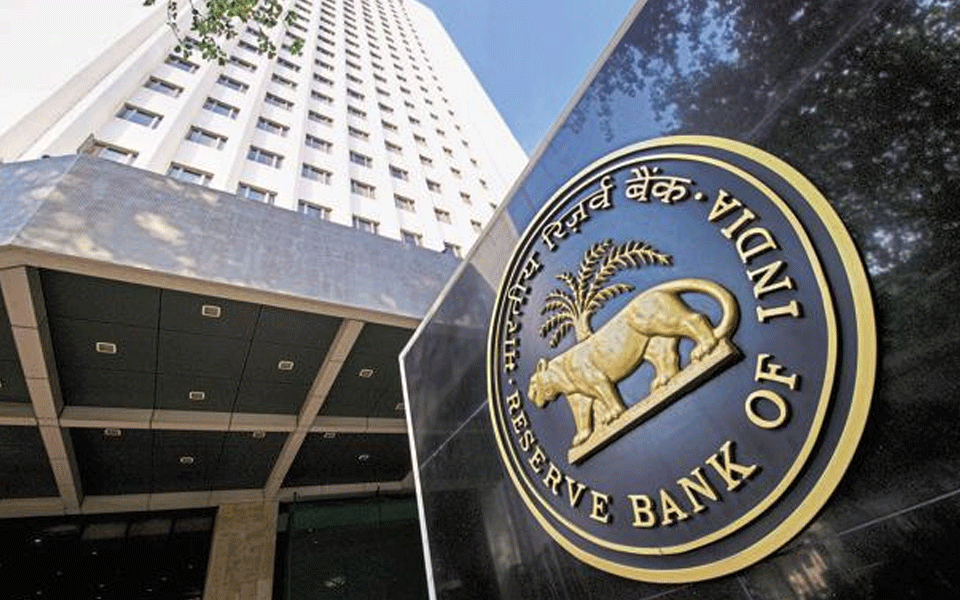
Mumbai, Oct 5 : After back-to-back hike since June, the Reserve Bank of India (RBI) Friday kept interest rates unchanged, surprising markets that had expected a rate hike to support tumbling rupee and combat inflationary pressures from high oil prices.
With five of its six members voting for a status quo, RBI's monetary policy committee (MPC) left repo rate at 6.50 per cent and changed policy stance to 'calibrated tightening' from 'neutral', which RBI Governor Urjit Patel said meant there would be no rate cut in the current cycle.
Vowing to keep the inflation rate under targeted 4 per cent, RBI warned that volatile and rising oil prices, and tightening of global financial conditions pose substantial risks to growth and inflation.
A majority of the analysts and bankers had expected that RBI will raise interest rate by at least a 0.25 per cent with some even rooting for a 0.50 per cent increase in view of the developments over the last few days where rupee had continued to slide and international oil prices hit four-year high.
Soon after the monetary policy announcement, the rupee slid to a new record low, falling past the 74 to a dollar mark, before closing down 0.3 per cent to 73.7650. The domestic unit has fallen 14.5 per cent since January, making it the worst performing major Asian emerging market currency.
"Today's stance of calibrated tightening essentially means that in this rate cycle a rate cut is off the table, and that we are not bound to increase rates at every meeting," Patel told reporters here. "As new data comes in we would look into changing our policies accordingly".
Welcoming the decision of RBI to keep rates unchanged, Economic Affairs Secretary S C Garg said the government's assessment of inflation is in line with the MPC's assessment.
"We believe growth should turn out to be higher than that projected by MPC," Garg said.
The RBI forecasted GDP growth of 7.4 per cent in the current financial year ending March 31, 2019 and 7.6 per cent in the next.
"The MPC reiterates its commitment to achieving the medium-term target for headline inflation of 4 per cent on a durable basis," the resolution of the MPC after a three-day meet said.
It projected an inflation rate of 4.8 per cent by June 2019, slightly better than the 5.0 per cent August forecast.
The repo rate, at which the RBI lends to the system, will continue to be at 6.5 per cent, the reverse repo, at which it absorbs excess funds, will be at the same level of 6.25 per cent.
The MPC voted 5:1 in favour of a status quo, with only Chetan Ghate voting for a 0.25 per cent hike.
The resolution said actual inflation outcomes have been 'below projections' as the expected seasonal increase in food prices did not materialise and inflation, excluding food and fuel, moderated.
Lowering its inflation projections from the August review, the MPC headed by RBI Governor Urjit Patel said headline inflation is expected to rise to 3.7 per cent by September quarter-end, excluding HRA impact, 3.8-4.5 per cent by the second half of the fiscal and 4.8 per cent by the first quarter of the next fiscal.
He said food inflation, a key component of the inflation basket, has been 'unusually benign' and added that the price situation will be influenced by the hike in minimum support prices, global crude prices, second round impact of the HRA allowance for government employees and currency movement.
However, the RBI warned that "global headwinds in the form of escalating trade tensions, volatile and rising oil prices, and tightening of global financial conditions pose substantial risks to the growth and inflation outlook. It is, therefore, imperative to further strengthen domestic macroeconomic fundamentals".
Taking note of the petroleum price cut on Thursday, the MPC said that the recent excise duty cuts on petrol and diesel will moderate retail inflation.
The government announced a Rs 2.50 per litre cut in petrol and diesel prices after it reduced excise duty by Rs 1.50 a litre and asked oil companies to absorb another Re 1.
The hike in minimum support prices for the winter crop was announced by the government Wednesday.
Rising protectionist tendencies, threats of currency wars and policy normalisation in the US pose the biggest risks for domestic growth prospects, it said.
RBI's study of professional forecasters put the inflation at 4.5 per cent by March quarter and go up further to 5.1 per cent by March 2020 quarter.
A surge in oil prices to USD 88 from the present USD 86 can push the headline inflation number up by 0.20 per cent and dent growth by 0.15 per cent, it said.
The RBI has hiked rates twice in the last two policy reviews by 0.25 per cent.
The headline inflation for August softened to 3.69 per cent in August as against 4.17 per cent in July. The medium-term target set for the RBI by the government is 4 per cent.
The six-member MPC led by the RBI governor began its three-day meeting on October 3. The rupee has been depreciating to new lows as against the US dollar along with the global crude prices breached the USD 86 to a barrel mark.
The government and RBI have taken a slew of measures to arrest the slide, but those have been termed as ineffective by analysts.
The rupee depreciation is due to the overall strengthening of the US dollar against local currencies, widening of trade and current account deficits due to higher crude prices, portfolio outflows and risk aversion among portfolio investors, it said.
Let the Truth be known. If you read VB and like VB, please be a VB Supporter and Help us deliver the Truth to one and all.
KSCA expresses disappointment over missing IPL playoffs, says it was ready to host matches in B’luru
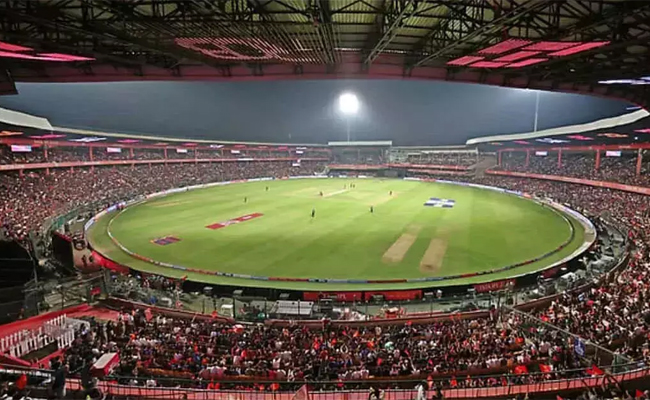
Bengaluru: The Karnataka State Cricket Association (KSCA) has issued a clarification stating that it was fully prepared to host the IPL playoffs and final matches in Bengaluru but the fixtures were allotted to other venues.
In a media note, KSCA said it was disappointed with the decision. The association stated that its president, former India cricketer Venkatesh Prasad, had been in touch with the Board of Control for Cricket in India (BCCI) and had formally conveyed the association’s readiness and interest in hosting the matches at the M. Chinnaswamy Stadium.
KSCA said the IPL matches held in Bengaluru this season were appreciated for smooth conduct, crowd management and overall experience for spectators. It said this reflected its ability to handle high-profile matches.
The association also stated that it had sent a detailed communication to the BCCI explaining its preparedness and the operational arrangements followed during the current IPL season. According to KSCA, these systems have been in place since the start of the Indian Premier League in 2008 and were followed consistently, including during previous playoff matches hosted in Bengaluru.
The clarification added that the communication sent to the BCCI was only meant to provide factual and operational details and to bring clarity on logistical and stakeholder-related requirements involved in hosting such matches.
KSCA said that although it had shown willingness and preparedness, the BCCI has decided to allocate the playoff matches to other venues. It added that the reasons for this decision have not been formally shared with the association, but it respects the authority of the board in taking such decisions.
The association further said it remains ready to host matches of national and international importance and will continue to cooperate with the BCCI, franchises, government authorities and other stakeholders for conducting cricket events.
The statement was issued by KSCA official spokesperson Vinay Mruthyunjaya, who also thanked the media and cricket fans for their continued support.