RBI's views might have delayed crypto bill: Deputy Governor Michael Patra

Mumbai, Feb 23: Reserve Bank Deputy Governor Michael Patra on Wednesday said the central bank's views about cryptocurrencies might have delayed the government's proposed legislation on crypto assets.
Emphasising that the Central Bank Digital Currency (CBDC) will be introduced in FY23 as announced by Finance Minister Nirmala Sitharaman in the Budget speech, Patra said India will proceed very gradually on the subject as there are concerns on privacy, its impact on monetary policy formulation and energy intensity.
The government had plans to introduce a bill on cryptocurrencies like Bitcoin during the Winter Session of Parliament in November-December 2021 but did not introduce it.
"RBI's view is quite known on crypto. I think it is the one of the views that has actually delayed a bill on that subject but we will engage in a fair debate on that subject and will look at all sides of the debate," Patra said, speaking at an event organised by the Pune International Centre.
The central bank is in favour of a complete ban on the speculative assets, saying they hold no underlying value at all, and has also called them a threat to financial stability.
On the CBDC, Patra said there already exists such an instrument on the wholesale front but it is retail where work is required.
"I think we will proceed very gradually. We will cross the river by feeling the pebbles. There are issues of privacy that are involved, there are issues of monetary policy transmission that are involved. There is also an issue of energy intensity of the whole process if it is on a certain kind of technology," he said.
RBI is proceeding "very, very slowly" on the subject and will make calibrated moves in the direction, he noted.
A few weeks ago, former RBI Governor D Subbarao had flagged concerns on privacy on the CBDC front saying the feature to check the entire movement of a single unit of the digital currency makes it susceptible to be tracked and also pointed to the absence of guardrails like a data protection law.
"Why should RBI or the government know how much ice cream I buy every month? or what luxury brands I patronise? So, there is a certain level of discomfort and I think if you have CBDCs, you have to have very robust data protection laws which are credible not only to people within the country but also outside. So, data protection laws are very important in issuing CBDCs," he had said.
"In a country like India where the opposition is very vigorous, there can be fake complaints, or there can be (a) government misusing the data and covering it up. So I can see a lot of political complications coming out of this," the former governor had said.
Let the Truth be known. If you read VB and like VB, please be a VB Supporter and Help us deliver the Truth to one and all.
Congress using hijab issue to pacify minority anger, alleges Karnataka LoP R Ashoka
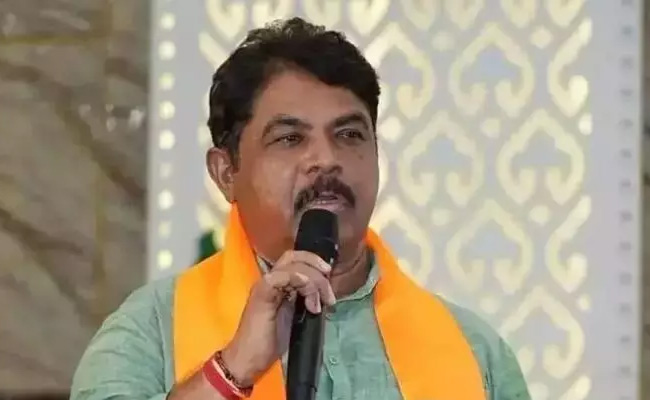
Bengaluru: Leader of Opposition in the Assembly R. Ashoka has accused the Congress government of using the hijab issue to placate what he described as discontent among minority voters after the Davanagere by-election.
In a post on X on Wednesday, Ashoka alleged that the state government, instead of addressing issues such as price rise, corruption, farmers’ distress and law and order, was attempting to retain its minority vote base by reviving the hijab issue.
Referring to the 2022 dress code introduced by the BJP government, which prohibited hijab in schools and colleges, Ashoka said the Karnataka High Court had upheld the policy and emphasised the importance of discipline in educational institutions.
He questioned the Congress government’s move to revisit the issue and asked whether setting aside the court-backed policy to benefit one community could be described as secularism.
Ashoka further alleged that while the government was willing to permit hijab, it continued to prohibit saffron shawls.
He accused the government of dividing students on religious lines rather than treating schools and colleges as spaces of equality.
Drawing a comparison with Mamata Banerjee’s government in West Bengal, Ashoka claimed that excessive appeasement politics had harmed the state and warned that the Congress in Karnataka could face a similar political response.
He said voters in Karnataka would teach the Congress a lesson for what he termed “vote-bank politics” and for compromising constitutional and judicial principles.