RCEP trade negotiations will continue into 2019: Prabhu
New Delhi, Sep 4 : The long-drawn negotiations for the Regional Comprehensive Economic Partnership (RCEP) agreement will continue into 2019 to sort out issues related to goods and services trade among member nations, Commerce Minister Suresh Prabhu said on Tuesday.
The Minister was briefing reporters here following a meeting of trade Ministers of the 16-nation RCEP in Singapore last week, which concluded on Sunday.
The RCEP is being negotiated by 10 Asean nations -- Brunei, Cambodia, Indonesia, Malaysia, Myanmar, Singapore, Thailand, the Philippines, Laos and Vietnam -- and their six free trade agreement (FTA) partners India, China, Japan, South Korea, Australia and New Zealand.
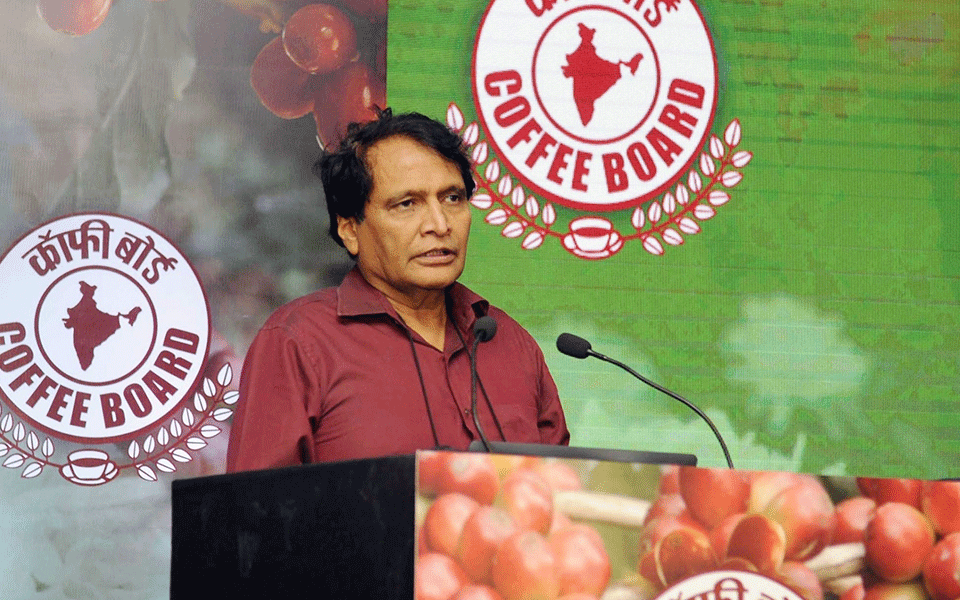
"The RCEP negotiations will not end in 2018. It has been agreed at the level of leaders that it will go on in 2019 as well. We will have the opportunity to work on all the issues," Prabhu said on the sidelines of a promotional event organised by the India Coffee Board.
Of the 16 countries in the proposed multilateral grouping, India does not have FTAs with Australia, New Zealand and China, which pose a hurdle to RCEP negotiations, Prabhu said.
"We cannot negotiate through the RCEP route with these countries... on India's insistence, we will now negotiate with China, Australia and New Zealand separately along with RCEP negotiations."
At the Singapore talks, India was able to convince on the issue of a grace period of more than 20 years before the RCEP guidelines on free trade are implemented, Prabhu said.
He said that custom lines being negotiated would be adopted later after suggestions are received by the Commerce Ministry from all trade associations in the country.
According to the Minister, at the Singapore meeting, India emphasised on three important issues, including linkage of services to goods negotiations since the agreement is a comprehensive one.
"We have emphasised on the inclusion of services under goods in the economic agreement. Our argument has been accepted and now services will also be included under the ambit of RCEP," he said.
India currently has a massive trade deficit with China, while segments of Indian industry have periodically voiced concern that lowering or eliminating import duties for China may flood the Indian markets with goods from the communist country.
Let the Truth be known. If you read VB and like VB, please be a VB Supporter and Help us deliver the Truth to one and all.
18 injured in amusement ride mishap at Jatra Mahotsava in Gadag
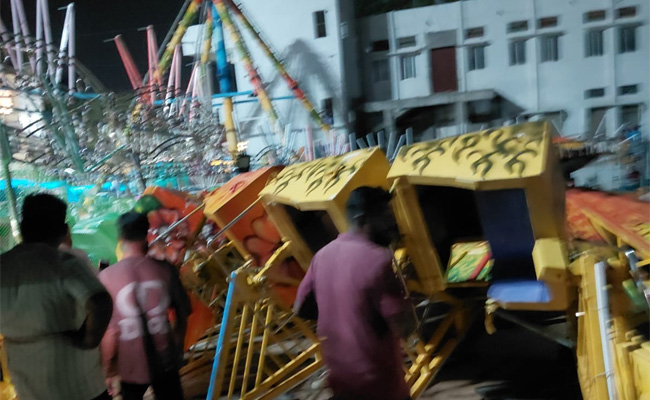
Gadag: At least 18 people were injured, four of them critically, after an amusement ride malfunctioned during the Jatra Mahotsava held at the premises of Tontadarya Mutt on Sunday night.
According to Deccan Herald, the incident occurred around 9 pm when the ‘Dancing Play’ ride (also known as Break Dance or Crazy Dance) reportedly developed a mechanical fault, causing three chairs to tilt dangerously while in motion.
The people inside these chairs were injured and rushed to Gadag Institute of Medical Sciences and Karnataka Medical College and Research Institute (KMC-RI) Hubballi.
Police said that among the injured, two are from Koppal district, one from Tumakuru, and the remaining are from Gadag district. The identities of some victims are yet to be confirmed.
The four victims, who are in critical condition, are severely injured in the head and have been shifted to KMC-RI, officials said.
Meanwhile, members of the Hindu Veerashaiva Lingayat Yuva Vedike staged a protest, demanding strict action against the contractor responsible for organizing the amusement rides, as well as the Jatra Mahotsava committee.