Recruitment of Gorkhas from Nepal to continue under Agnipath scheme: MEA
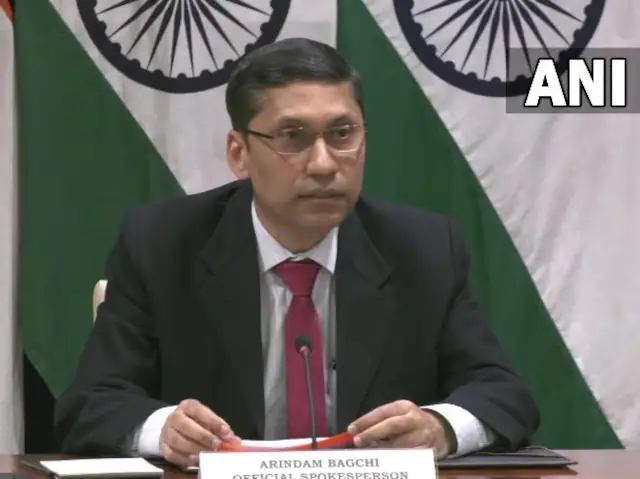
New Delhi, Aug 25: India on Thursday said the Indian Army has been inducting Gorkha soldiers from Nepal for a long time and the exercise will continue under the newly launched Agnipath recruitment scheme.
The comments by External Affairs Ministry spokesperson Arindam Bagchi came amid some apprehensions in Nepal about the age-old induction of Nepali youths into the Indian Army in view of the rollout of the Agnipath scheme.
"We have been recruiting Gorkha soldiers into the Indian Army for a long time and we look forward to continuing recruiting Gorkha soldiers into the Indian Army under the Agnipath scheme," Bagchi said during the weekly media briefing.
The Indian Army's Gorkha regiments have 43 battalions and they comprise Indian soldiers as well as those recruited from Nepal.
The Agnipath scheme, announced on June 14, provides for the recruitment of youths between the age bracket of 17-and-half years to 21 for only four years with a provision to retain 25 per cent of them for 15 more years. Later, the government extended the upper age limit to 23 years for recruitment in 2022.
The personnel to be recruited under the new scheme will be known as 'Agniveers'.
Under the scheme, the three services are planning to recruit 46,000 soldiers this year. A major objective of the scheme is to bring down the average age of military personnel.
To a question on reports of a visit to India by Bangladesh Prime Minister Sheikh Hasina, Bagchi said he did not have any details to share on it.
Asked about the Rohingya issue, he referred to a press statement issued by the Ministry of Home Affairs.
Let the Truth be known. If you read VB and like VB, please be a VB Supporter and Help us deliver the Truth to one and all.
No need for guv: DMK leader Kanimozhi
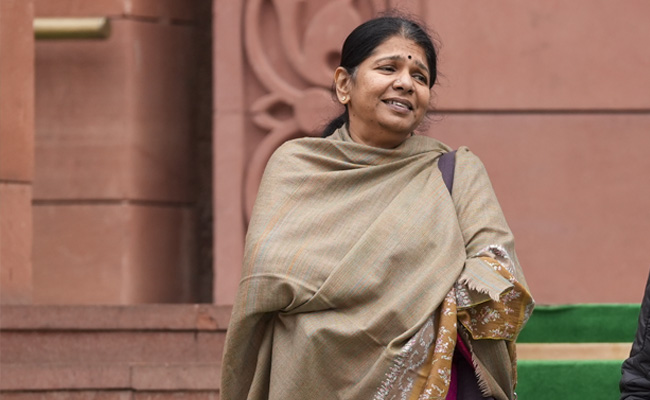
Chennai (PTI): Senior DMK leader Kanimozhi Karunanidhi on Friday reiterated her party’s opposition to the office of the governor amid uncertainty over government formation in Tamil Nadu after a fractured election mandate.
Speaking to PTI Videos, Kanimozhi emphasised that the DMK’s demand for the abolition of the governor’s post remained unchanged, especially as questions arise over constitutional propriety during the current political transition.
"Our position that we do not need a governor at all is something the DMK has never changed at any point in time," she said.
When asked about the governor’s actions following the election results—particularly the delay in inviting the leading party to form the government—Kanimozhi pointed to what she described as the "inherent friction" between the office of the governor and the political interests of the state.
She said the current situation "raises a lot of questions" and requires introspection regarding constitutional procedures.
Kanimozhi described the election results as lacking a "clear mandate", which she identified as the primary reason for the prevailing political uncertainty in the state.
"What the people decide is supreme," she said, adding that while the mandate was not decisive, it must be respected.
The Thoothukudi MP attributed the ongoing delays and "many confusions" to the absence of a decisive majority for any single party.
She firmly dismissed rumours about the DMK potentially supporting the AIADMK from outside to help stabilise the government.
She described such reports as mere "speculation" and "rumours".
"We can’t be responding to every rumour," she said, declining to comment on the AIADMK’s claims regarding its numbers to form the government.
The political situation in Tamil Nadu remains fluid as stakeholders await the governor’s next constitutional step in an Assembly where no party has secured a clear majority.
The DMK and AIADMK—both of which suffered significant losses to the TVK—are reportedly exploring tactical manoeuvres to navigate the hung Assembly.
The TVK, with 108 seats and the support of Congress’s five MLAs, is still short of the majority mark. The DMK and AIADMK secured 59 and 47 seats, respectively.