Reliance stops Russian oil use at its only-for-export refinery to comply with EU sanctions
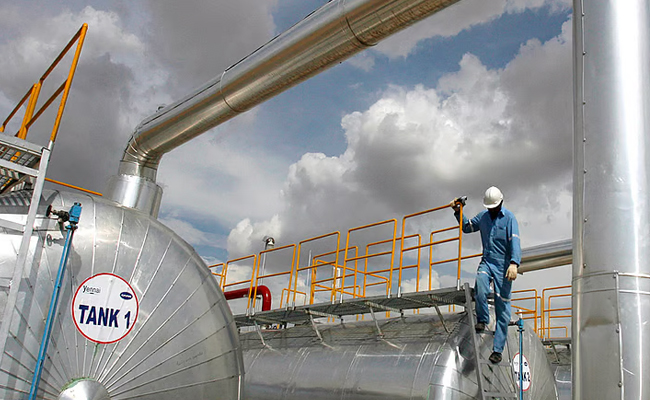
New Delhi (PTI): Reliance Industries Ltd on Thursday said it has halted the use of Russian crude at its export-only refinery in Jamnagar, Gujarat, as the company moves to comply with European Union sanctions.
Reliance is India's largest buyer of Russian oil, which it processes and turns into fuel, such as petrol and diesel, at its giant oil refining complex at Jamnagar.
The complex is made up of two refineries - one SEZ unit from which fuels are exported to the European Union, the US and other markets, and an older unit that caters to the domestic market.
The European Union - a big market for Reliance - has imposed wide-ranging sanctions targeting Russia's energy revenues, including measures that restrict the import and sale of fuels produced from Russian crude oil.
To comply with these, Reliance has stopped processing Russian crude oil at its only-for-exports (SEZ) refinery.
"We have stopped importing Russian crude oil into our SEZ refinery with effect from November 20," a company spokesperson said in a statement.
As is the case with any large industrial factory, the refinery must have past raw material (crude oil) inventories, which it is currently processing and turning into fuels. Once the old inventory runs out, newer products will only be made from non-Russian oil.
"From December 1, all product exports from the SEZ refinery will be obtained from non-Russian crude oil," the firm said.
"The transition has been completed ahead of schedule to ensure full compliance with product-import restrictions coming into force in January 2026."
Last month, when the US sanctioned Russia's largest oil exporters - Rosneft and Lukoil, the firm had stated that it would meet all applicable restrictions and would adjust its refinery operations to meet compliance requirements.
"We have noted the recent restrictions announced by the European Union, the United Kingdom and the United States on crude oil imports from Russia and export of refined products to Europe. Reliance is currently assessing the implications, including the new compliance requirements," Reliance had said on October 24.
Reliance, which operates the world's largest single-site oil refining complex at Jamnagar in Gujarat, purchased about half of the 1.7-1.8 million barrels per day of discounted Russian crude shipped to India.
The company refines the crude into petrol, diesel and aviation turbine fuel (ATF), a large share of which is exported to regions such as Europe and the United States, at market prices, generating strong margins.
All this may change after US President Donald Trump imposed sanctions on Open Joint Stock Company Rosneft Oil Company (Rosneft) and Lukoil OAO (Lukoil) -- Russia's two largest oil companies that he accuses of helping fund the Kremlin's "war machine" in Ukraine.
Additionally, the European Union has barred the import of fuel made from Russian crude, starting January 2026.
"We will comply with the EU's guidelines on the import of refined products into Europe," Reliance had said.
On Thursday, the firm said the crude oil import in SEZ is a fully segregated facility catering to the production line in SEZ.
"All pre-committed liftings of Russian crude oil as of October 22, 2025, are being honoured, considering all transport arrangements were already in place."
"The final such cargo was loaded on November 12. Any (Russian) cargoes arriving on or after November 20 will be received and processed at our refinery in the domestic tariff area (DTA)," it said.
"All operational activities ordinarily incident to such oil supply transactions can be completed, we believe, in a compliant way."
Reliance, which has signed a 25-year deal to buy up to 5,00,000 barrels of crude oil per day (25 million tonnes in a year) with Rosneft, has been cutting Russian imports since the US sanctions.
The company has huge business interests in the US and cannot risk attracting scrutiny.
Reliance, which bought an estimated USD 35 billion worth of Russian oil since the start of the Ukraine war in February 2022, started "recalibration" of its imports soon after the European Union adopted its 18th package of sanctions against Moscow in late July this year.
Recalibration is nothing but moving the import requirement to a different region. And this may get expedited now, industry sources said.
Transactions involving the two sanctioned Russian firms need to be wound down by November 21.
Russia currently supplies nearly a third of India's crude imports, averaging around 1.7 million barrels per day (mbd) in 2025, of which approximately 1.2 mbd came directly from Rosneft and Lukoil.
Most of these volumes were bought by private refiners, Reliance Industries Ltd and Nayara Energy, with smaller allocations to state-owned refiners.
Let the Truth be known. If you read VB and like VB, please be a VB Supporter and Help us deliver the Truth to one and all.
TN Assembly elections: Eight-month pregnant homemaker wins Thiru Vi Ka Nagar seat for TVK

Chennai (PTI): Before giving birth, she had already delivered a mandate—a symbol of hope for Thiru Vi Ka Nagar.
Echoing Delhi’s 2013 “common citizen” political churn associated with the rise of the Aam Aadmi Party (AAP), an eight-month-pregnant homemaker, M R Pallavi, has been elected as an MLA from Chennai’s Thiru Vi Ka Nagar constituency, emerging as one of the notable first-time faces of the Vijay-led TVK in the recently held Tamil Nadu Assembly elections.
In the narrow lanes of Thiru Vi Ka Nagar, a steady stream of media personnel has been making their way to Pallavi’s residence—a scene reminiscent of the result day in Delhi when journalists thronged the modest home of Rakhi Birla, who had won from Mangolpuri on an AAP ticket.
Pallavi, 36, a homemaker educated up to class XII, defeated the DMK candidate K S Ravichandran by a margin of 22,333 votes in the reserved Thiru Vi Ka Nagar Assembly constituency.
Tamilaga Vettri Kazhagam emerged as the single largest party by winning 108 seats, while DMK and AIADMK got 59 and 47, respectively.
Pallavi’s victory has drawn attention due to her personal circumstances. She campaigned extensively while eight months pregnant, going door-to-door to reach voters.
According to local accounts, she even fainted once during the campaign but continued her outreach.
She has not spoken to the media following her victory, as doctors have advised her to rest. Her husband, Rajesh, briefly recounted her campaign efforts.
A self-professed admirer of actor-turned-politician Vijay, Pallavi joined TVK soon after its formation and is now among its first-time legislators.
Doctors have advised her to be hospitalised around May 20, as she is expecting her second child. Ahead of that, voters in Thiru Vi Ka Nagar have entrusted her with representing them in the state Assembly.
Political observers say the rise of candidates like Pallavi signals a possible shift in Tamil Nadu’s political landscape, with voters backing a new party and candidates from non-traditional backgrounds.