Religious discrimination affects followers of all faiths: India at UN

United Nations (PTI): India has said it stands united with the UN members in condemning incidents of religious intolerance against Muslims, as it underlined the need to recognise that religious discrimination is a broader challenge affecting followers of all faiths.
“India is a land of diversity and pluralism. We are home to followers of virtually every major religion in the world and India has been the birthplace of four world religions namely Hinduism, Buddhism, Jainism and Sikhism. With over 200 million of its citizens practising Islam, India is home to one of the largest Muslim populations in the world,” India’s Permanent Representative to the UN Ambassador P Harish said on Friday.
Addressing the informal meeting of the plenary in the UN General Assembly to commemorate the International Day to Combat Islamophobia, Harish said that fostering a world free from religious discrimination, hatred and violence has been a way of life for India since time immemorial.
“We stand united with the UN membership in condemning incidents of religious intolerance against Muslims. However, it is also imperative to recognise that religious discrimination is a broader challenge that affects followers of all faiths,” the Indian envoy said.
“We strongly believe that the path to meaningful progress lies in acknowledging that religio-phobia in its various forms threatens the fabric of our diverse, global society,” he added.
Harish began his statement Friday by conveying greetings on the holy month of Ramadan as well as Holi wishes as the festival of colours was celebrated across India and around the world.
India voiced concern over the disturbing rise in violence targeting places of worship and religious communities. Harish said this can only be countered by sustained commitment and concrete action from all Member States to the principle of equal respect for all faiths.
“All countries must commit to equal treatment of all their citizens and not practice policies that promote religious discrimination. We must also ensure that the education system does not perpetuate stereotypes or encourage bigotry,” Harish said.
Harish said that as the international community observes the day, it is important to "remember that the fight against Islamophobia is inseparable from the broader struggle against religious discrimination in all its forms” and urged nations to work towards a future where every individual, regardless of their faith, can live with dignity, security, and respect.
The UN General Assembly had adopted a resolution sponsored by 60 member-states of the Organisation of Islamic Cooperation (OIC) designating March 15 as the International Day to Combat Islamophobia.
The document stressed that terrorism and violent extremism cannot and should not be associated with any religion, nationality, civilization, or ethnic group.
It called for strengthened international efforts to foster a global dialogue on the promotion of a culture of tolerance and peace at all levels, based on respect for human rights and for the diversity of religions and beliefs.
It strongly deplored all acts of violence against persons on the basis of their religion or belief and such acts directed against their places of worship, as well as all attacks on and in religious places, sites and shrines that are in violation of international law.
Harish underlined that in an increasingly fractured world, the United Nations is envisaged as an entity that rises above differences. The UN derives its credibility from its perseverance to promote peace and security, growth and development.
The work done by the United Nations and its entities in supporting the maintenance of international peace and security, promoting social development, advancing women’s empowerment and fostering capacity building is immense. “In keeping with this core agenda, any deliberation on issues of faith must seek to unite, not divide,” he said.
In his message for the day, UN Secretary-General Antonio Guterres said that as Muslims around the world come together to mark the holy month of Ramadan, “many do so in fear – fear of discrimination, exclusion, and even violence.”
Guterres said the world is witnessing a disturbing rise in anti-Muslim bigotry - from racial profiling and discriminatory policies that violate human rights and dignity, to outright violence against individuals and places of worship.
“This is part of a wider scourge of intolerance, extremist ideologies, and attacks against religious groups and vulnerable populations,” he said.
The UN chief underlined that when one group is attacked, the rights and freedoms of all are at risk.
Urging the global community to reject and eradicate bigotry, Guterres said governments must foster social cohesion and protect religious freedom, and online platforms must curb hate speech and harassment. “We must all speak out against bigotry, xenophobia, and discrimination.”
Let the Truth be known. If you read VB and like VB, please be a VB Supporter and Help us deliver the Truth to one and all.
Sujit Nair raises concerns over speculation of DMK-AIADMK understanding to block TVK
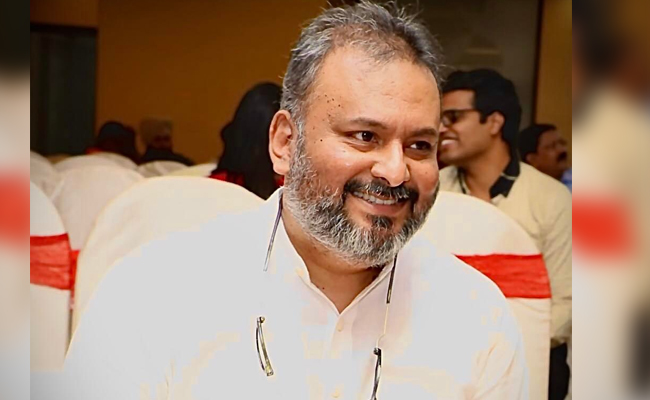
Chennai: Journalist and political commentator Sujit Nair has expressed concern over speculation that the Dravida Munnetra Kazhagam and the All India Anna Dravida Munnetra Kazhagam could explore a post-poll understanding to prevent Vijay-led Tamilaga Vettri Kazhagam from forming the government in Tamil Nadu.
In a social media post, Sujit Nair said the election verdict in Tamil Nadu reflected a clear public demand for political change and argued that the mandate should be respected irrespective of political preferences.
Referring to reports and political discussions surrounding a possible understanding between the DMK and AIADMK, he said he hoped such developments remained only speculative conversations and did not turn into reality.
Nair stated that if such an alliance were to take shape, it would raise serious questions about ideological politics in the country. He said TVK had emerged through a democratic electoral process and that the legitimacy to govern in a parliamentary democracy comes from the people’s verdict.
According to him, attempts to prevent an electoral winner from forming the government through unexpected political arrangements may be constitutionally valid, but many people could view them as politically opportunistic.
He further said that such a move could particularly affect the political image of the DMK, which has historically projected itself around ideology, social justice and opposition politics. Nair said that in ideological terms, the DMK appeared closer to TVK than to the AIADMK, and joining hands with its long-time political rival only to remain in power could weaken its broader political narrative.
He added that the same questions would apply to the AIADMK as well, as the party had spent decades positioning itself against the DMK and such an arrangement could create discomfort among its cadre and supporters.
Drawing a comparison with Maharashtra politics in 2019, Nair said he had expressed similar views when the Shiv Sena formed an alliance with the Indian National Congress and the Nationalist Congress Party after the Assembly elections.
He said post-poll alliances between long-standing political rivals often create a public perception that ideology and electoral mandates become secondary when political power equations come into play.
Nair also said such developments increase public cynicism towards politics and reinforce the belief among voters that ideology is often sidelined after elections.
He maintained that the Tamil Nadu verdict was emphatic and said respecting both the spirit and substance of the mandate was important for the credibility of democratic politics.