Renowned Journalist, author G. N. Ranganatha Rao passes away at 81
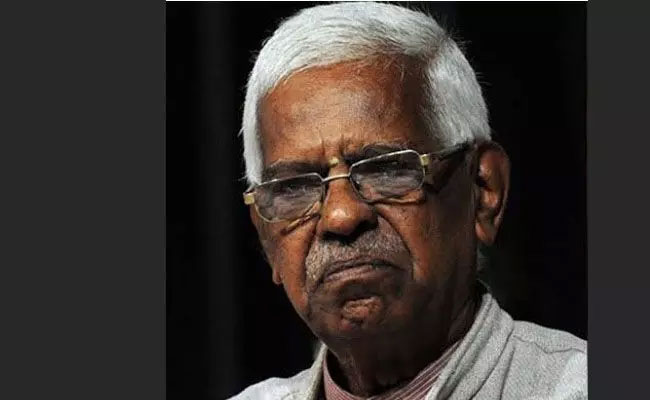
Bengaluru: G. N. Ranganatha Rao, a distinguished journalist, acclaimed writer, and esteemed member of the literary community, breathed his last this morning at the BMS Hospital in Basavanagudi, succumbing to age-related illness. He was 81.
Born in 1942 in Harohalli, Bangalore district, GN Ranganath Rao pursued his education in Hoskote and Bangalore cities. He commenced his illustrious career as the Deputy Editor of Samyukta Karnataka Daily, eventually retiring as the Executive Editor of Prajavani. Following his retirement, he continued to contribute as a translator, columnist, writer, and journalism teacher at Bharatiya Vidya Bhavan. Ranganatha Rao was widely respected for his soft-spoken nature and simplicity, endearing him to colleagues and readers alike.
Ranganatha Rao's literary contributions spanned across various genres, including novels, short stories, plays, and essays.
His remarkable talents and dedication were recognized through several prestigious awards, including the Kadri Shamanna Award in 2009, the Rajyotsava Award in 2018, the Sandesh Award, the Kuvempu Bhashabharati Award, the Karnataka Drama Academy Fellowship, the Teessar Award, the Masti Award, and the Kendra Sahitya Akademi Translation Literature Award.
Chief Minister Siddaramaiah expressed his condolences at the passing of GN Ranganatha Rao. In his message, he remarked, "The news of the demise of senior writer and journalist GN Ranganatha Rao is shocking. Besides serving as the Executive Editor of Prajavani daily, he engaged himself in the field of literature and worked for the upliftment of Nadu Nudi. Ranganatha Rao's passing away is an irreparable loss to the press and the literary sector of the country. May his soul rest in peace and farewell. I pray that God gives the family strength to bear the grief.”
Let the Truth be known. If you read VB and like VB, please be a VB Supporter and Help us deliver the Truth to one and all.
Ladakh a living land of dharma for centuries: Amit Shah
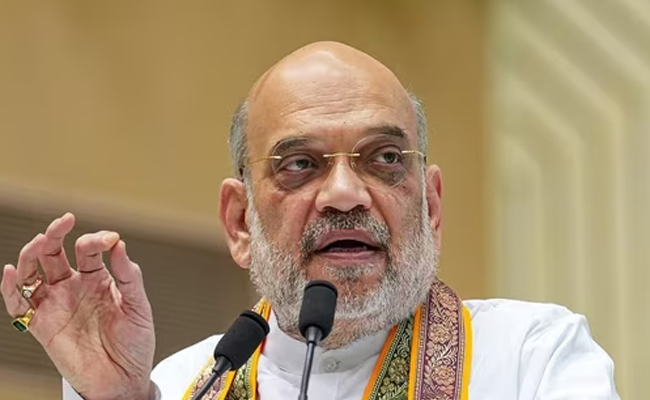
Leh/Jammu (PTI): Union Home Minister Amit Shah on Friday described the return of sacred relics of Lord Buddha to Ladakh after 75 years as a "historic reunion" and said that the Union Territory has remained a "living land of dharma", preserving and nurturing Buddhist knowledge for centuries.
Stressing the relevance of Buddha's teachings in modern times, Shah said the message of peace, compassion and the middle path was even more important today than it was 2,500 years ago.
"Ladakh has been a living land of dharma for centuries. When the Dalai Lama comes here, he says this land is not merely a geographical land but a living laboratory of Buddhist culture and compassion," Shah said, speaking after the inauguration of the sacred holy relics exposition of Tathagata Buddha and the 2569th Buddha Purnima celebrations at Jivetsal in Leh during his two-day visit to Ladakh.
Calling Ladakh a land of compassion, he said this land has preserved and nurtured knowledge. "Whenever Buddhism faced crises, this land worked to protect the teachings of Buddha. And when peace returned, it helped to expand and carry forward that preserved wisdom," he added.
"Unless one internalises knowledge and makes it a part of oneself, liberation is not possible. Knowledge is incomplete without spiritual practice, while spiritual practice without knowledge is blind. Therefore, the union of spiritual practice and knowledge is the right path. Even after all this, if there is no moral discipline, one cannot lead a truly wise life. The basis of a life of wisdom is moral discipline," he said.
Shah said it was through Ladakh and adjoining routes that the teachings of Tathagata Buddha, which originated in India, spread to China and several other countries.
"The message that emerged from the land of Ladakh has become a guiding force for many people around the world to take their lives forward. The presence of these sacred relics in Ladakh reminds us that India's civilisation has, for thousands of years, given the message of peace and coexistence," he said.
He said that in a diverse region like Ladakh and Kargil, this message becomes even more relevant. "This heritage still tells us today that amidst conflict and unrest, only the path of peace and compassion can provide solutions."
He said the return of the relics on Buddha Purnima had enhanced the significance of the festival for the people of Ladakh.
"These sacred relics have come to Ladakh after 75 years. It is as if Buddha himself is present here today," Shah said, adding that followers of Buddhism and people of other faiths in Ladakh and Kargil would draw spiritual energy from the relics.
Highlighting Ladakh's role in the spread of Buddhism, Shah said Kashmir was once an ancient centre of Buddhist studies, Mahayana philosophy and Buddhist art, from where Ladakh first came into close contact with Buddhism.
He said Emperor Ashoka's envoys laid the foundation of Buddhist influence in Ladakh through Kashmir and Gandhara, while Mahayana Buddhism expanded in the region during the Kushan period between the first and third centuries CE.
The Silk Route linking Kashmir, Leh, Yarkand, Khotan and Tibet became a channel not only for trade but also for ideas, monks, manuscripts and artistic traditions, Shah said.
He added that later, Tibetan influence between the seventh and tenth centuries further enriched Ladakh through Mahayana and Vajrayana traditions.
Stressing the relevance of Buddha's teachings in modern times, Shah said the message of peace, compassion and the middle path was even more important today than it was 2,500 years ago.
"Amid conflict and unrest, only the path of peace and compassion can provide solutions," he said.
Shah also appealed to the Ladakh administration to ensure complete arrangements so that followers of all faiths, especially Buddhists, could visit and pay obeisance to the relics.
#WATCH लेह, लद्दाख: केंद्रीय गृह मंत्री अमित शाह ने कहा, "जब दलाई लामा यहां आते हैं तो वे कहते हैं कि यह भूमि केवल भौगोलिक भूमि नहीं है। यह भूमि बौद्ध संस्कृति और करुणा की जीवंत प्रयोगशाला है। इस भूमि पर ज्ञान का संरक्षण हुआ है... भारत की सभ्यता हजारों वर्षों से शांति का संदेश… https://t.co/2nwG0w2CE6 pic.twitter.com/W13itRBqeX
— ANI_HindiNews (@AHindinews) May 1, 2026