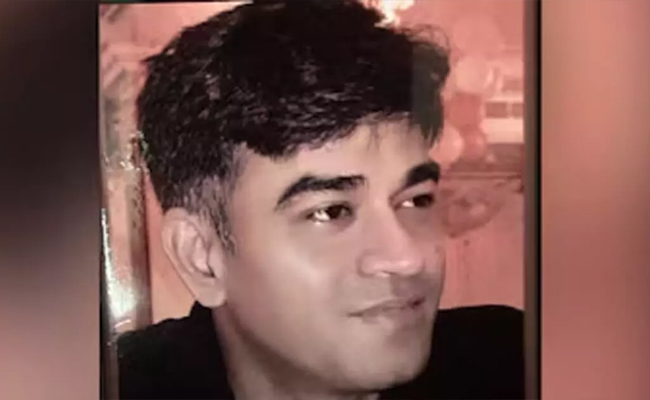
Renowned Odia poet Ramakanta Rath dies at 90
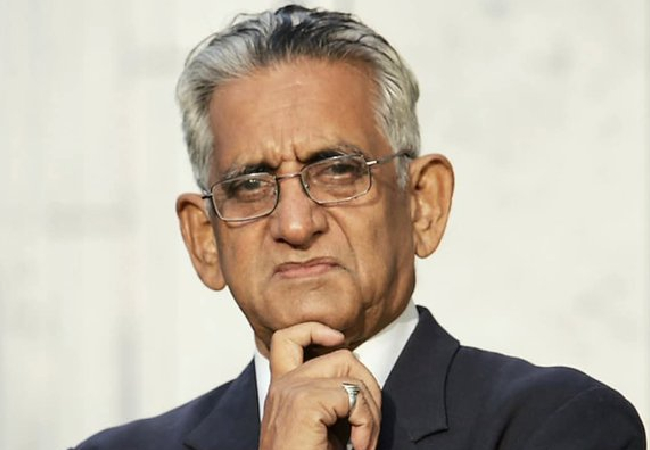
Bhubaneswar: Renowned Odia poet and former bureaucrat Ramakanta Rath died at his residence in Kharvel Nagar area here on Sunday, family sources said. He was 90.
Rath, a Padma Bhushan awardee, was survived by three daughters and a son.
Several leaders and eminent personalities from Odisha mourned the demise of Rath and gathered at his house to pay their last respects.
Expressing deep grief over the demise of Rath, Odisha Chief Minister Mohan Charan Majhi said Ramakanta Rath will always be remembered for his contribution to the Indian administrative service and to the world of literature.
Majhi prayed before Lord Jagannath for heavenly abode of the departed soul and expressed his condolences to the bereaved family.
He also announced that Rath's last rites will be performed with full state honour.
After the arrival of his son from abroad, Rath's last rites will be performed on Monday in Puri Swargadwar, informed the poet's younger daughter.
Rath was born on December 13, 1934 in Cuttack. After completing an MA in English literature from Ravenshaw College (now university), Rath joined the IAS in 1957. He retired as chief secretary of Odisha in 1992 after holding several important posts in both state and central governments.
Some of the major poetry collections of Rath include Kete Dinara (1962), Aneka Kothari (1967), Sandigdha Mrugaya (1971), Saptama Rutu (1977), Sachitra Andhara (1982), Sri Radha (1985), and Sreshtha Kavita (1992). Some of his poetry has been translated to English and other languages.
Rath was honoured with the Sahitya Akademi Award in 1977, the Sarala Award in 1984, the Bishuva Samman in 1990, and the Sahitya Akademi Fellowship in 2009.
In recognition of his outstanding contribution to literature, he was conferred with the Padma Bhushan in 2006.
He also served as the vice president of the Kendra Sahitya Akademi from 1993 to 1998 and the president from 1998 to 2003.
Let the Truth be known. If you read VB and like VB, please be a VB Supporter and Help us deliver the Truth to one and all.
Sujit Nair raises concerns over speculation of DMK-AIADMK understanding to block TVK
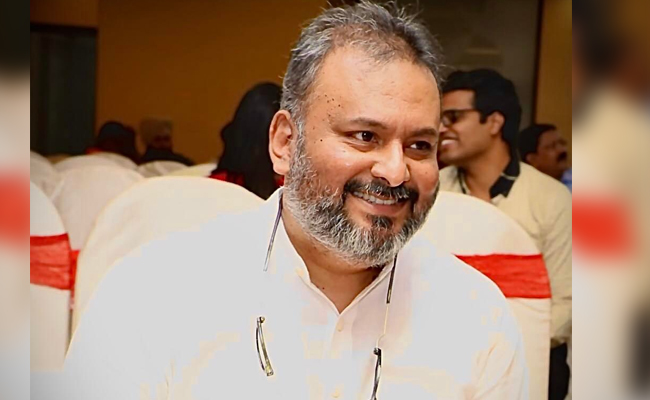
Chennai: Journalist and political commentator Sujit Nair has expressed concern over speculation that the Dravida Munnetra Kazhagam and the All India Anna Dravida Munnetra Kazhagam could explore a post-poll understanding to prevent Vijay-led Tamilaga Vettri Kazhagam from forming the government in Tamil Nadu.
In a social media post, Sujit Nair said the election verdict in Tamil Nadu reflected a clear public demand for political change and argued that the mandate should be respected irrespective of political preferences.
Referring to reports and political discussions surrounding a possible understanding between the DMK and AIADMK, he said he hoped such developments remained only speculative conversations and did not turn into reality.
Nair stated that if such an alliance were to take shape, it would raise serious questions about ideological politics in the country. He said TVK had emerged through a democratic electoral process and that the legitimacy to govern in a parliamentary democracy comes from the people’s verdict.
According to him, attempts to prevent an electoral winner from forming the government through unexpected political arrangements may be constitutionally valid, but many people could view them as politically opportunistic.
He further said that such a move could particularly affect the political image of the DMK, which has historically projected itself around ideology, social justice and opposition politics. Nair said that in ideological terms, the DMK appeared closer to TVK than to the AIADMK, and joining hands with its long-time political rival only to remain in power could weaken its broader political narrative.
He added that the same questions would apply to the AIADMK as well, as the party had spent decades positioning itself against the DMK and such an arrangement could create discomfort among its cadre and supporters.
Drawing a comparison with Maharashtra politics in 2019, Nair said he had expressed similar views when the Shiv Sena formed an alliance with the Indian National Congress and the Nationalist Congress Party after the Assembly elections.
He said post-poll alliances between long-standing political rivals often create a public perception that ideology and electoral mandates become secondary when political power equations come into play.
Nair also said such developments increase public cynicism towards politics and reinforce the belief among voters that ideology is often sidelined after elections.
He maintained that the Tamil Nadu verdict was emphatic and said respecting both the spirit and substance of the mandate was important for the credibility of democratic politics.