Republic Day 2025: 942 police personnel awarded gallantry and service medals
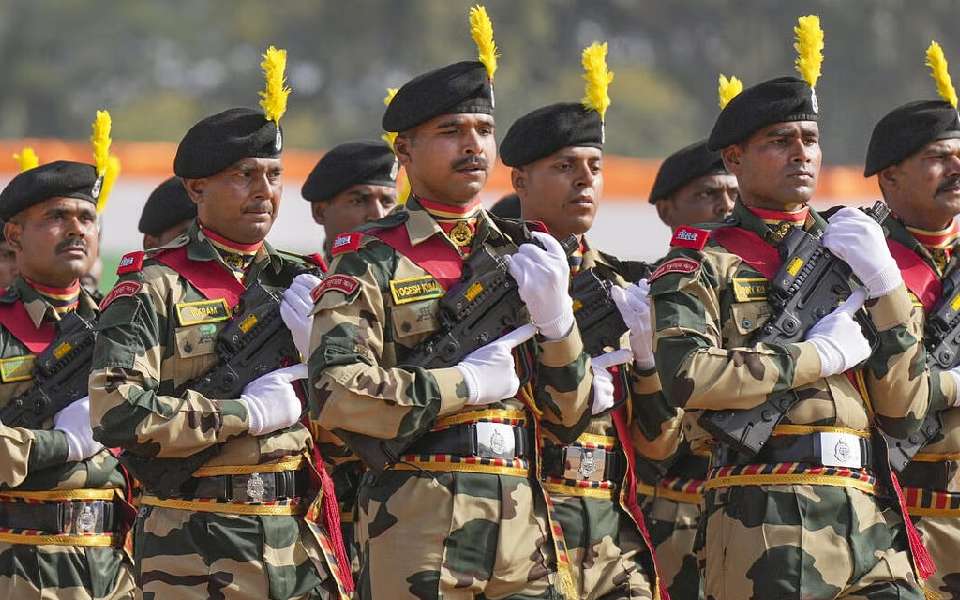
New Delhi, Jan 25 (PTI): A total of 942 police, fire and civil defence personnel have been awarded different categories of gallantry and service medals on the eve of the Republic Day, according to a government statement issued on Saturday.
These include 95 gallantry medals.
The awardees include the personnel of police, fire, home guard and civil defence and those working in correctional services, the Union home ministry said.
Among the gallantry award winners, 28 deployed in Left Wing Extremism-affected areas, 28 in the Jammu and Kashmir region, three in the northeast and 36 posted in other regions are being awarded for their gallant action, it said.
Of the 101 President's Medals for Distinguished Service (PSM), 85 have been awarded to police personnel, five to fire services personnel, seven to civil defence and home guard service and four to correctional service.
Among the 746 Medals for Meritorious Service (MSM), 634 have been awarded to police service, 37 to fire service, 39 to civil defence and home guard service and 36 to correctional service, the statement said.
The Medal for Gallantry (GM) is awarded for a rare conspicuous act of gallantry and a conspicuous act of gallantry respectively in saving life and property or in preventing crime or arresting criminals, the risk incurred being estimated with due regard to the obligations and duties of the officer concerned.
The President's Medal for Distinguished Service (PSM) is awarded for a special distinguished record in service and the Medal for Meritorious Service (MSM) is awarded for valuable service characterised by resource and devotion to duty.
Let the Truth be known. If you read VB and like VB, please be a VB Supporter and Help us deliver the Truth to one and all.
No need for guv: DMK leader Kanimozhi
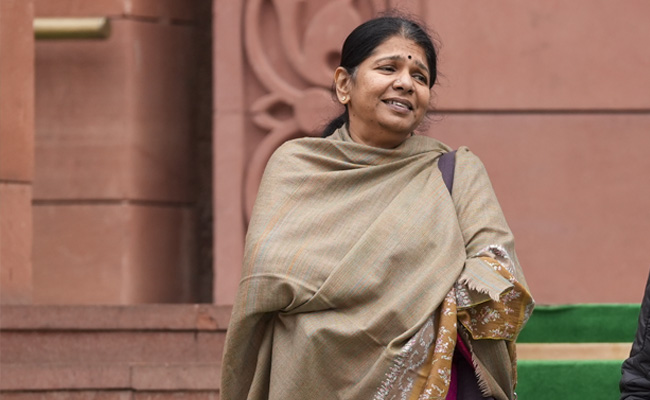
Chennai (PTI): Senior DMK leader Kanimozhi Karunanidhi on Friday reiterated her party’s opposition to the office of the governor amid uncertainty over government formation in Tamil Nadu after a fractured election mandate.
Speaking to PTI Videos, Kanimozhi emphasised that the DMK’s demand for the abolition of the governor’s post remained unchanged, especially as questions arise over constitutional propriety during the current political transition.
"Our position that we do not need a governor at all is something the DMK has never changed at any point in time," she said.
When asked about the governor’s actions following the election results—particularly the delay in inviting the leading party to form the government—Kanimozhi pointed to what she described as the "inherent friction" between the office of the governor and the political interests of the state.
She said the current situation "raises a lot of questions" and requires introspection regarding constitutional procedures.
Kanimozhi described the election results as lacking a "clear mandate", which she identified as the primary reason for the prevailing political uncertainty in the state.
"What the people decide is supreme," she said, adding that while the mandate was not decisive, it must be respected.
The Thoothukudi MP attributed the ongoing delays and "many confusions" to the absence of a decisive majority for any single party.
She firmly dismissed rumours about the DMK potentially supporting the AIADMK from outside to help stabilise the government.
She described such reports as mere "speculation" and "rumours".
"We can’t be responding to every rumour," she said, declining to comment on the AIADMK’s claims regarding its numbers to form the government.
The political situation in Tamil Nadu remains fluid as stakeholders await the governor’s next constitutional step in an Assembly where no party has secured a clear majority.
The DMK and AIADMK—both of which suffered significant losses to the TVK—are reportedly exploring tactical manoeuvres to navigate the hung Assembly.
The TVK, with 108 seats and the support of Congress’s five MLAs, is still short of the majority mark. The DMK and AIADMK secured 59 and 47 seats, respectively.