Research findings need to be translated for better reach: Vice President Venkaiah Naidu
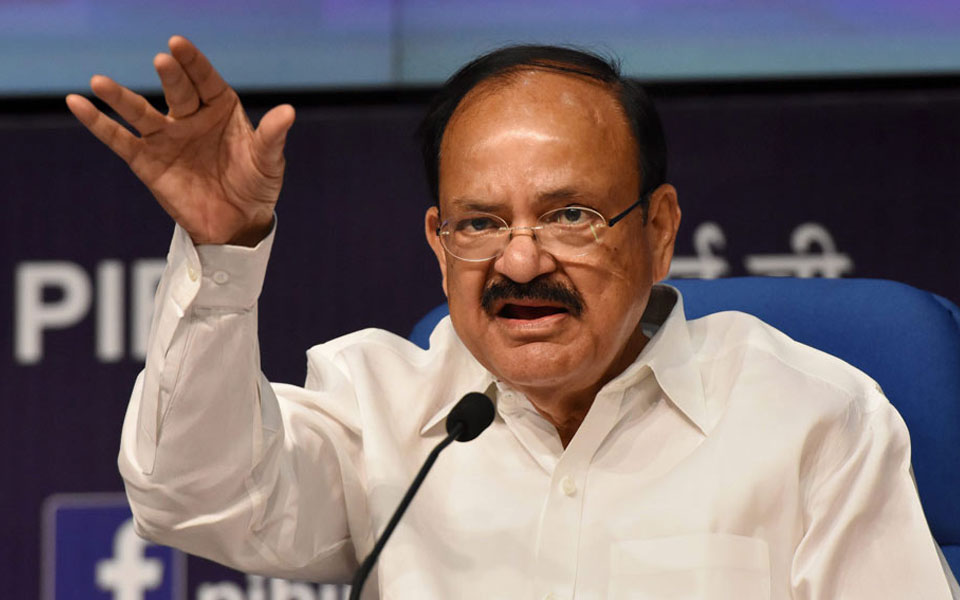
Nagpur: Vice President Venkaiah Naidu on Wednesday said research findings in English should be translated into various Indian languages to increase their reach, and the government should work towards it. Naidu was speaking at an international symposium organised by the National Environmental Engineering Research Institute in Maharashtra's Nagpur city.
Addressing scientists at the event, the vice president said there was a need to translate science and research findings into Indian languages.
"People will not be able to understand your research, if it is only confined to English. In India, we have more than 760 languages and people will appreciate it better if it is told to them in their own language," he said.
Naidu said that is why wherever he goes, he tells people to know, promote and propagate their mother language. "There is nothing wrong in knowing English, but before going to English, you should learn your mother tongue.
"Mother tongue is like your 'eyesight' other languages are your spectacles. This applies to all nations, everybody should feel proud of their mother tongue," Naidu said.
He further said it is not possible for everyone to learn every language.
Hence, it is the government's duty to see that all the research findings, teachings and preachings are translated into various Indian languages, he said. Naidu also raised concern over the air and water pollution in cities.
"We cannot think of building a safe, secure, healthy and prosperous future when our cities, the engines of growth, are choking in noxious fumes, and when our water and soil are polluted," he said.
The Air Quality Index reports in most of the major cities frequently register the air quality as 'poor' or 'severe', he noted. Quoting the Centre for Science and Environment's State of India's Environment (SoE) Report, 2019, the vice president said air pollution is responsible for 12.5 per cent of all deaths in India.
"The numbers are, indeed, alarming and a cause for great concern," he said.
Naidu informed that the government has started the National Clean Air Programme (NCAP), a time-bound strategy to tackle rising air pollution. The NCAP will be a mid-term, five-year action plan, starting this year. The programme's main aim is 20 to 30 per cent reduction of particulate matter concentration in the air by 2024, he said.
The World Economic Forum has found that the cost of environmental degradation in India is estimated to be Rs 3.75 trillion a year, he said.
The ultimate aim of all innovation and scientific breakthroughs must be towards betterment of human lives, alleviation of suffering and promotion of stability, peace and harmony, Naidu told the scientists.
"Let us love and live with nature," he added.
Let the Truth be known. If you read VB and like VB, please be a VB Supporter and Help us deliver the Truth to one and all.
Delhi to adopt fully digital system for time bound traffic challan disposal
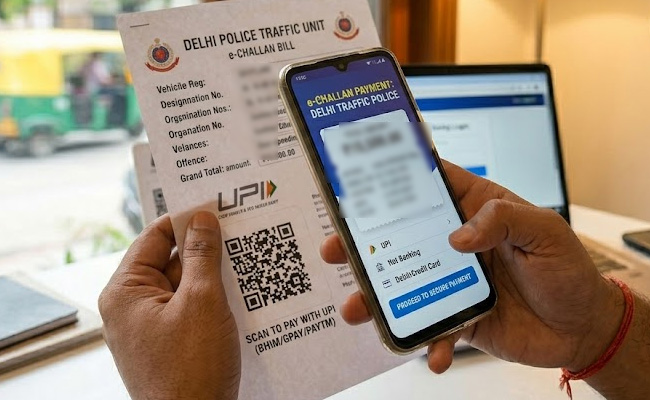
New Delhi (PTI): The Delhi government will soon implement amended Central Motor Vehicles Rules, 1989, making the traffic challan process completely digital and time-bound, to curb violations and enhance road safety, Chief Minister Rekha Gupta said on Sunday.
Under the new framework, avoiding challans will no longer be possible and timely resolution will be mandatory for all citizens. Importantly, violators will not be able to approach courts directly to contest a challan without first going through the prescribed process, said a Delhi CMO statement.
Anyone committing five or more traffic violations within a year will be classified as a "serious offender" and will risk suspension or disqualification of their driving licence under the amended rules, it said.
Gupta noted that the issuance of challans will now be fully modernised.
Police or authorised officers can issue challans either physically or electronically. In addition, violations captured through cameras and digital surveillance systems will automatically generate challans. The e-challans will be delivered within three days to the violators through their mobile numbers, and a physical notice will be delivered within 15 days.
Once a challan is issued, the violator will have 45 days to either pay the fine or challenge it before a grievance redressal officer through the online portal, supported by documentary evidence. If no action is taken within this period, the challan will be deemed accepted, and payment must be made within the next 30 days, the statement said.
If a challenge is rejected, the individual can either pay the fine within 30 days or approach the court after depositing 50 per cent of the challan amount.
Failure to act within the stipulated time will result in the challan being treated as accepted, with payment required within 15 days thereafter.
Payments can be made through electronic modes. The grievance redressal officer will be required to upload a decision on the portal within 30 days, it said.
The chief minister made it clear that once deadlines lapse, daily electronic notices will be issued. Continued non-payment will lead to restrictions on all vehicle-related services, including payment of taxes and processing of driving licence or registration-related requests.
The vehicle will be flagged on the official portal as 'not to be transacted,' effectively blocking any further transactions until the dues are cleared. In cases where necessary, and subject to court orders, police or authorised officers may also impound vehicles involved in violations.
All challans will be issued in the name of the registered vehicle owner, who will be notified via SMS, email or other digital means, it added.