Restrictions lifted from most parts of Kashmir, private vehicles on roads in Srinagar
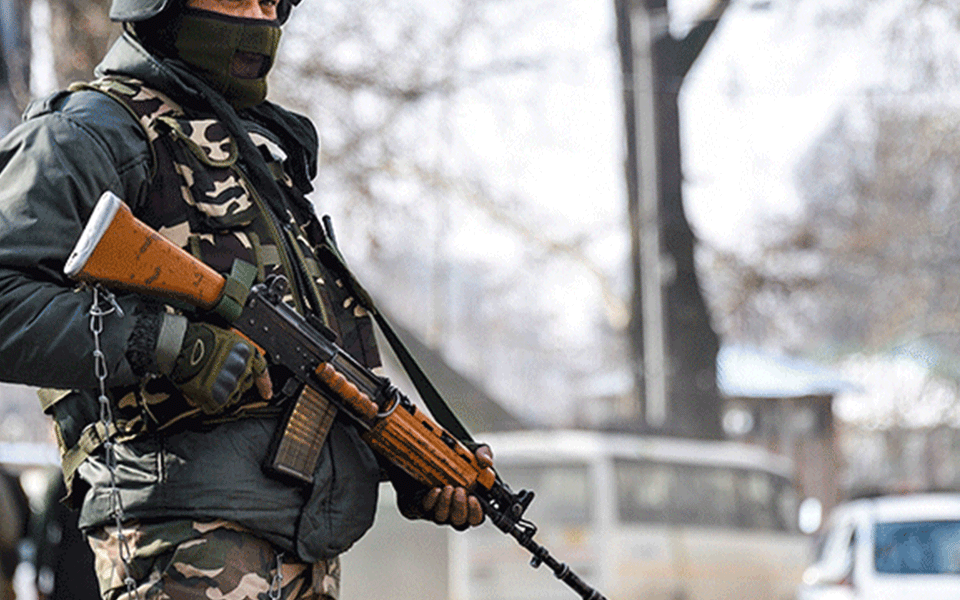
Srinagar: Restrictions were lifted from most parts of Kashmir on Wednesday and some areas in Srinagar city witnessed an increased presence of private transport leading to traffic jams but schools remained closed and public transport was off the roads, officials said.
The city witnessed increased movement of private vehicles on Wednesday leading to traffic jams at several places on the Karan Nagar-Batamaloo-Lal Chowk-Dalgate axis, the officials said.
They said few auto rickshaws and inter-district cabs were also seen plying in some areas of the city.
The officials said restrictions have been lifted from most areas of the valley, but security forces continued to be deployed to maintain law and order.
The restrictions were re-imposed in parts of the valley on Tuesday to prevent any procession in the city and elsewhere in the valley on the tenth day of Muharram. The curbs on the movement of people in some parts of the valley are imposed every year on the eight and the tenth day of Muharram to prevent any processions.
Restrictions were first imposed across the Kashmir on 5 August when the Centre announced its decision to abrogate Article 370 of the Constitution and bifurcate the state into two Union territories. The restrictions were lifted in phases from many parts of the valley as the situation improved with passage of time.
However, the authorities have been imposing restrictions in vulnerable areas of the valley every Friday, apprehending that vested interests might exploit the large gatherings at big mosques and shrines to fuel protests.
Friday prayers have not been allowed at any of the major mosques or shrines in the valley for the past one month now. Meanwhile, normal life remained severely affected in Kashmir due to shutdown which entered 38th day on Wednesday.
Markets and other business establishments remained closed, while public transport was off the roads across the valley, the officials said.
The efforts of the state government to open schools have not borne any fruit as parents continued to keep children at home due to apprehensions about their safety.
Most of the top-level and second rung separatist politicians have been taken into custody while mainstream leaders including three former chief ministers Farooq Abdullah, Omar Abdullah and Mehbooba Mufti have also been either detained or placed under house arrest.
Let the Truth be known. If you read VB and like VB, please be a VB Supporter and Help us deliver the Truth to one and all.
Mamata visits Bhabanipur EVM strong room, warns against counting irregularities
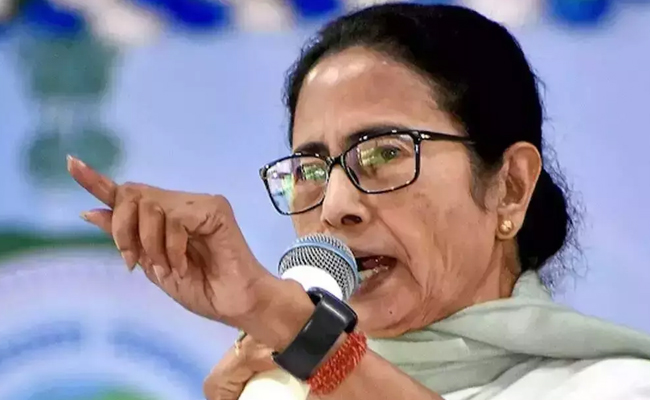
Kolkata (PTI): West Bengal Chief Minister and TMC supremo Mamata Banerjee early Friday warned against any attempt to tamper with the counting process, hours after she visited an EVM strong room in Bhabanipur, alleging possible malpractice.
Banerjee, who emerged around 12:07 am after spending nearly four hours at the counting centre for her Bhabanipur constituency housed in Sakhawat Memorial School in south Kolkata, said only one person would be allowed inside the designated counting area.
"Either the candidate or one agent can stay upstairs. I have also suggested installation of a CCTV camera for the media," she told reporters.
Stressing the need for transparency, she said, "It is essential to maintain transparency. People’s votes must be protected. I rushed here after receiving complaints. The central forces initially did not allow me to enter."
Sounding a stern note ahead of the May 4 counting, she added, "If there is any plan to tamper with the counting process, it will not be tolerated."
On Thursday evening, Banerjee had reached the Bhabanipur Assembly segment counting centre, which houses the strong room for EVMs used in the April 29 polling, citing suspicion of tampering with the machines.
She entered the premises along with her election agent and remained inside for hours, even as Kolkata Mayor and TMC candidate from the Kolkata Port segment Firhad Hakim reached the spot but could not meet her.
"I reached here upon learning that the chief minister has arrived. But I couldn’t meet her since she was already inside the premises, exercising her right as a candidate to visit strong rooms. I wasn’t allowed there. I will not be able to confirm what exactly is transpiring inside," Hakim said.
The development coincided with protests by TMC candidates Kunal Ghosh and Shashi Panja outside the Khudiram Anushilan Kendra in north Kolkata, where they staged a sit-in alleging irregularities and possible tampering of EVMs stored in strong rooms, leading to face-offs between TMC and BJP supporters.
Earlier in a video message, Banerjee had urged party leaders, workers and polling agents to maintain a 24-hour vigil on EVM strong rooms, alleging that the BJP could attempt to tamper with the machines before counting begins.
Her remarks come amid heightened political tension in the state following a fiercely contested Assembly election, with parties closely monitoring arrangements and raising concerns over transparency.