Retail inflation dips to nearly 6-yr low of 3.34 pc in March on subdued food prices
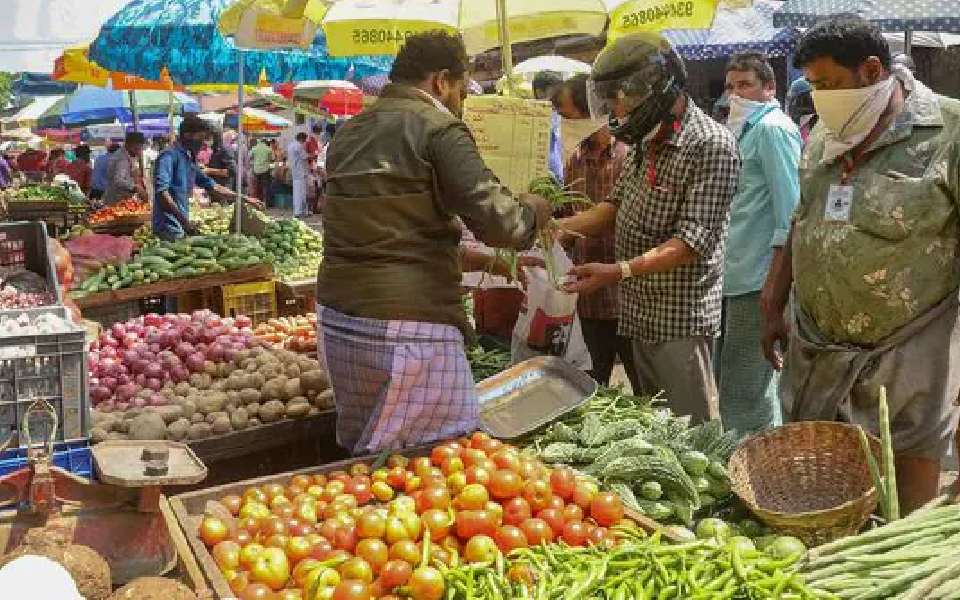
New Delhi, Apr 15 (PTI): Retail inflation dipped marginally to a nearly six-year low of 3.34 per cent in March due to decline in prices of vegetables, eggs and protein-rich items, raising hope for a third rate cut by the RBI as it remains below the median target of 4 per cent.
The Consumer Price Index (CPI) based inflation was 3.61 per cent in February and 4.85 per cent in March last year.
The inflation rate in March 2025 is the lowest since August 2019, when it was 3.28 per cent.
According to data released by National Statistics Office (NSO) on Tuesday, the retail food inflation in March was 2.69 per cent compared to 3.75 per cent in February and 8.52 per cent in March 2024.
Meanwhile, wholesale price inflation declined to a six-month low of 2.05 per cent in March as prices of vegetables, potato and other food items eased, another set of government data showed.
Wholesale Price Index (WPI) based inflation was 2.38 per cent in February. It was 0.26 per cent in March last year.
Last week, the Reserve Bank reduced the key short-term lending rate (repo) by 25 basis points in the wake of easing inflation.
The Reserve Bank has projected CPI inflation for the current fiscal 2025-26 at 4 per cent, with Q1 at 3.6 per cent, Q2 at 3.9 per cent, Q3 at 3.8 per cent, and Q4 at 4.4 per cent. The risks are evenly balanced.
While announcing the bi-monthly monetary policy on April 9, the RBI had indicated another rate cut as it changed the monetary stance to 'accommodative' from 'neutral'.
The NSO said the significant decline in headline inflation and food inflation during March 2025 was mainly attributed to decline in inflation of vegetables, eggs, pulses and products, meat and fish, cereals and products, and milk and its products.
Commenting on the NSO data, Aditi Nayar, Chief Economist, ICRA said the unexpectedly sharp sequential fall in the headline CPI inflation in March 2025 was predominantly led by food items.
"In our view, further monetary easing is clearly on the table, to the tune of 50 bps over the next three policies. With the next inflation print also expected to be sub-4 per cent, a June 2025 rate cut seems highly likely, unless Q4 FY2025 GDP growth surprises sharply to the upside," Nayar said.
The decline in CPI inflation was witnessed in eggs (-3.16 per cent), vegetables (-7.04 per cent), pulses and products (-2.73 per cent), and spices (-4.92 per cent).
On the other hand, 'oils and fats' segment recorded highest annual inflation of 17.07 per cent in March followed by fruits at 16.27 per cent.
Rajani Sinha, Chief Economist, CareEdge Ratings said agricultural production is seen at a record high in 2024-25 as per the Second Advance Estimate.
The prices of edible oils remain a key concern, especially given the contraction in the sowing of oil seeds, an increase in global edible oil prices, and import dependency in this category, she said.
"Food inflation is likely to remain comfortable in the coming months. However, we need to be cautious of any weather-related disruptions," Sinha added.
Vivek Rathi, National Director Research, Knight Frank India said excluding the food and fuel basket, inflationary pressures persist among households, potentially tightening consumption expenditure, especially for lower-income households that are more sensitive to price increase, he said
"As household prices remain elevated, it is crucial for commercial banks to pass on the benefits of rate cuts to consumers to support domestic consumption and growth. This is also vital for boosting housing demand in the affordable segment," Rathi said.
Urban inflation increased marginally from 3.32 per cent in February to 3.43 per cent in March 2025. However, significant decline was observed in food inflation from 3.15 per cent in February 2025 to 2.48 per cent in March, NSO said.
Further, there was decline in headline and food inflation in the rural sector. The headline inflation was 3.25 per cent in March compared to 3.79 per cent in the preceding month. The retail food inflation in the rural sector was at 2.82 per cent in March, down from 4.06 per cent in February.
NSO data also showed the highest retail inflation was in Kerala (6.59 per cent) and the lowest in Telangana (1.06 per cent)
As per the WPI data, food inflation eased to 1.57 per cent in March from 3.38 per cent in February, with vegetables seeing a sharp drop. The decline in vegetables inflation was 15.88 per cent during the month compared to 5.80 per cent in February.
Inflation in potato, which was rising in double digits since February 2024, fell in March 2025. The inflation in potato in March 2025 was in negative at 6.77 per cent.
In onion, wholesale inflation eased to 26.65 per cent in March against 48.05 per cent in February.
Manufactured products, however, saw a spike at 3.07 per cent in March compared to 2.86 per cent in February, WPI data showed.
Fuel and power too saw an uptick with a 0.20 per cent rise in March against a deflation of 0.71 per cent in February, it said.
Bank of Baroda Economist Sonal Badhan said, "Going forward, as the trade war deepens further, global growth prospects remain weak. This will exert downward pressure on oil and other commodity prices, which, in turn, will be positive for WPI inflation".
Let the Truth be known. If you read VB and like VB, please be a VB Supporter and Help us deliver the Truth to one and all.
CM Siddaramaiah alleges ‘criminal conspiracy’ in Sringeri recount, vows legal action
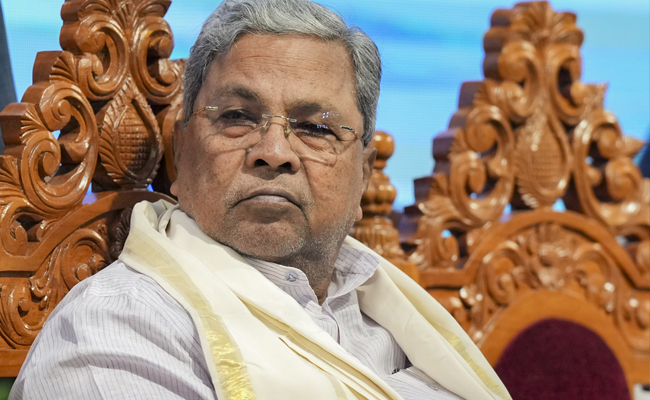
Bengaluru (PTI): Alleging a “criminal conspiracy” by BJP candidate D N Jeevaraj in the Sringeri Assembly poll recounting, Karnataka CM Siddaramaiah on Tuesday said the outcome was manipulated after valid postal ballot votes in favour of Congress leader T D Raje Gowda were tampered with during the recounting process.
Following a Karnataka High Court order on an election petition filed by Jeevaraj, challenging Raje Gowda’s election, the reverification and recounting were conducted on Saturday.
After the reverification and recount of postal ballots for the Sringeri Assembly constituency, votes polled in favour of Raje Gowda were reduced by 255, the returning officer said.
A report on the matter has been submitted to the Election Commission of India for further action, the officer added.
Congress leader Raje Gowda had won the 2023 Assembly polls from Sringeri by 201 votes, defeating his nearest rival Jeevaraj.
Addressing a press conference in Bengaluru, Siddaramaiah said the High Court had directed the recounting of postal ballots and that irregularities were noticed during the exercise conducted on May 2.
“This is a clear case of criminal conspiracy,” Siddaramaiah said, alleging that valid votes cast in favour of Raje Gowda were altered after being accepted by counting agents of all parties, including Congress, BJP, and JD(S).
He claimed that during the recounting of postal ballots, 255 votes were initially accepted as valid by all agents but were later tampered with by subordinate officials.
“There is a second mark on the votes polled in favour of Raje Gowda. They had accepted these as valid votes. Subsequently, another mark was made by officials. This is a clear case of criminal conspiracy,” he said.
When asked who was behind the alleged conspiracy, the CM replied, “It was hatched by Jeevaraj and others. It is planned.”
Siddaramaiah further alleged that the returning officer acted improperly by declaring the result despite the presence of an Election Commission observer during the recounting.
“Immediately after the counting, the returning officer announced the result. He should not have done so; this is against the law,” he said.
He pointed out that Raje Gowda had originally won by 201 votes, but after the recounting, the BJP candidate was declared the winner by 52 votes.
“The BJP has committed a criminal act of conspiracy. This is not vote chori but vote dacoity,” he alleged.
The CM said a police complaint had already been filed by Raje Gowda’s election agent, Sudhir Kumar, and emphasised the need for electoral integrity.
“We want transparency and free and fair elections. That is what our Constitution mandates,” he added.
Stating that the government would pursue legal remedies, Siddaramaiah said, “We are preparing an appeal challenging the returning officer’s announcement in a court of law.”
Responding to a separate query on elections in other states, the CM said there appeared to be an anti-incumbency factor in West Bengal, while results in Tamil Nadu were “surprising,” adding that Vijay’s party was emerging as the largest there.
Following the victory of party candidates in Bagalkote and Davanagere South, Siddaramaiah expressed confidence about future electoral prospects in Karnataka.
“Even in 2028, we will win the Assembly elections. We will come back,” the CM said.
Siddaramaiah added that he would order a forensic examination into the alleged tampering of postal ballots.