Retail inflation slows to 5-month low of 4.3 pc in Jan: Govt data
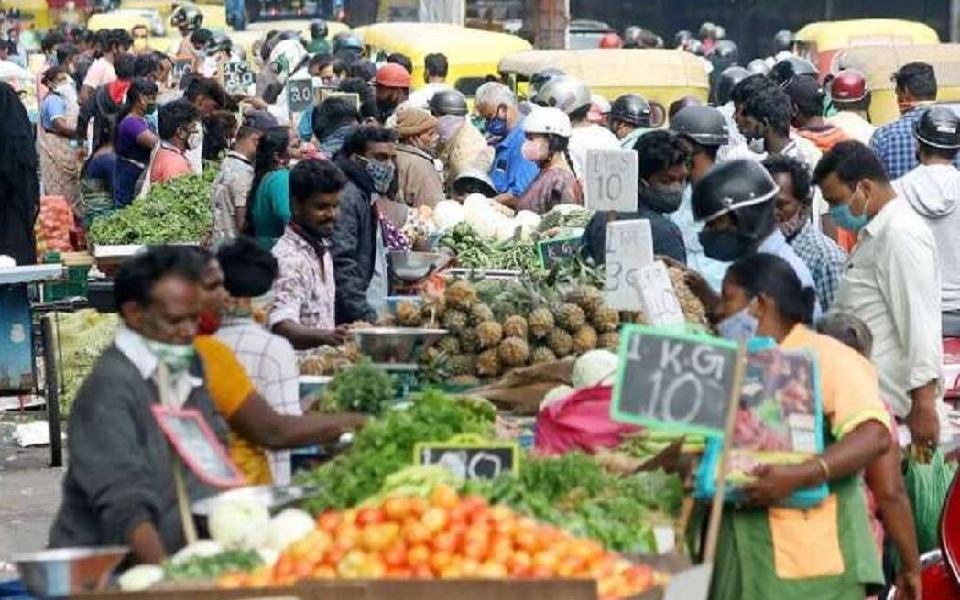
New Delhi, Feb 12 (PTI): Continuing the downward trend, retail inflation fell to a five-month low of 4.31 per cent in January, mainly due to a decline in the prices of vegetables, eggs, and pulses.
The Consumer Price Index-based retail inflation was 5.22 per cent in December and 5.1 per cent in January 2024. The previous low inflation was in August 2024 at 3.65 per cent. The Consumer Price Index has been on a decline since October.
The inflation in the food basket was 6.02 per cent in January, the lowest after August 2024 when it was 5.66 per cent.
There is a decline of 91 basis points in headline inflation of January 2025 in comparison to December 2024 and it is the lowest year-on-year inflation after August 2024, the National Statistics Office (NSO) data showed.
According to the data, the top five items showing the highest year on year inflation were coconut oil (54.2 per cent), potato (49.61 per cent), coconut (38.71 per cent), garlic (30.65 per cent), peas (30.17 per cent).
On the other hand, the key items having the lowest year on year inflation in January were jeera (-32.25 per cent), ginger (-30.92 per cent), dry chilies (-11.27 per cent), brinjal (-9.94 per cent), LPG (excluding conveyance) (-9.29 per cent).
Last week, the Reserve Bank years effected a rate cut of 25 basis points after a gap of five years to spur growth as inflation was in its comfort zone. The central bank has been mandated by the government to ensure CPI remains at 4 per cent with a margin of 2 per cent on either side.
NSO further said a significant decline in headline and food inflation in the rural sector was observed in January 2025.
It was 4.64 per cent in January compared to 5.76 per cent in the preceding month.
The food inflation in the rural sector was 6.31 per cent in comparison to 8.65 per cent in December 2024.
Similarly, urban inflation witnessed a sharp decline from 4.58 per cent in December 2024 to 3.87 per cent in January. Food inflation decreased from 7.9 per cent in December to 5.53 per cent in January 2025.
Housing inflation rate was marginally higher in January 2.76 per cent over December.
"The significant decline in headline inflation and food inflation during the month of January, 2025 is mainly attributed to decline in inflation of vegetables, eggs, pulses and products, cereals and products, education, clothing and health," NSO said.
The data further showed that top five states which had higher inflation than the national average in January were Kerala (6.76 per cent), Odisha (6.05 per cent), Chhattisgarh (5.85 per cent), Haryana (5.1 per cent), and Bihar (5.06 per cent).
The lowest inflation was in Delhi at 2.02 per cent.
The NSO collects price data from selected 1,114 urban markets and 1,181 villages covering all States/UTs on a weekly roster.
Commenting on the data, Aditi Nayar, Chief Economist, ICRA said the CPI inflation fell appreciably sharper than expected to a five-month low, led primarily by food items, vindicating the unanimous rate cut effected by the Reserve Bank's Monetary Policy Committee (MPC) last week.
"Looking ahead, ICRA believes that the growth-inflation outlook suggests that there is room for another 25 bps rate cut in either the April or the June 2025 meetings. The exact timing of the same would depend on the incoming data, global developments, and the movements in the USD/INR pair," she added.
Let the Truth be known. If you read VB and like VB, please be a VB Supporter and Help us deliver the Truth to one and all.
Activists write open letter to Odisha govt flagging anti-Christian violence
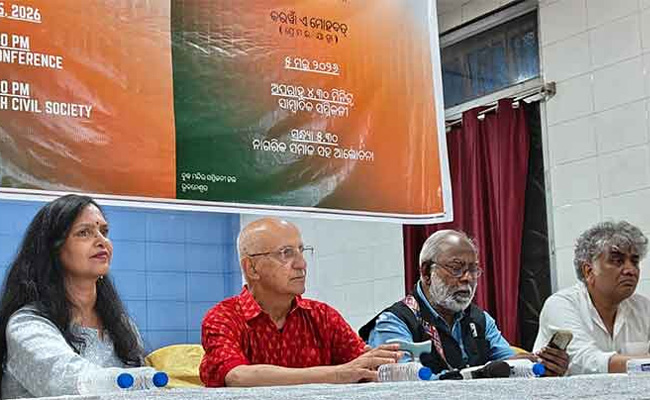
New Delhi: Activists and rights campaigners John Dayal, Aakar Patel, Vidya Dinker and Harsh Mander have expressed serious concern over the alleged rise in violence and intimidation against Christians in several districts, accusing both Hindutva organisations and sections of the police of targeting the minority community.
In a strongly worded communication addressed to the state administration, the signatories said they had received disturbing testimonies from affected people regarding social boycott, denial of burial rights, physical assaults and police intimidation.
According to the activists, Christians in some areas were allegedly boycotted by villagers, while people who traded with them, employed them or provided them shelter were also targeted.
The letter also highlighted what it described as “gruesome” incidents involving the prevention of burials of Christians within village burial grounds and even on privately owned lands belonging to Christian families. The activists said there were cases where bodies remained unburied for days due to opposition from local groups, while in some instances burials were allegedly forced to take place in forest areas outside village limits. Funeral prayers were also reportedly disrupted.
The signatories further alleged that in certain districts the violence escalated into physical assaults on Christians. They claimed that some victims were tied to trees and beaten, while others were allegedly placed inside sacks and assaulted. The letter also mentioned a few reported instances of sexual violence and attempts to burn people alive, which, according to them, were stopped at the last moment.
Expressing particular concern, the activists said many victims had testified that police personnel joined hands with Hindutva organisations to force Christians into signing “compromise” agreements. These agreements allegedly required them to give up their faith and stop collective worship.
The letter also accused the police of registering serious criminal cases against victims of attacks instead of taking action against the attackers. According to the signatories, many of those attacked were detained in police stations and jails, while in some cases the police themselves allegedly played a direct role in intimidation and violence against Christians.
Stating that there appeared to be a “complete breakdown in the constitutional machinery of the state” in relation to Christian minorities, the activists urged the administration to uphold and protect the constitutional and religious rights of all citizens without discrimination based on religion, caste or creed.
The letter was signed by John Dayal, Aakar Patel, Vidya Dinker and Harsh Mander.