Revised IT rules to ensure senior-level authorisation for content takedown notices

New Delhi (PTI): The IT ministry has stipulated that intimation to social media platforms for removal of 'unlawful information' can only be issued by senior officials and would require precise details and reasons to be specified, as it notified IT Rules amendment to streamline content takedown procedures and bring transparency, clarity and precision in actions.
Further, all intimations issued under Rule 3(1)(d) will be subject to a monthly review by an officer, not below the rank of secretary of the appropriate government, to ensure that such actions remain "necessary, proportionate, and consistent with law".
Under Rule 3(1)(d), intermediaries are required to remove unlawful information upon receiving actual knowledge either through a court order or notification from the appropriate government.
"On the Rule 3 (1) (d)...accountability of the Government increases with this change and we will be giving a reasoned intimation whenever any such order is passed. The orders will be passed at a fairly senior level, joint secretary and above, DIG and above," IT Minister Ashwini Vaishnaw told mediapersons.
The IT ministry, in a note, said that the government has notified amendments to Rule 3(1)(d) of the IT Rules, 2021 to enhance transparency, accountability and safeguards.
A review undertaken by the IT ministry had highlighted the need for additional safeguards and checks and balances to ensure senior-level accountability, precise specification of unlawful content, and periodic review of government directions at higher level.
Accordingly, "any intimation to intermediaries for removal of unlawful information can now only be issued by a senior officer not below the rank of Joint Secretary, or equivalent, or, where such rank is not appointed, a Director or an officer equivalent in rank — and, where so authorised, acting through a single corresponding officer in its authorised agency, where such agency is so appointed".
In case of police authorities, only an officer not below the rank of Deputy Inspector General of Police (DIG), specially authorised, can issue such intimation.
The amendments also require intimation to specify reasons and details in such cases.
"The intimation must clearly specify the legal basis and statutory provision, the nature of the unlawful act, and the specific URL/identifier or other electronic location of the information, data or communication link (content) to be removed," the IT ministry said.
As per the ministry, the amendments strike a balance between the constitutional rights of citizens and the legitimate regulatory powers of the state, ensuring that enforcement actions are transparent and do not lead to arbitrary restrictions.
They aim for greater transparency and accountability, through clear guidelines on who can issue directions and how, with periodic review, ensuring checks and balances are in place.
"By mandating detailed and reasoned intimations, intermediaries will have better guidance to act in compliance with law," as per the ministry.
Further the reforms ensure proportionality and uphold the principles of natural justice while reinforcing lawful restrictions under the IT Act, 2000.
Let the Truth be known. If you read VB and like VB, please be a VB Supporter and Help us deliver the Truth to one and all.
Trump says he ‘hasn’t even thought about’ continuing Iran ceasefire
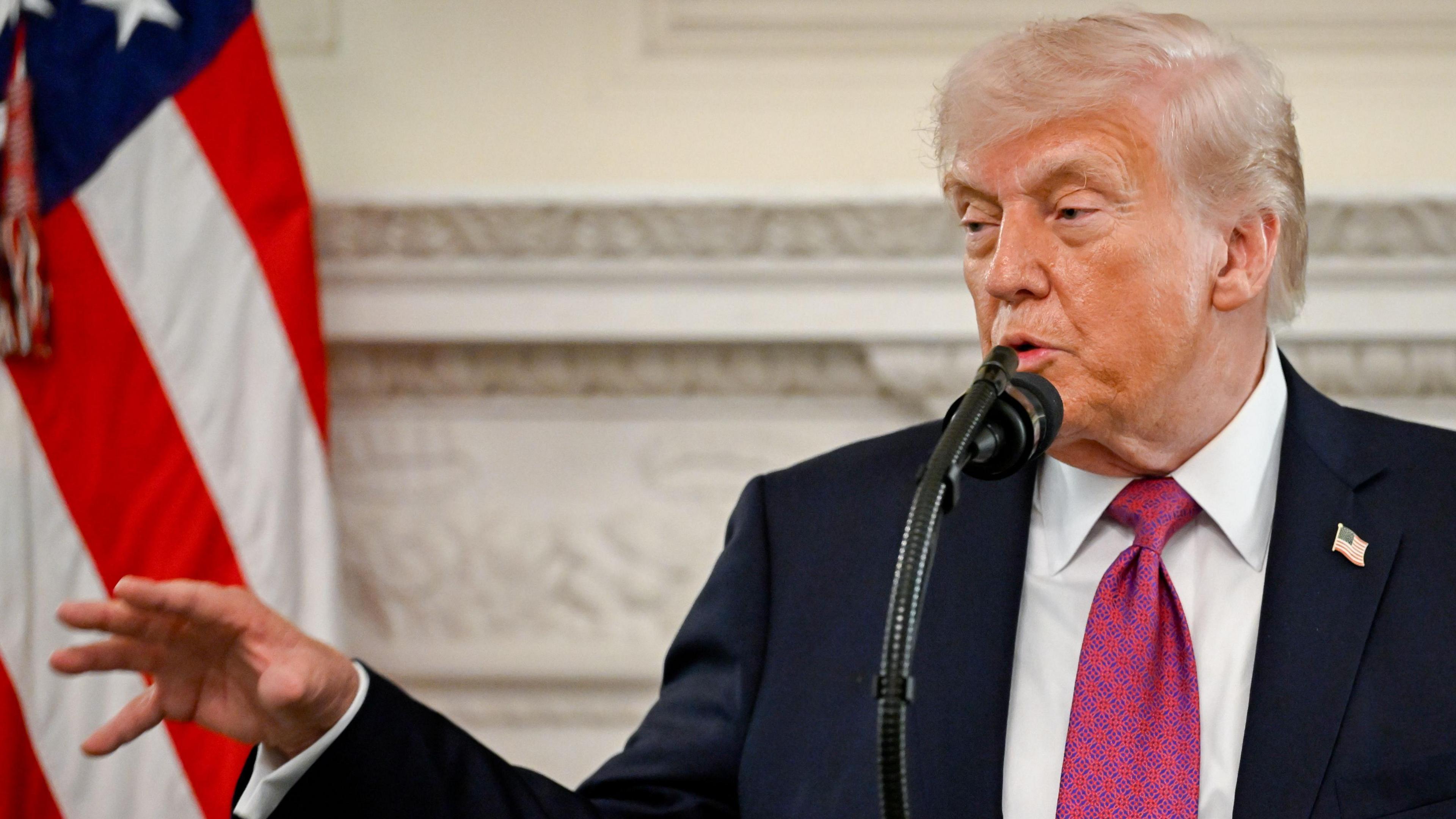
Washington: US President Donald Trump has said he has not yet considered whether he would continue the ceasefire involving Iran, while also claiming the United States holds the advantage in negotiations.
Speaking to reporters, Trump said he was prepared to make a deal with “whoever is running the show” in Iran.
“They are fighting with each other, there’s tremendous infighting. They’re probably fighting for leadership in many cases. I think they’re fighting not to be leader because we knocked out two levels of leaders,” he said.
Trump added, “When they want they can call me. We have all the cards, we’ve won everything.”
Referring to ongoing negotiations, he said, “They gave us a paper that should’ve been better. And, interestingly, immediately when I cancelled it [envoy trip to Pakistan], within 10 minutes we got a new paper that was much better.”
“We talked about they will not have a nuclear weapon, very simple … They offered a lot, but not enough,” he added.
When asked whether he would continue the ceasefire, Trump replied, “I haven’t even thought about it.”
The remarks come as uncertainty remains over the future of the temporary truce and broader negotiations between Washington and Tehran.