Right to ask supplementary question taken away as speaker did not allow it: Rahul Gandhi
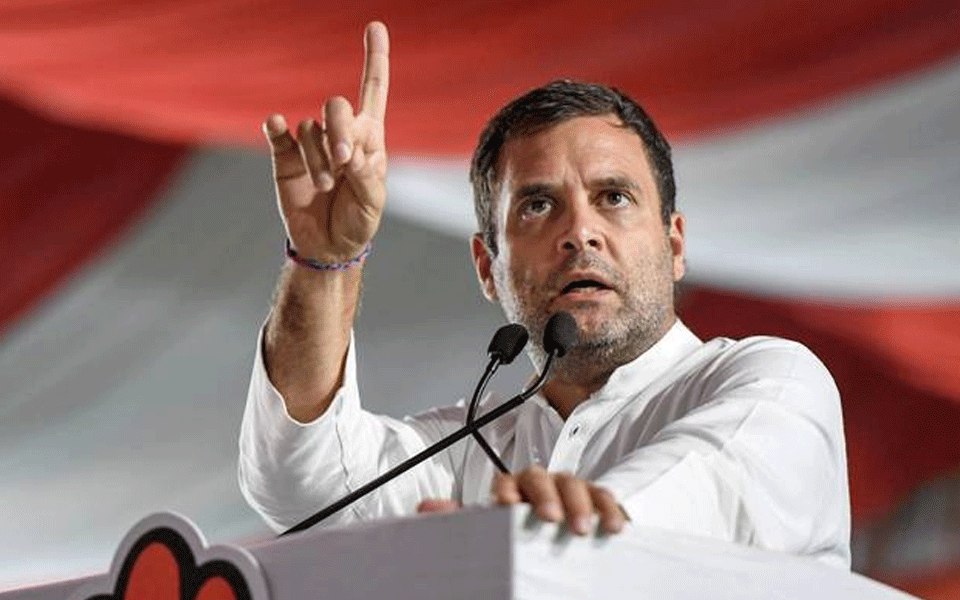
New Delhi: Congress leader Rahul Gandhi on Monday said his right as an MP to ask a supplementary question in Lok Sabha was taken away as Speaker Om Birla did not allow him to ask one.
He said he was hurt by the action as it was the duty of the speaker to protect his right to speak and ask a supplementary question.
Gandhi was asking the government to name wilful bank loan defaulters, but was not allowed another supplementary question amid uproar in the lower house.
"I was not allowed to ask supplementary question in Lok Sabha, this takes away my right as MP," Gandhi told reporters outside Parliament. "This is taking away my right as a member of Parliament and it is not fair. This is completely unfair," he said.
"I was hurt that my Parliamentary right to ask a supplementary question was not given. The speaker did not allow me to ask a supplementary question. I got hurt as this was my right as an MP to ask a supplementary question," the Congress leader said.
Gandhi said there is a Parliamentary procedure while asking questions and it is the right of every single Parliamentarian. He said when one asks a question, one is asked to put forth a secondary question.
Today, he said, he asked a question and the minister did not respond to the question on the largest wilful defaulters. "This minister did not answer my question and I was quite hurt," he said. "It is the duty of the speaker to protect my right to speak," he said.
Gandhi asked why the government is scared of naming wilful bank loan defaulters.
"Why is the government trying to defend the big wilful bank loan defaulters. Why is the government not naming them in Parliament," Gandhi asked.
The former Congress president said why is the government so scared of naming those 500 wilful defaulters.
"We know that the economy is not moving forward. 500 people have stolen Indian money. They are wilful defaulters. The prime minister has said he is going to take action against wilful defaulters. Why is the government not giving their names," he asked.
Gandhi said he has been warning this country that the current situation of banks, the economic situation coupled with coronavirus is going to result in a "disaster".
"I keep repeating it and I am sorry to say that actions like this do not help," he said. Gandhi raised in Lok Sabha the issue of bad loans and sought a list of 50 top wilful defaulters.
However, the House soon witnessed noisy scenes and a walkout by Congress members as Gandhi was not allowed to ask a second supplementary related to wilful defaulters during the Question Hour.
The protests came after Speaker Om Birla announced the end of Question Hour at noon as the designated time for it is 11 am to noon.
While asking the first supplementary, Gandhi said he wanted to know the list of 50 top wilful defaulters, including funds given and the amount written off by banks but did not get a proper answer in the written reply.
Let the Truth be known. If you read VB and like VB, please be a VB Supporter and Help us deliver the Truth to one and all.
Sujit Nair raises concerns over speculation of DMK-AIADMK understanding to block TVK
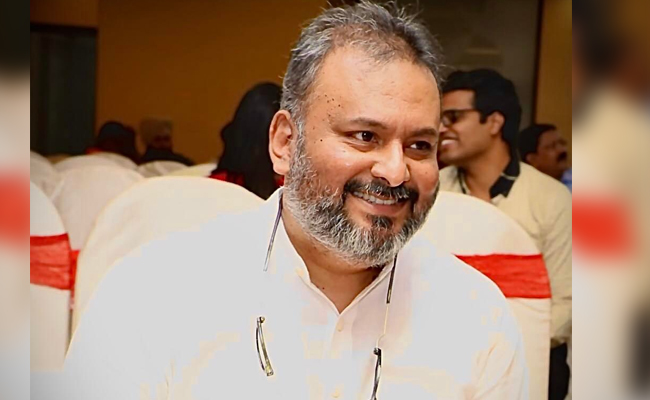
Chennai: Journalist and political commentator Sujit Nair has expressed concern over speculation that the Dravida Munnetra Kazhagam and the All India Anna Dravida Munnetra Kazhagam could explore a post-poll understanding to prevent Vijay-led Tamilaga Vettri Kazhagam from forming the government in Tamil Nadu.
In a social media post, Sujit Nair said the election verdict in Tamil Nadu reflected a clear public demand for political change and argued that the mandate should be respected irrespective of political preferences.
Referring to reports and political discussions surrounding a possible understanding between the DMK and AIADMK, he said he hoped such developments remained only speculative conversations and did not turn into reality.
Nair stated that if such an alliance were to take shape, it would raise serious questions about ideological politics in the country. He said TVK had emerged through a democratic electoral process and that the legitimacy to govern in a parliamentary democracy comes from the people’s verdict.
According to him, attempts to prevent an electoral winner from forming the government through unexpected political arrangements may be constitutionally valid, but many people could view them as politically opportunistic.
He further said that such a move could particularly affect the political image of the DMK, which has historically projected itself around ideology, social justice and opposition politics. Nair said that in ideological terms, the DMK appeared closer to TVK than to the AIADMK, and joining hands with its long-time political rival only to remain in power could weaken its broader political narrative.
He added that the same questions would apply to the AIADMK as well, as the party had spent decades positioning itself against the DMK and such an arrangement could create discomfort among its cadre and supporters.
Drawing a comparison with Maharashtra politics in 2019, Nair said he had expressed similar views when the Shiv Sena formed an alliance with the Indian National Congress and the Nationalist Congress Party after the Assembly elections.
He said post-poll alliances between long-standing political rivals often create a public perception that ideology and electoral mandates become secondary when political power equations come into play.
Nair also said such developments increase public cynicism towards politics and reinforce the belief among voters that ideology is often sidelined after elections.
He maintained that the Tamil Nadu verdict was emphatic and said respecting both the spirit and substance of the mandate was important for the credibility of democratic politics.