Rights groups allege custodial killings after seven Maoist leaders killed in C'garh 'encounter'
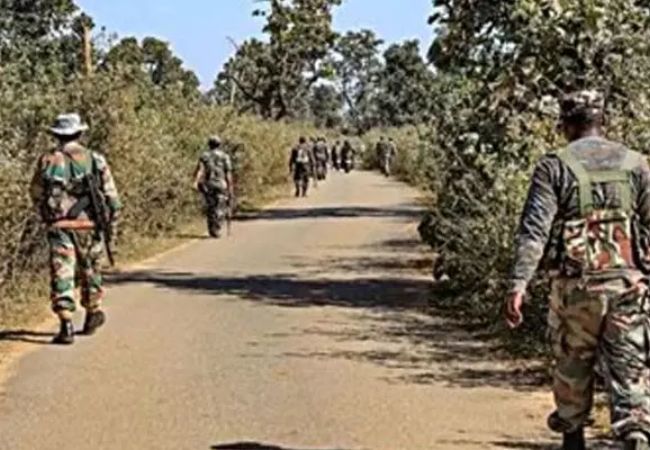
Bijapur: Seven senior Maoist leaders were killed over three days in what the police claim were encounters with security forces in the Indravati National Park between June 5 and 7. However, civil rights groups have alleged that the deaths were the result of custodial torture and fake encounters following the illegal detention of 10 Maoists from Parshagarh village.
According to the Civil Liberties Committee (CLC) of Telangana, the police picked up 10 Maoists from the national park and killed seven of them after subjecting them to brutal torture. The CLC alleged that one Maoist was killed on June 5, four on June 6, and two on June 7. The remaining three are reportedly still in police custody.
Police have so far confirmed the deaths of only two individuals: Tentu Laxmi Narasimha Chalam alias Sudhakar, a CPI (Maoist) central committee member, and Mylarapu Adelu alias Bhaskar, a Telangana state committee member. Rights groups have named the others allegedly killed, including Telangana committee member Bandi Prakash and Dandakaranya zonal committee member Papa Rao.
The police version differs significantly. Bijapur SP Jitendra Kumar claimed the operation was based on specific intelligence about Maoist leaders gathered in the forest. He stated that Sudhakar was killed in an exchange of fire on June 5 and that an AK-47 rifle was recovered from the scene. Additional fatalities reportedly occurred on June 6 and 7. The SP denied the allegations made by rights organisations, calling them "false propaganda."
Civil rights activists raised questions about the absence of other bodies near Sudhakar’s, despite him being a top leader usually accompanied by armed guards. They also pointed out he was found in civilian clothes, not the usual military fatigues. They urged the National Human Rights Commission and the Supreme Court to take suo motu cognisance of the alleged extrajudicial killings.
The Coordination Committee for Peace, which includes noted mediator G. Haragopal, described the incident as a “constitutional crisis” and called for urgent court intervention to prevent further erosion of democratic values. Haragopal had previously mediated with Maoists in high-profile hostage situations.
Bhaskar, who was also killed, was a registered medical practitioner before joining the Maoist movement in 1995. Both he and Sudhakar had long underground histories in the party.
The Committee for Release of Political Prisoners and the Indian Association of People’s Lawyers have demanded a second post-mortem of the bodies, alleging that the two were killed in cold blood.
The Civil Liberties Committee claims that over 550 Maoists have been killed since January 2024 as part of the Union government’s ‘Operation Kagar’, which they argue is being used to suppress tribal resistance and hand over mineral-rich lands to corporations.
Let the Truth be known. If you read VB and like VB, please be a VB Supporter and Help us deliver the Truth to one and all.
Indian startup's 'Drishti' satellite launched aboard SpaceX rocket
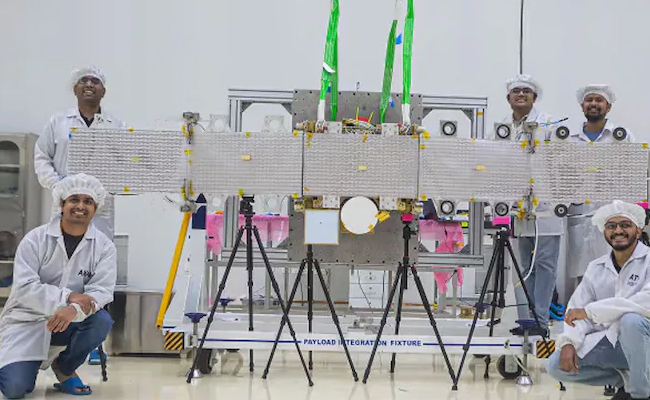
New Delhi (PTI): Bengaluru-based space start-up GalaxEye's Mission Drishti satellite was launched on Sunday aboard SpaceX's Falcon 9 rocket from California.
Mission Drishti is the world's first OptoSAR satellite, integrating electro-optical (EO) and synthetic aperture radar (SAR) sensors into a single operational platform, according to the company.
While EO sensors capture high-resolution images during sunlight and clear skies, SAR sensors provide all-weather and all-time images, using radar pulses.
In a statement, Suyash Singh, founder and CEO of GalaxEye, said, "With the satellite (Mission Drishti) now successfully in orbit, our immediate focus is on completing its commissioning. As we move through this phase, we are already witnessing strong global interest in the differentiated datasets enabled by our OptoSAR payload."
The satellite will help address long-standing limitations of conventional systems and enable more reliable and consistent data acquisition across diverse environmental conditions, the company said.
As a dual-use Earth observation satellite, the mission will support use cases across defence, agriculture, disaster management, maritime monitoring, and infrastructure planning.
The satellite is also expected to complement India's broader initiatives, including the 29 active Earth Observation satellites outlined in ISRO's recent annual report.
The launch came after five years of indigenous research and development, and extensive environmental testing and performance validation of the Mission Drishti.
In a statement, Lt Gen AK Bhatt (Retd), director general of Indian Space Association (ISpA), said, "GalaxEye has achieved what only a few global players have, which is seamlessly combining optical and SAR capabilities on a single platform to enable persistent, all-weather intelligence."
What stands out is not just the technology, but its broader impact on how downstream applications will increasingly define value in the space economy, particularly in Earth observation, where timely, decision-grade insights are critical," he added.
ISpA is the premier industry association of space and satellite companies in the country.
Union Minister Jitendra Singh also took note of the Mission Drishti launch, saying the development marked a significant milestone in India's space journey.
In a post on X, the minister said, "The successful launch of the world's first OptoSAR satellite, and the largest privately-built satellite in the country, reflects the immense potential of our young innovators driving nation-building."
GalaxEye aims to scale up Mission Drishti to a constellation of 10 satellites by 2030, developing a robust and sovereign Earth observation infrastructure for India.