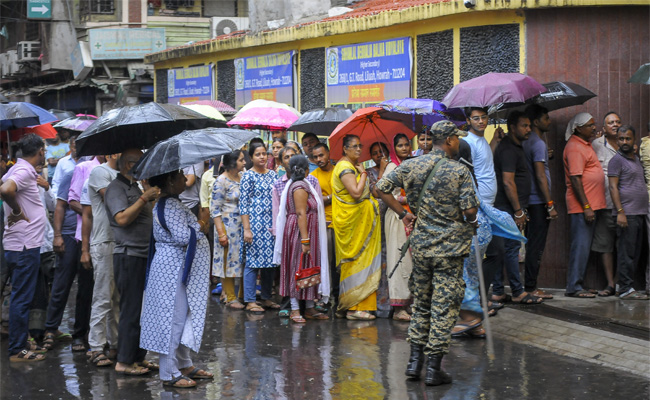
RJD MP Sudhakar Singh alleges ‘targeted deletion’ of voters in Bihar
Produces 17 ‘dead’ but alive citizens before Supreme Court
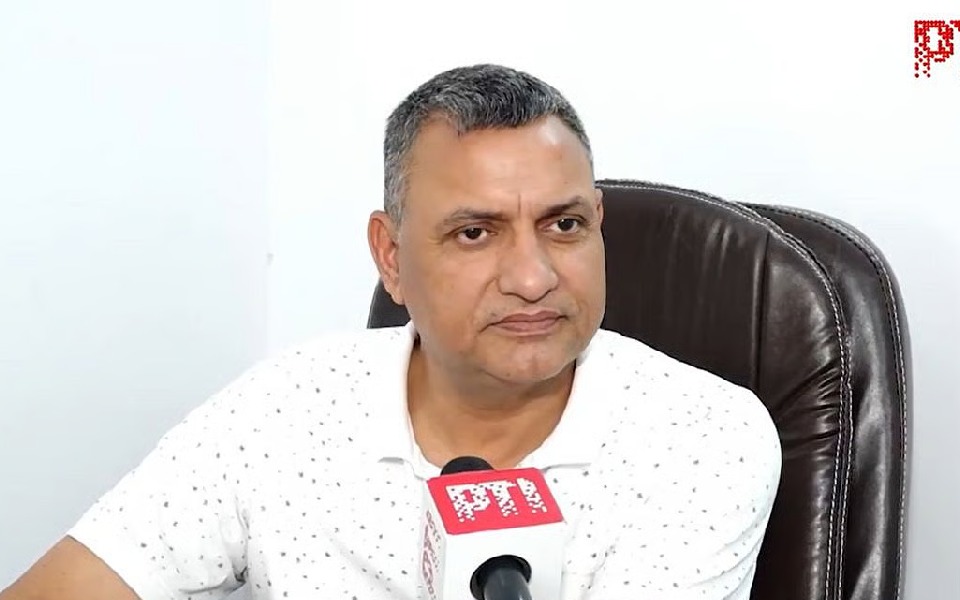
New Delhi – RJD MP Sudhakar Singh has levelled serious allegations against the Election Commission of India (ECI), claiming that lakhs of genuine voters in Bihar have been wrongfully struck off the electoral rolls under the ongoing Special Intensive Revision (SIR) of voter lists. Speaking to YouTube channel Red Mike after a Supreme Court hearing on Tuesday, Singh said he personally brought 17 people to the court whose names had been removed on the grounds that they were “dead” – but all were alive.
Singh, who is one of the petitioners in the case, said the number of such wrongful deletions runs into lakhs across the state. “If the Election Commission gives us a train, we will fill it with people who have been declared dead but are alive,” he said, adding that the 17 he brought to court were only from a single list he had prepared. He claimed that in one booth alone, 275 people had been marked as dead despite being alive, and his team had photographed them along with their EPIC cards to prove their identity.
The RJD leader also alleged large-scale addition of fake names in voter lists. “In Maharashtra, 65-70 lakh fake names were added. In one Lok Sabha seat in Bangalore, 1,15,000 votes were added. Now the same thing has started in Bihar,” Singh said. As an example, he claimed that two fake names – Suraj Singh and Manoj Kumar Rathod, had been added to the voter list at his own residential address, which is also the house.
According to Singh, this process is happening on two fronts, wrongful deletion of genuine voters and insertion of fake or duplicate names. “In my booth, Ashok Singh’s name has been added twice. Avdhesh Singh’s name has been added twice. This is not about ending fake names; this is about creating a committed voter list for BJP and RSS to win elections,” he alleged.
He further accused the ECI of refusing to share the list of 65 lakh voters removed from the draft rolls with either the petitioners or even the Supreme Court. “The Supreme Court is the temple of justice. If the Election Commission refuses to bring facts before the court, it means it wants to hide its theft,” he said. Singh pointed out that under the law, any voter whose name is removed must be informed of the reason and given a chance to respond, something he claimed was not being done anywhere in Bihar.
Slamming the poll panel, Singh alleged it was functioning for the benefit of Prime Minister Narendra Modi rather than as an independent constitutional body. He criticised recent changes in the appointment process of Election Commissioners, which now involve the Prime Minister and Home Minister instead of an earlier system that included the Leader of the Opposition and the Chief Justice of India.
Singh also questioned the ECI’s claim that the list of deletions had been given to Booth Level Agents (BLAs). “Yes, they gave it to BLAs, but in English. Bihar is a Hindi-speaking state – how many people here can read English? And the list doesn’t even mention the reason for deletion. This is like giving a hungry man rice mixed with pebbles and later saying we fed him,” he remarked.
He warned that the exercise would particularly harm migrant workers from Bihar, many of whom work in other states and may be unable to return to fix their records. “Forty percent of people in Bihar have no land papers, 35 percent are illiterate. How will they produce the documents the Election Commission is asking for? This is not just an attack on voters, it is an attack on citizenship,” he said. Singh also predicted similar exercises would be carried out in West Bengal and Uttar Pradesh, possibly just before elections to prevent affected voters from appealing in time.
The same day, political activist Yogendra Yadav, also a petitioner in the matter, appeared before a bench of Justice Surya Kant and Justice Joymalya Bagchi and produced two men who had been declared dead in Bihar’s SIR process but were alive. Calling the ongoing deletion drive “the largest exercise of disenfranchisement in the history of the world”, Yadav told the court that 65 lakh names had been removed from Bihar’s electoral rolls and warned the number could cross one crore.
“This is not an issue of routine revision. This is mass exclusion. These people are declared dead but are alive. Please see them,” Yadav told the judges. He argued that the assumption that Bihar’s voter list was inflated and needed correction was wrong and warned that extending SIR to other states would produce similar results.
When Justice Kant asked if a similar exercise in 2003 had been studied for its impact, Yadav replied that no such comparison was ever made and this was the first time in India’s history that a voter list revision had taken place with “zero additions” – meaning no new voters were registered during the process.
Yadav highlighted that 31 lakh women and 25 lakh men had been deleted from the rolls and described the process as “intensive deletion”. He also raised concerns about the workload of Electoral Registration Officers in Bihar, who are also Block Development Officers and are dealing with floods, yet expected to scrutinise thousands of forms daily.
Justice Bagchi acknowledged the possibility of “inadvertent error” in cases where living people were marked as dead but said the court took Yadav’s points seriously. Justice Kant praised Yadav’s analysis, telling him, “Thank you Mr Yadav, you have given excellent analysis. Thank you for your assistance.”
The hearing will continue on Wednesday.
Let the Truth be known. If you read VB and like VB, please be a VB Supporter and Help us deliver the Truth to one and all.
Rickelton's ton in vain as SRH beat MI by 6 wickets

Mumbai (PTI): Ryan Rickelton's whirlwind unbeaten ton was overshadowed by Heinrich Klaasen's unbeaten 65 as Sunrisers Hyderabad defeated Mumbai Indians by six wickets in an IPL match here on Wednesday.
Chasing an imposing 244-run target, Travis Head (76 off 30) and Abhishek Sharma (45 off 24) shared 129 runs for the opening wicket to set the platform for SRH.
Klaasen (65 not out off 30 balls) then displayed his all-round hitting abilities to guide SRH home with the help of Nitish Kumar Reddy (21) and Salil Arora (30 not out off 10) in 18.4 overs.
Earlier, Rickelton's knock powered MI to 243 for five.
MI rode on a 93-run stand between Rickelton (123 not out off 55 balls) and Will Jacks (46 off 22) in 7.1 overs for the opening stand to power the side.
MI skipper Hardik Pandya scored a valuable 31 off 15 balls before being dismissed.
Praful Hinge (2/54), Eshan Malinga (1/29), Sakib Hasan (1/39) and Nitish Kumar Reddy (1/31) were the wicket-takers for SRH.
Brief Scores:
Mumbai Indian: 243 for 5 in 20 overs (Ryan Rickelton 123 not out; Praful Hinge 2/54).
Sunrisers Hyderabad: 249 for 4 in 18.4 overs (Travis Head 76, Heinrich Klaasen 65 not out; AM Ghazanfar 2/51).