Rs 2,000 notes worth Rs 10,000 crore left in system: RBI Governor
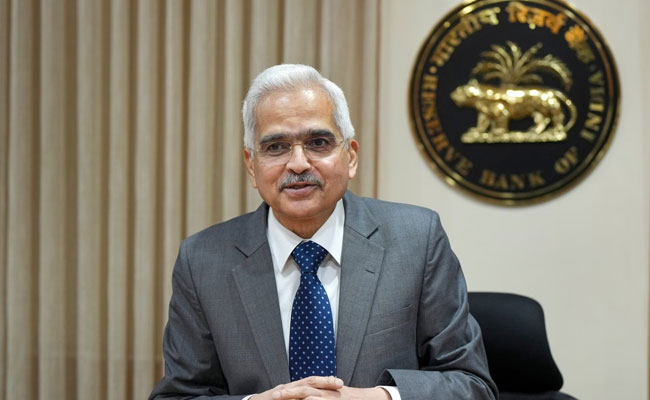
New Delhi (PTI): Reserve Bank Governor Shaktikanta Das on Friday said Rs 2,000 denomination notes are coming back and only Rs 10,000 crore worth of such notes are still with people.
He exuded confidence that these notes will also be returned or deposited back.
"Rs 2,000 notes are coming back and only Rs 10,000 crore is left in the system. The expectation is that the amount will also come back," he said on the sidelines of the event here.
Earlier this month, Das had said 87 per cent of the Rs 2,000 denomination notes being withdrawn have returned as deposits into banks while the rest has been exchanged across counters.
On May 19, the Reserve Bank of India (RBI) took the financial world by surprise when it declared its plan to phase out the Rs 2,000 note, which had been introduced in 2016 as part of a rapid remonetisation effort.
This had followed Prime Minister Narendra Modi's announcement to withdraw more than 88 per cent of the currency in circulation by invalidating the Rs 500 and Rs 1,000 notes.
Public and entities holding such notes were initially asked to either exchange or deposit them in bank accounts by September 30. The last date was later extended to October 7.
On October 7, both deposit and exchange services at bank branches were discontinued.
Starting October 8, individuals were provided with the choice of either exchanging the currency or having the equivalent sum credited to their bank accounts at 19 Reserve Bank of India locations.
Individuals or entities can exchange Rs 2,000 bank notes at the 19 RBI offices up to a limit of Rs 20,000 at a time. However, there is no limit on the total amount for getting Rs 2,000 notes credited into bank accounts.
Let the Truth be known. If you read VB and like VB, please be a VB Supporter and Help us deliver the Truth to one and all.
Bank account in Ramgarh tracked for fraudulent fund transactions across 24 states, 4 arrested

Ramgarh (Jharkhand) (PTI): Jharkhand police on Thursday said it has unearthed a network of interstate cyber frauds and arrested four miscreants for fraudulent transactions through a bank account in Ramgarh district after complaints of 274 suspected transactions in 24 states.
The states where complaints for fraudulent transactions were registered included Maharashtra, Karnataka, West Bengal, Uttar Pradesh, Telangana, Tamil Nadu, Kerala and Andhra Pradesh.
The action followed inputs received through 'Samanvaya portal', a centralised, web-based platform launched by the Union Home Ministry to curb cybercrime.
"We arrested four cyber miscreants after a current account with Kuju (Ramgarh) branch of the State Bank of India was found to have registered suspected financial transactions in 24 states with the help of the Pratibimba portal of the Home Ministry through the Samanvaya portal," Ramgarh Superintendent of Police Mukesh Kumar Lunayat said.
During the probe, police found that the account was opened under the MSME Udyam Registration scheme in the name of Shree Ganesh Enterprises, he said.
The account had been linked to as many as 274 complaints from different states related to cyber fraud and illegal fund transfers.
The registered proprietors of the enterprise were identified as Rahul Gupta (37), Ravi Kumar Verma (34), and Ajay Sharma (33), all residents of Ramgarh district, a statement from the Ramgarh police said.
During interrogation, Rahul Gupta and Ravi Kumar Verma revealed that they had opened multiple current accounts at the behest of Ritesh Agrawal alias Munna (40) and Sonu Kumar Jha (34).
They admitted receiving Rs 1.2 lakh in exchange for facilitating the opening of these accounts.
"The accused further confessed to sharing OTPs, activating mobile banking services, and handing over control of the accounts to the main operators through WhatsApp and Telegram groups. These accounts were then allegedly used to route fraudulent transactions.
Police said mobile data analysis of the accused led to the recovery of crucial digital evidence, including details of SIM cards, bank accounts, passbooks, ATM cards, QR code scanners, Aadhaar cards, and PAN cards shared through messaging platforms.
A total of four accused have been arrested so far and sent to judicial custody.
A case has been registered at the Cyber Crime Police Station under relevant sections of the Bharatiya Nyaya Sanhita (BNS) 2023 and Sections 66C and 66D of the Information Technology Act, 2000.
Further investigation is underway, the police said.