Rupee Crashes To Lifetime Low of 69 Against US Dollar
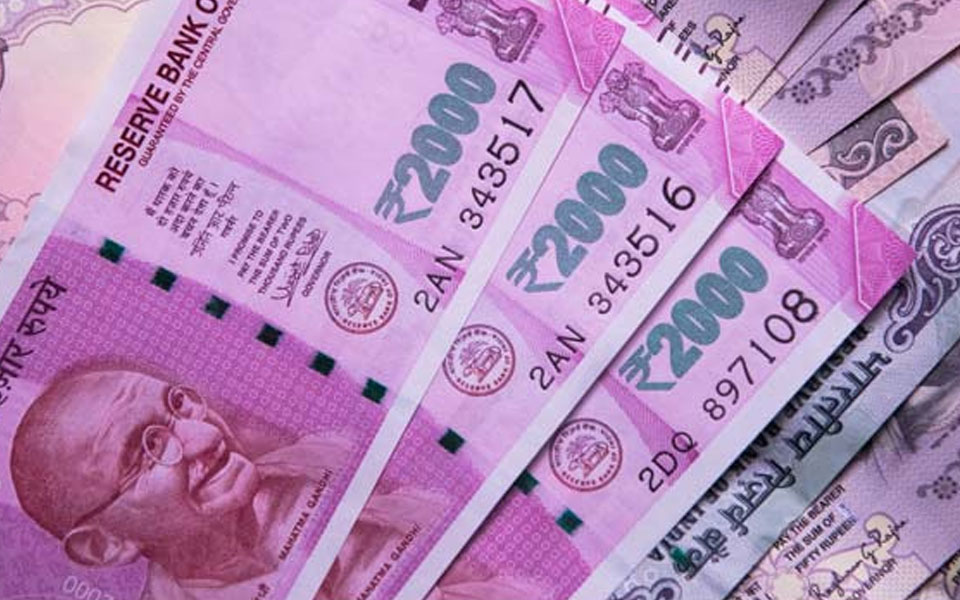
New Delhi : The rupee fell to an all-time low against the US dollar on Thursday tracking Asian peers, with weakening macro-economic fundamentals on the domestic front also weighing on the currency. The dollar's sharp gain overnight coupled with falls in Asian peers caused the drop in early trade, traders said, adding they were hopeful the central bank would step in to prevent further losses. The rupee was trading at 68.92/93 to the dollar at 11.12 am, after hitting a life low of 69.0950 earlier in the session, and sharply lower than its previous close of 68.65/66.
The rupee's last record low was 68.8650 per dollar, hit on November 24, 2016.
The dollar was, however, steady against its peers on Thursday, having failed to extend overnight gains amid conflicting signals from Washington on a proposal to restrict Chinese investment as the bitter U.S.-China trade row kept financial markets on edge.
On the domestic front, a widening current account deficit (CAD) due to higher global crude oil prices and steady capital outflows have weighed on the rupee this year.
"Weakening at this pace shatters confidence. Markets expect RBI (Reserve bank of India) to manage the currency more effectively. The pressure on INR is high, thus in the absence of major action from regulators, 70 levels can be seen," the head of currency and debt trading at a foreign bank said. "The RBI has been effectively managing (the rupee) over the years, and they do have ample firepower to manage sharp falls."
Foreign exchange reserves stood at $410.07 billion as of June 15, latest RBI data showed.
Oil prices have been rallying for much of 2018 on tightening market conditions due to record demand and voluntary supply cuts led by the Organization of the Petroleum Exporting Countries (OPEC).
Economy's March quarter CAD widened to $13.0 billion, or 1.9 per cent of GDP, from $2.6 billion, or 0.4 per cent of GDP, from a year earlier. Despite the rise in CAD, it remains modest relative to GDP and is largely financed by equity inflows, including foreign direct investment (FDI), Moody's said in a note on Thursday, adding that the large foreign exchange reserves provided a good buffer.
"India's low dependence on foreign-currency borrowing to fund its debt burden limits the risk of currency depreciation transmitting into materially weaker debt affordability," Moody's added.
courtesy : ndtv.com
Let the Truth be known. If you read VB and like VB, please be a VB Supporter and Help us deliver the Truth to one and all.
19-year-old girl in Belthangady who attempted suicide dies in Mangaluru hospital

Belthangady: A 19-year-old girl from Belalu village, who had attempted suicide at home by consuming poison, has reportedly died at a hospital in Mangaluru.
The deceased, Rama, was the daughter of Dinesh and Revathi Naik of Mayada Balemandikallu in Belalu village, Belthangady taluk, and a II PUC student at Vamapadavu College.
Rama’s attempt to commit suicide is being linked to personal matters, as she is known to have loved a youngster.
On the night of April 19, she reportedly consumed rat poison at her residence and was admitted to a hospital in Mangaluru for treatment. After 10 days of treatment, she died on April 30 after failing to respond to medical care.
A case has been registered at the Dharmasthala Police Station, and investigation is underway.
(Assistance for overcoming suicidal thoughts is available on the state’s health helpline 104, Tele-MANAS 14416.)