Rupee falls 23 paise to hit fresh record low of 85.50 against US dollar
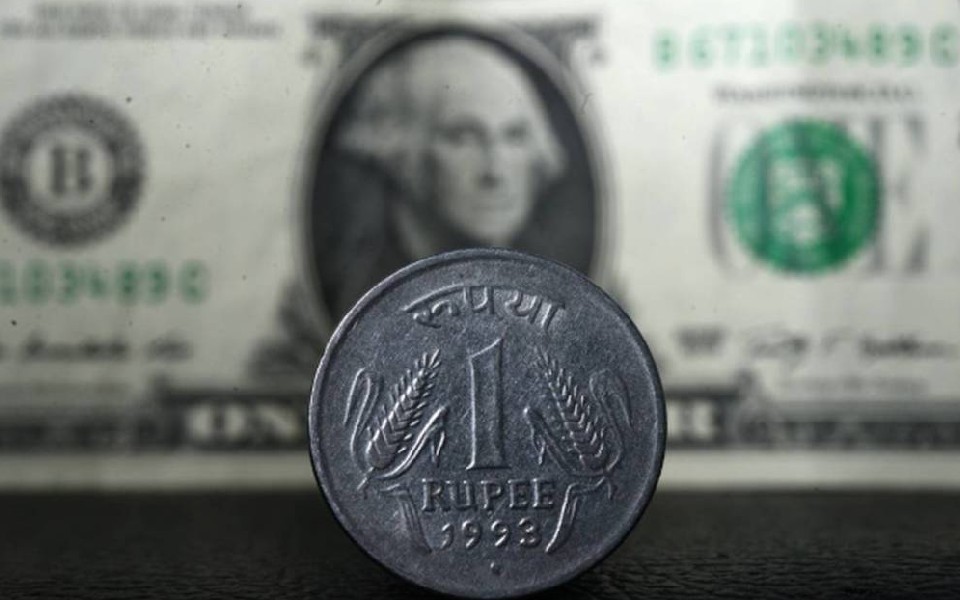
Mumbai, Dec 27: The rupee fell steepest in almost two years to hit its lifetime intraday low of 85.80 before a suspected central bank intervention helped recover some of its losses and settled 23 paise lower at a record low of 85.50 (provisional) against the US dollar on Friday due to a strong greenback amid increased month-end demand from banks and importers.
According to analysts, the Reserve Bank's stance to hold on to its dollar payments in short-term forward contracts added to the shortage of greenback, with importers rushing to meet their month-end payment obligations.
Despite robust sentiment in domestic equity markets, the rupee was weighed down by sustained outflow of foreign funds and rising crude oil prices, they added.
At the interbank foreign exchange, the rupee opened weak at 85.31 and plunged 53 paise to the lowest-ever intraday level of 85.80.
The unit finally ended the session at 85.50 (provisional) against the greenback, losing 23 paise from its previous closing level of 85.27.
The rupee's earlier sharpest one-day fall of 68 paise was recorded on February 2, 2023.
The domestic unit has been hitting new lows almost every day in the past couple of weeks. It had plunged 12 paise to 85.27 against the dollar on Thursday after declining 13 paise in the previous two sessions.
"The central bank holds USD 21 billion in short-side forward contracts set to mature in December and January. Market speculation suggests that the RBI has refrained from rolling over these maturing forwards, leading to a scarcity of dollars and an oversupply of rupees.
"Moreover, dollar liquidity in the market remains very low, amplifying the upward momentum in the pair. This imbalance has propelled the USD-INR pair towards 85.8075 levels," said Amit Pabari, MD of CR Forex Advisors.
According to Anuj Choudhary – Research Analyst at Mirae Asset Sharekhan, the rupee hit a record low on dollar demand from importers towards the end of the month and outflows from foreign investors (FIIs).
"Rising US treasury yields and crude oil prices also weighed on the rupee," he said and projected the USD-INR spot price in a range of Rs 85.30 to Rs 85.85, saying traders may take cues from goods trade balance data from the US.
Meanwhile, the dollar index, which gauges the greenback's strength against a basket of six currencies, was trading higher by 0.04 per cent at 107.94, while the 10-year benchmark US Treasury yield rose 0.76 per cent, hitting its seven-month high level of 4.61 per cent.
Brent crude, the global oil benchmark, rose 0.15 per cent to USD 73.37 per barrel in futures trade.
In the domestic equity market, the 30-share BSE Sensex settled 226.59 points or 0.29 per cent higher at 78,699.07 points, while Nifty went up 63.20 points, or 0.27 per cent to close at 23,813.40 points.
Foreign Institutional Investors (FIIs) were net sellers in the capital markets on Thursday, as they offloaded shares worth Rs 2,376.67 crore, according to exchange data.
Let the Truth be known. If you read VB and like VB, please be a VB Supporter and Help us deliver the Truth to one and all.
Air India resorts to cost-cutting ways amid 'tough times'; layoffs not anticipated
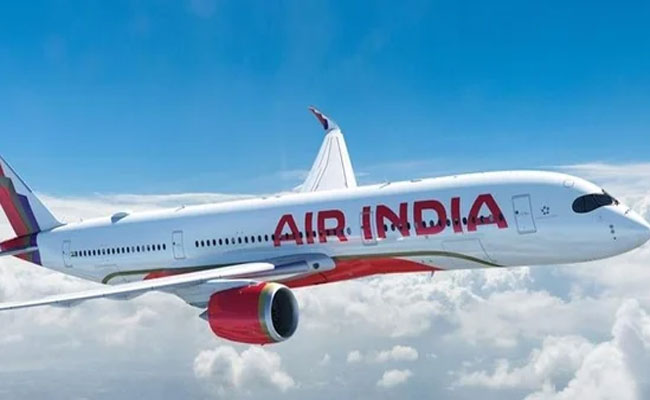
New Delhi/Mumbai (PTI): Hit hard by Pakistan airspace closure and Iran war, Air India has resorted to cost-cutting measures, including holding back annual increments for staff and asking them to cut discretionary spending as well as non-critical expenditures, warning of "tough times".
On Friday, Air India Chief Executive Officer & Managing Director (CEO & MD) Campbell Wilson told the staff it is going to be a "very, very difficult year" if things don't improve on the Middle East front.
A day after the loss-making airline's board discussed various cost-saving steps, Wilson, along with Chief Financial Officer (CFO) Sanjay Sharma and Chief Human Resources Officer (CHRO) Ravindra Kumar GP, addressed the employees during a townhall on Friday where the emphasis on the need to keep a close watch on costs.
With higher jet fuel prices due to the West Asia conflict and airspace curbs, the loss-making airline's expenses have spiralled in recent times and against this backdrop, Sharma also told staffers that FY26 has seen a softening in revenue amid heightened external uncertainties.
Calling for a relentless focus on costs in these tough times, Wilson urged employees to suspend discretionary spending, renegotiate rates where feasible, and defer non-critical expenditures.
"There must be a laser-sharp focus on eliminating wastage and leakages," he said.
Stressing the need to tighten the belt for a while, Wilson sounded optimistic that travel demand would rebound and the industry would continue on its upward path.
CHRO Ravindra Kumar told staff that the airline will proceed with variable pay for the last financial year and continue with planned promotions while noting that annual increments will be deferred by at least one quarter.
"We don't anticipate layoffs," he said.
At the airline's board meeting on Thursday, various cost-saving steps, including likely furloughs, were discussed. The Tata Group-owned airline has around 24,000 employees.
Generally, furlough refers to sending staff on unpaid leaves by companies during a tough financial situation.
During the townhall, CFO Sanjay Sharma said while strong revenue growth and fleet expansion drove financial momentum through FY25, FY26 has seen a softening in revenue amid heightened external uncertainties.
Air India has seen around 40 per cent CAGR (Compounded Annual Growth Rate) in revenue between 2022 and 2025, he added.
The airline was acquired by the Tata Group from the government in January 2022.
The Air India CEO mentioned the external challenges being facing the aviation industry as a whole, including the continued closure of Pakistan airspace that is expected to persist for the foreseeable future and geopolitical conflicts leading to disruptions and airspace closures across West Asia.
Wilson, who is set to step down later this year, also flagged a sharp depreciation of the rupee and a 2.5-3 times increase in jet fuel prices, and added that these factors have adversely affected travel sentiment and consumer confidence, as per the sources.
If the Strait of Hormuz opens, oil prices fall and consumer as well as business confidence come back, there is a decent chance of a solid recovery, Wilson said, adding that unless those circumstances happen, it was going to be "a very, very difficult year".
"I feel somewhat responsible that we ended up with probably the biggest surprise of the year in the external environment which was a full-scale war in our neighbouring region in the Gulf. That has had a huge impact on airspace," he said.
For Air India, Wilson said the situation is compounded by the fact that the airline cannot fly over the neighbouring country and has to take a much longer routing for any west-bound destination.
"Every airline is reporting that they are under some sort of financial pressure as a result of higher fuel prices and economic uncertainty. So, it is unfortunately not a great environment to be running an airline," the Air India CEO said.
The Air India Group -- Air India and Air India Express -- is projected to have incurred more than Rs 22,000 crore loss in the financial year ended March 2026.
At the townhall, Wilson also highlighted various initiatives, including completion of the retrofit of its legacy narrow-body aircraft and rapid network optimisation to redeploy capacity more efficiently.