Salman Khan house firing: Remove actor's name from plea over death of accused, says HC
Mumbai (PTI): The Bombay High Court on Monday ordered for the removal of actor Salman Khan's name as respondent in a plea seeking a CBI probe into the custodial death of an accused in a case of firing outside the actor's house.
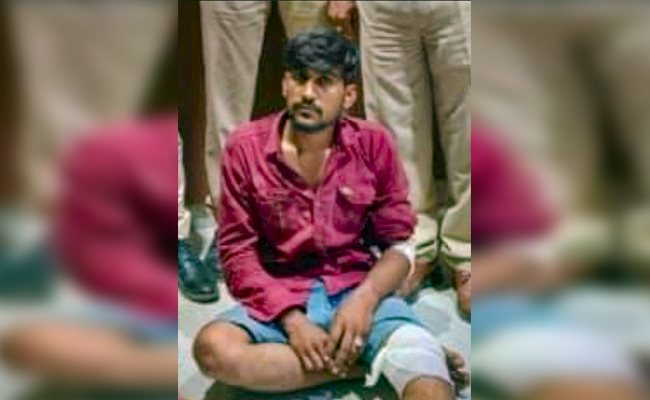
Accused Anuj Thapan was found dead on May 1 inside the toilet of the crime branch police lock-up here.
A division bench of Justices Revati Mohite-Dere and Shyam Chandak directed petitioner Rita Devi, mother of Thapan, to delete Khan's name from the petition.
"Delete his name. Petitioner seeks leave to amend the petition to delete the name of respondent 4 (Salman Khan) as there is no pleading against him and no relief sought against him," the court said.
On April 14, two motorbike-borne persons opened fire outside Bollywood superstar Salman Khan's residence in Bandra area here.
The alleged shooters - Vicky Gupta and Sagar Pal - were later arrested from Gujarat.
Thapan was arrested on April 26 from Punjab along with another person for allegedly supplying weapons to the shooters for firing at Khan's residence.
While police claim Thapan killed himself, Rita Devi in her petition filed on May 3 in the HC alleged foul play and claimed he was killed.
In her plea, she sought the HC to direct the Central Bureau of Investigation (CBI) to conduct a probe into her son's death.
The petition said Thapan was physically assaulted and tortured by police in custody.
Rita Devi had in her plea impleaded Khan as a respondent.
The high court on Monday said no averments or relief was sought against Khan in the petition and hence there was no point in keeping the actor involved in the plea.
"What is the point of making a person who is supposed to be the victim a party respondent? We see no reason why respondent 4 should continue to be in this plea. He is not a necessary party," the bench said.
The HC noted the petitioner's concern was the death of her son but there was no point in making Khan a respondent in the plea.
"You (petitioner) are concerned with the death of your son...that the court will look into...but what is the point of impleading respondent 4 in the plea," the bench asked.
"This is too far-fetched. No relief is sought against him (Salman Khan) and no averment or allegation is made against him," the court added.
The petitioner's advocate told the court that while they are not seeking any relief in their plea against the actor, he should be part of the probe being carried out by the state Crime Investigation Department (CID) into Thapan's death.
The court said it is for the CID to decide.
By impleading Khan as a respondent in the plea, the petitioner was shifting her focus to something else instead of the main issue, the court said.
"Your (petitioner) focus should be on the main issue. By doing this, you are digressing from the core issue which should be your concern," it said.
Additional public prosecutor Prajakta Shinde informed the court that as per law, a magisterial enquiry was also initiated and submitted a status report of the CID probe before the HC.
Rita Devi's advocate told the court that the magistrate issued summons to the petitioner on May 10, directing her to appear before it for recording her statement on May 23, but she received the summons only on May 24.
The court said the magistrate shall issue fresh summons to the petitioner and ensure it is served prior in time so that she can appear.
The high court posted the matter for further hearing after six weeks.
Let the Truth be known. If you read VB and like VB, please be a VB Supporter and Help us deliver the Truth to one and all.
AIITA welcomes Karnataka’s ban on obscene songs in school events

Bhatkal: The Karnataka unit of the All India Ideal Teachers Association (AIITA) has welcomed the Karnataka government’s decision to strictly ban school children from dancing to obscene songs during educational and cultural programmes in government, aided, and private schools across the state.
AIITA Karnataka State President M. R. Manvi congratulated the government for taking what he termed an important step to preserve the sanctity of education.
“Such decisions to safeguard the dignity of school children and uphold the values of education are the need of the hour. This rule should not be limited to government schools alone but must be strictly implemented in all private educational institutions as well,” he said.
He further urged the government to address other concerns within school programmes.
“The government should not only prohibit obscene dances in the name of school anniversaries, but also ensure that plays and dialogues that incite religious hatred are avoided. Schools should be centres of harmony, not platforms for spreading hatred,” he added.
According to a recent circular issued by the Department of School Education and Literacy, obscene dances are adversely affecting the mental health and moral values of students.
In this regard, schools have been advised to use songs that promote nationalism, positive thinking, the greatness of Kannada culture, and value-based traditions instead of inappropriate content during programmes.
The circular also emphasises that students should be dressed in decent attire.
AIITA also backed the department’s warning that disciplinary action would be taken against head teachers if such guidelines are violated. The association has further demanded that district Deputy Directors of Public Instruction strictly monitor the implementation of these rules.