Salute tricolour 21 times with 'Bharat Mata ki Jai' slogan: MP HC tells man while granting bail
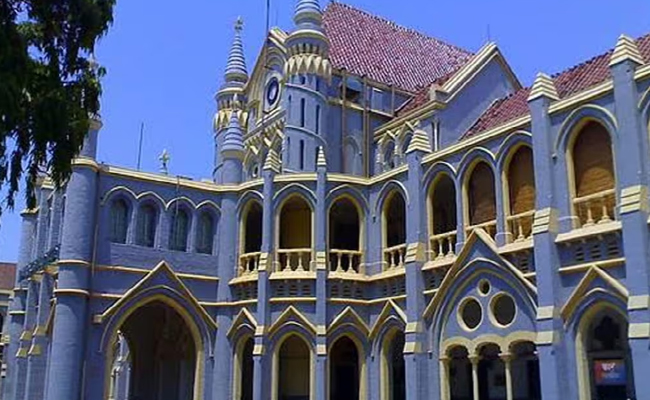
Jabalpur (PTI): The Madhya Pradesh High Court has granted bail to a man accused of shouting a pro-Pakistan slogan and directed him to salute the national flag at a Bhopal police station 21 times and raise 'Bharat Mata ki Jai' slogan twice a month till the end of the trial.
Justice DK Paliwal, in the order on Tuesday, said the applicant may be released on bail by imposing some conditions which may enthuse in him a sense of responsibility and pride for the country in which he was born and living.
"He is openly shouting slogans against the country in which he was born and brought up," the HC stated.
The court directed the accused to salute the national flag and chant 'Bharat Mata ki Jai' slogan on every first and fourth Tuesday of the month.
The accused, Faizal alias Faizan, was arrested after an FIR was registered against him at Bhopal's Misrod police station in May under section 153B (imputations, assertions prejudicial to national integration) of the lapsed Indian Penal Code (IPC).
"It is directed that applicant - Faizal alias Faizan be released on bail on his furnishing a personal bond of Rs 50,000 with one solvent surety in the like amount to the satisfaction of the trial court, for his regular appearance before the trial court during the trial," the HC order said.
"It is further directed that he shall continuously mark his presence before police station Misrod, Bhopal every 1st and 4th Tuesday of the month till the conclusion of the trial and shall salute the National Flag unfurled on the building of the police station 21 times by raising 'Bharat Mata ki Jai'," the high court stated.
As per the prosecution, the accused had shouted a pro-Pakistan slogan which amounted to promoting enmity between different groups and his act was prejudicial to the maintenance of harmony and national integration.
"After investigation, a charge sheet has been filed," the court order noted.
The defence counsel submitted that the applicant had been falsely implicated.
However, the learned counsel (for the applicant) has fairly stated that in a video, the applicant is seen shouting the slogan hailing Pakistan and denouncing India, the order stated.
The state government's counsel opposed the bail, saying the applicant was a habitual offender and 14 criminal cases were registered against him.
Let the Truth be known. If you read VB and like VB, please be a VB Supporter and Help us deliver the Truth to one and all.
Oath-taking ceremony of first BJP govt in Bengal on May 9; Modi, Shah likely to attend
Kolkata (PTI): The oath-taking ceremony of the first BJP government in West Bengal will be held at Brigade Parade Ground here on May 9, marking the saffron camp’s arrival in power in a state after decades on the political fringes.
The ceremony, scheduled to begin at 10 am, is expected to witness the presence of Prime Minister Narendra Modi, Union Home Minister Amit Shah, BJP president Nitin Nabin, several Union ministers and chief ministers of BJP- and NDA-ruled states, party sources said.
“The new BJP government will take oath on May 9 at 10 am at Brigade Parade Ground,” state BJP president Samik Bhattacharya announced on Wednesday.
Even as the BJP leadership kept its cards close to the chest on the chief ministerial face, Leader of the Opposition Suvendu Adhikari has emerged as a frontrunner in internal discussions after cementing his position as the party’s principal mass leader in Bengal politics.
Adhikari, once among Mamata Banerjee’s closest lieutenants and a key architect of the TMC’s rural expansion in districts such as Purba Medinipur, crossed over to the BJP ahead of the 2021 assembly elections and went on to defeat Banerjee in Nandigram in one of Bengal’s fiercest political battles.
Five years later, he again found himself at the centre of Bengal’s political churn by beating Banerjee in her own turf at Bhabanipur by over 15,000 votes.
Other names for the CM post doing the rounds include Bhattacharya, Union minister Sukanta Majumdar and former Rajya Sabha MP Swapan Dasgupta, though party insiders indicated that the leadership was inclined towards projecting a “bhumiputra” face rooted in Bengal’s linguistic and cultural ethos.
During the campaign, Shah repeatedly asserted that the BJP’s chief minister in Bengal would be a “son of the soil”, born and educated in the state, in an attempt to blunt the TMC’s sustained attack that the BJP represented an “outsider” political culture alien to Bengal’s social and intellectual traditions.
The BJP bagged 207 of the 294 assembly seats in the recently concluded elections, ending the Trinamool Congress’s uninterrupted 15-year rule and scripting the saffron party’s biggest breakthrough in a state where it once struggled to open its electoral account.
Significantly, the swearing-in ceremony will be held on the 25th day of Baisakh in the Bengali calendar — observed across the state as Rabindra Jayanti, the birth anniversary of Rabindranath Tagore — lending the event a deeper cultural symbolism.
According to BJP leaders, the choice of the date is aimed at embedding the party’s historic rise within Bengal’s cultural imagination and countering the long-standing perception battle over identity and belonging.
Over the last decade, the BJP has steadily attempted to appropriate and reinterpret icons of Bengal’s cultural nationalism — from Tagore and Swami Vivekananda to Netaji Subhas Chandra Bose and Syama Prasad Mookerjee — as part of a broader ideological effort to expand its emotional and political footprint in the state.
Party insiders said the leadership was also conscious of the need to balance Bengal’s competing regional aspirations while choosing the chief ministerial face, with discussions also taking place around whether greater representation should be accorded to north Bengal, a region where the BJP has made substantial electoral gains over successive elections.
A meeting of the newly elected BJP MLAs has been convened on May 8 evening, party sources said, though the leadership remained tight-lipped over the final choice.
The Brigade Parade Ground ceremony is expected to mark not merely a transfer of power, but a defining moment in Bengal’s political history, the culmination of the BJP’s long ideological and organisational march from the margins to the centre of power in a state that had for decades resisted the saffron surge seen elsewhere in India.