Sanjay Raut posts cartoon taking potshots at his party Shiv Sena's alliance partner
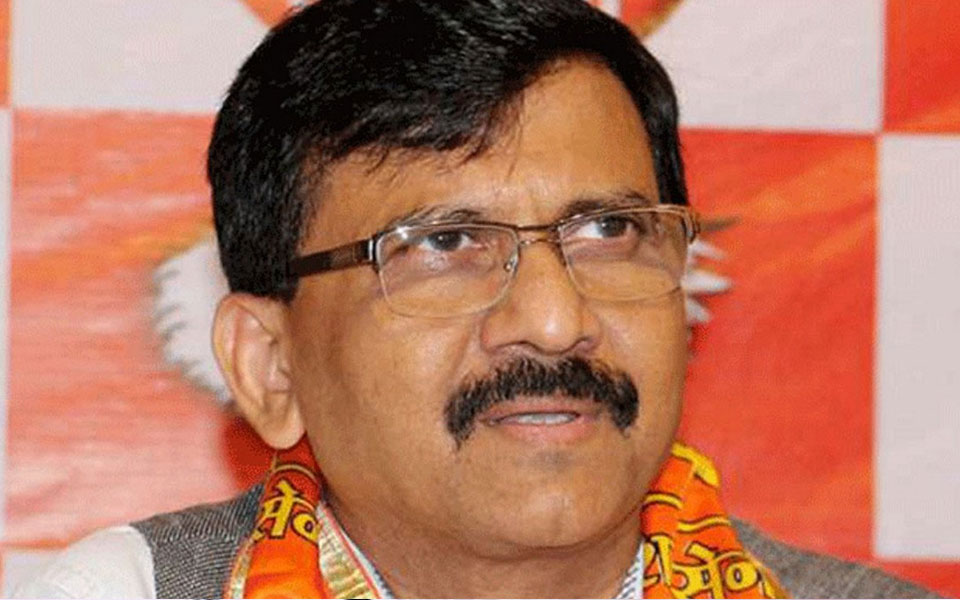
Mumbai: A day after Maharashtra Assembly election results showed a dip in BJP's tally compared to 2014 polls, Shiv Sena MP Sanjay Raut posted a cartoon to take a dig at his party's senior alliance partner.
The cartoon, posted by Raut on his verified Twitter account, shows a tiger (Shiv Senas party symbol) wearing a clock locket (NCPs party symbol) sniffing a lotus (BJPs party symbol).
While the post is captioned "bura na maano Diwali hai" to denote that it was made in jest, the underlined meesage echoes with what former chief minister Prithviraj Chavan sought to convey about the the Sena, NCP and Congress coming together to prevent BJP from retaining power in Maharashtra.
Chavan had on Thursday spoken of an "interesting possibility", that of the Sena, NCP and Congress aligning to upset the BJP's applecart. In the 288-member Assembly, the BJP won 105 seats, while ally Sena bagged 56. The NCP bagged 54 seats and the Congress emerged victorious in 44 seats.
व्यंग चित्रकाराची कमाल!
— Sanjay Raut (@rautsanjay61) October 25, 2019
बुरा न मानो दिवाली है.. pic.twitter.com/krj2QAnGmB
In the 2014 polls, the BJP had won 122 seats, the Sena 63, the Congress 42 and the NCP 41. Chavan said the results have thrown up an "interesting possibility", but stopped short of indicating if the Congress and NCP will align with the Sena - which he termed as the 'lesser evil' (compared to BJP) - to form the next government in Maharashtra.
In terms of the increase in number of seats compared to the 2014 polls, the Sharad Pawar-led NCP emerged as the largest gainer, while the BJP's tally took a considerable dip.
Meanwhile, the Sena mouthpiece Saamana on Friday had a big headline on its front page, proclaiming that the Uddhav Thackeray-led party has the "keys to power" in Maharashtra.
Let the Truth be known. If you read VB and like VB, please be a VB Supporter and Help us deliver the Truth to one and all.
4 workers die after being buried under coal slurry in Jharkhand's Dhanbad
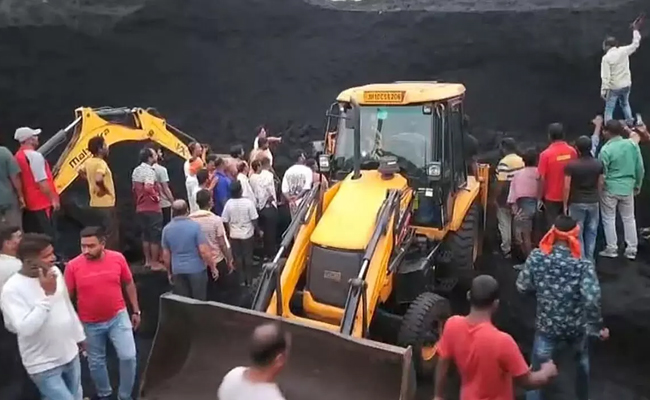
Dhanbad (Jharkhand) (PTI): At least four workers died after being buried under coal slurry in Jharkhand's Dhanbad district on Saturday, a police official said.
The incident took place at Moonidih coal washery in the command area of Bharat Coking Coal Limited (BCCL).
"Bodies of all four workers were dug out of debris during a rescue operation," Putki police station in-charge Waqar Hussain told PTI.
The incident took place when coal slurry was being loaded into trucks by workers, during which a large chunk of slurry fell and trapped several workers underneath, officials said.
The deceased have been identified as Manik Bauri, Dinesh Bauri, Deepak Bauri, and Hemlal Gope.
Meanwhile, the family members of the deceased and local villagers placed the bodies in front of the washery gate and began a protest.
They demanded compensation, jobs for dependents and action against those responsible for the incident.
Police and administration officials are trying to pacify the protesters, an official said.