SC agrees to examine if ED can file petition before HCs under Article 226 as juristic person
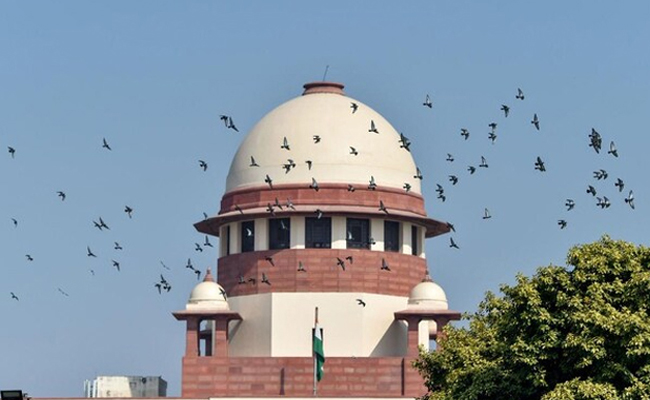
New Delhi (PTI): The Supreme Court on Tuesday agreed to examine whether the Enforcement Directorate can file a writ petition before high courts under Article 226 of the Constitution for enforcement of its rights as a 'juristic person'.
A juristic person is a non-human legal entity recognised by the law and entitled to rights and duties in the same way as a human being.
A bench of Justices Dipankar Datta and Satish Chandra Sharma issued notice to the agency on appeals filed by Kerala and Tamil Nadu governments challenging an order passed by the Kerala High Court which upheld the ED's locus to file writ petitions under Article 226.
Article 226 refers to power of high courts to issue certain writs.
The Kerala High Court, in its order passed on September 26, last year had upheld a single judge order staying the judicial inquiry into the ED probe of the 2020 gold smuggling through diplomatic channel.
The judicial inquiry commission was set up following allegations that ED officials coerced the accused to implicate political leaders, including the CM, in the gold smuggling case.
The high court had dismissed an appeal filed by the Kerala government challenging the single bench's interim stay order.
It had observed that the appeal lacked merit, and the single bench had committed no error in entertaining the ED's petition and staying the inquiry.
The case originated from a May 7, 2021, state govt notification ordering a judicial inquiry under the Commission of Inquiry Act, 1952, against ED officials accused of coercing the accused to implicate political leaders.
Former HC judge Justice V K Mohanan was appointed to head the inquiry commission. It was tasked with examining evidence, including an audio clip attributed to accused Swapna Suresh and a letter by accused Sandeep Nair, both alleging coercion by ED officers.
ED deputy director moved HC, questioning the state's authority to order an inquiry against a central investigating agency.
The single bench held that the ED had locus standi (the right to approach the court) and granted an interim stay of the notification on August 11, 2021, prompting the state government to file an appeal.
Let the Truth be known. If you read VB and like VB, please be a VB Supporter and Help us deliver the Truth to one and all.
RR beat RCB by six wickets in IPL
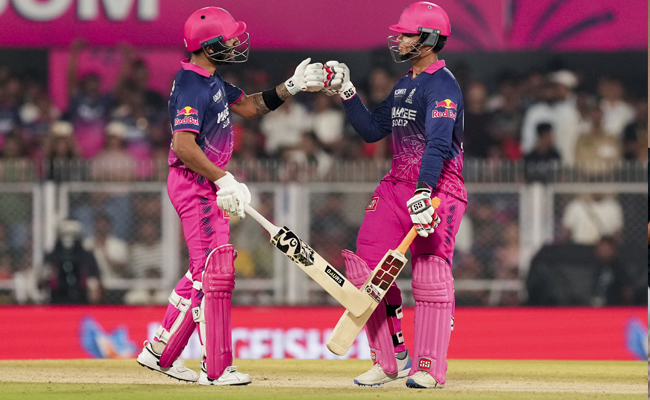
Guwahati (PTI): Blistering fifties by Vaibhav Sooryavanshi and Dhruv Jurel powered Rajasthan Royals to a six-wicket win over Royal Challengers Bengaluru in their IPL match here on Friday.
Sent in to bat, RCB rode on a fighting half-century by skipper Rajat Patidar (63) to post 201 for 8.
Virat Kohli (32), Romario Shepherd (22) and Venkatesh Iyer (29) also chipped in with useful contributions.
In reply, Sooryavanshi (78 off 26 balls) and Dhruv Jurel (81 not out off 43 balls) shared a 37-ball 108-run partnership for the second wicket to set the platform. Krunal Pandya (2/30) tried to bring them back with back-to-back wickets.
But Jurel, in the company of Ravindra Jadeja (24), completed the task with another 68-run stand, with two overs to spare.
For RR, Jofra Archer (2/33), Ravi Bishnoi (2/32) and Brijesh Sharma (2/37) took two wickets.
Brief scores:
Royal Challengers Bengaluru: 201 for 8 in 20 overs (Rajat Patidar 63; Jofra Archer 2/33, Ravi Bishnoi 2/32, Brijesh Sharma 2/37).
Rajasthan Royals: 202 for 4 in 18 overs (Vaibhav Sooryavanshi 78, Dhruv Jurel 80 not out; Krunal Pandya 2/30, Josh Hazlewood 2/44).