SC agrees to hear Owaisi's plea seeking extension of time for registration of Waqf properties
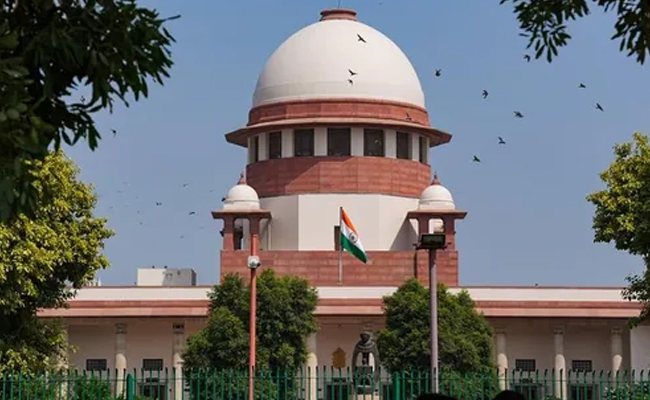
New Delhi (PTI): The Supreme Court on Monday agreed to list again for hearing a plea of AIMIM leader Asaduddin Owaisi seeking extension of time for the mandatory registration of all Waqf properties, including 'Waqf by user', under the UMEED portal.
The bench earlier listed the plea of the AIMIM leader and others on the issue for consideration on October 28. However, it could not be taken up for the hearing.
On Monday, lawyer Nizam Pasha, appearing for Owaisi, urged a bench comprising Chief Justice of India (CJI) B R Gavai and Justice K Vinod Chandran to hear the matter urgently as it could not be heard on the earlier date.
"We will give a date," the CJI said.
Earlier, the lawyer said the six-month period for the mandatory registration of Waqf was nearing its end.
In an interim order on September 15, the top court put on hold a few key provisions of the Waqf (Amendment) Act, 2025, including a clause that only those practising Islam for the last five years could create Waqf, but refused to stay the entire law, outlining the presumption of constitutionality in its favour.
It also held the Centre's order to delete the 'Waqf by user' provision in the newly-amended law was prima facie not arbitrary and the argument that Waqf lands would be grabbed by governments held "no water".
'Waqf by user' refers to a practice where a property is recognised as a religious or charitable endowment (waqf) based on its uninterrupted long-term use for such purposes, even if there isn't a formal, written declaration of Waqf by the owner.
Pasha previously urged the court to hear a miscellaneous application seeking an extension of time for registration of Waqf properties.
He said six months' time was given in the amended law for the registration of the waqf properties and "five months went during the judgement, we now only have one month left".
The Centre launched the Unified Waqf Management, Empowerment, Efficiency and Development (UMEED) Act central portal on June 6 to create a digital inventory after geo-tagging all Waqf properties.
According to the mandate of the UMEED portal, details of all registered Waqf properties across India are to be mandatorily uploaded within six months.
Let the Truth be known. If you read VB and like VB, please be a VB Supporter and Help us deliver the Truth to one and all.
No unannounced load shedding in Kerala, outages due to overload, says Minister
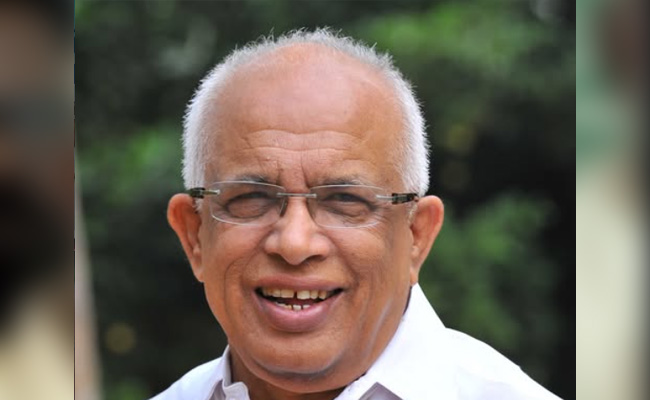
Palakkad (PTI): Kerala Electricity Minister K Krishnankutty on Saturday said there was no unannounced load shedding in the state, attributing recent power interruptions to temporary overload caused by high consumption.
Clarifying concerns raised from various parts of the state, the minister said the disruptions are not deliberate but occur when demand peaks, particularly between 10 pm and 11 pm.
"It is not being done intentionally. Power consumption has risen sharply, and when there is excessive and indiscriminate usage, the system experiences overload, leading to natural supply interruptions," he told reporters here.
His remarks come amid complaints that several areas have been witnessing frequent power cuts, often lasting around 15 minutes and occurring multiple times during the night.
Krishnankutty said the state's power demand has crossed 6,195 MW, putting pressure on the supply system. He added that around 70 per cent of Kerala's electricity is procured from outside, and existing power banking arrangements have been exhausted.
"We have approached the Regulatory Commission seeking permission to purchase more power. However, this will come at a higher cost," he said.
The minister said the government is trying to avoid increasing electricity tariffs and urged consumers to exercise restraint in usage to help manage the situation.
Responding to opposition criticism over the ruling LDF's earlier claims of a decade without power cuts, he said the current situation is not unique to Kerala.
A power crisis is emerging across the country, he said, and sarcastically asked the Opposition to take note of the role of natural factors in this.
Krishnankutty expressed confidence that the situation would improve within two days, while cautioning that long-term energy security would depend on enhancing in-state power generation.
He also warned that future generations could face serious challenges if adequate electricity production capacity is not developed within Kerala.