SC agrees to list PIL against practice of parties promising freebies during polls
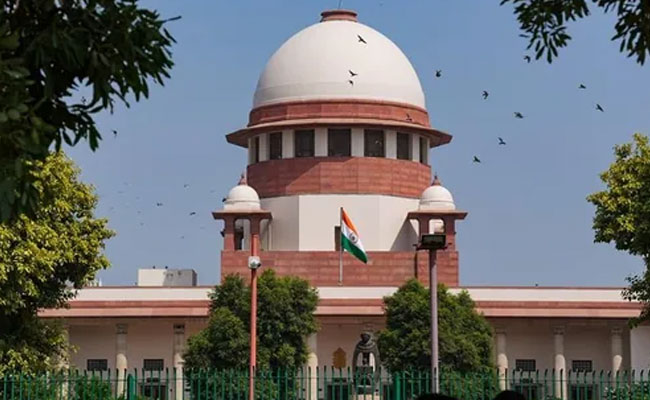
New Delhi (PTI): The Supreme Court agreed to list for hearing on Thursday a PIL against the practice of political parties promising freebies during elections, a significant development that comes ahead of general elections beginning April 19.
The PIL also seeks a direction to the Election Commission to invoke its powers to freeze the election symbols and cancel the registration of such political parties.
"This is important. We will keep this on board tomorrow," the bench, comprising Chief Justice D Y Chandrachud and Justices J B Pardiwala and Manoj Misra, said on Wednesday.
The apex court took note of the submissions of senior advocate Vijay Hansaria, appearing for lawyer and PIL petitioner Ashwini Upadhyay, that the plea needs to be heard before the Lok Sabha polls.
The plea said there should be a total ban on populist measures to gain undue political favour from voters as they violate the Constitution, and the EC should take suitable deterrent measures.
It also urged the court to declare that the promise of irrational freebies from public funds before elections unduly influences the voters, disturbs the level playing field and vitiates the purity of the poll process.
"Petitioner submits that the recent trend of political parties to influence voters by offering freebies with an eye on elections is not only the greatest threat to the survival of democratic values but also injures the spirit of the Constitution," said the plea.
"This unethical practice is just like giving bribes to the electorate at the cost of the exchequer to stay in power and must be avoided to preserve democratic principles and practices," it said.
The petition sought a direction to the EC to insert an additional condition in the relevant paragraphs of the Election Symbols (Reservation and Allotment) Order 1968, which deals with conditions for recognition as a state party, that a "political party shall not promise/distribute irrational freebies from the public fund before the election".
The petitioner has urged the apex court to declare that the promise or distribution of private goods or services, which are not for public purposes from public funds, before the elections violates several articles of the Constitution, including Article 14.
There are eight recognised national political parties and 56 state-level recognised parties. The total number of registered unrecognised political parties in the country is around 2,800.
The seven-phase elections for the 18th Lok Sabha will begin on April 19 and end on June 1. The votes will be counted on June 4.
The nomination process for 102 parliamentary constituencies spread across 21 states and Union territories where polling would be held in the first phase began on Wednesday with the issuance of a notification.
Let the Truth be known. If you read VB and like VB, please be a VB Supporter and Help us deliver the Truth to one and all.
Court can reject anticipatory bail but cannot direct accused to surrender: SC
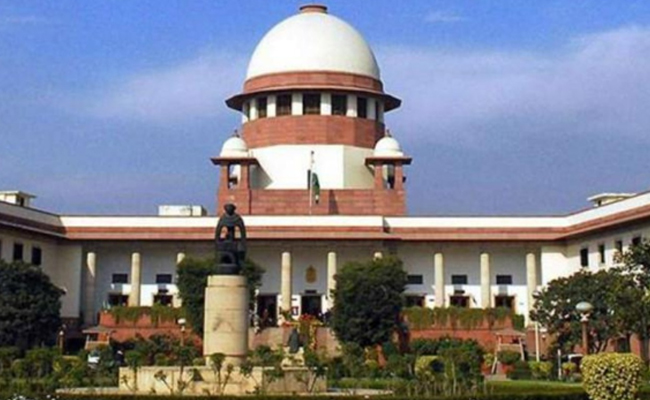
New Delhi (PTI): A court can reject anticipatory bail of an accused but it has no jurisdiction to direct him to surrender before the trial court, the Supreme Court has said.
A bench of Justices J B Pardiwala and Ujjal Bhuyan made the observation while hearing a plea filed by a man accused of cheating and forgery.
"If the court wants to reject the anticipatory bail, it may do so, but the court has no jurisdiction to say that the petitioner should now surrender," the bench said.
The Jharkhand High Court had rejected anticipatory bail plea of the accused and asked him to surrender and seek regular bail.
In this case, a complaint had been filed before a magistrate alleging offences under Sections 323 (voluntarily causing hurt), 420 (cheating), 467 (forgery of valuable security), 468 (forgery for purpose of cheating), 471 (using forged document) and 120B read with 34 of the IPC, in connection with a land dispute.
The high court had dismissed the second anticipatory bail application of the accused on the ground that no new circumstances were shown.
It had relied on its earlier order rejecting his first anticipatory bail plea, in which the court directed the petitioner to surrender before the trial court and seek regular bail in terms of the decision in Satender Kumar Antil v. CBI.
The top court said such a direction was wholly without jurisdiction and said that if a court chooses to reject anticipatory bail, it may do so, but it cannot compel the accused to surrender.