SC asks EC to pass order on plea to prepone poll timing in LS election
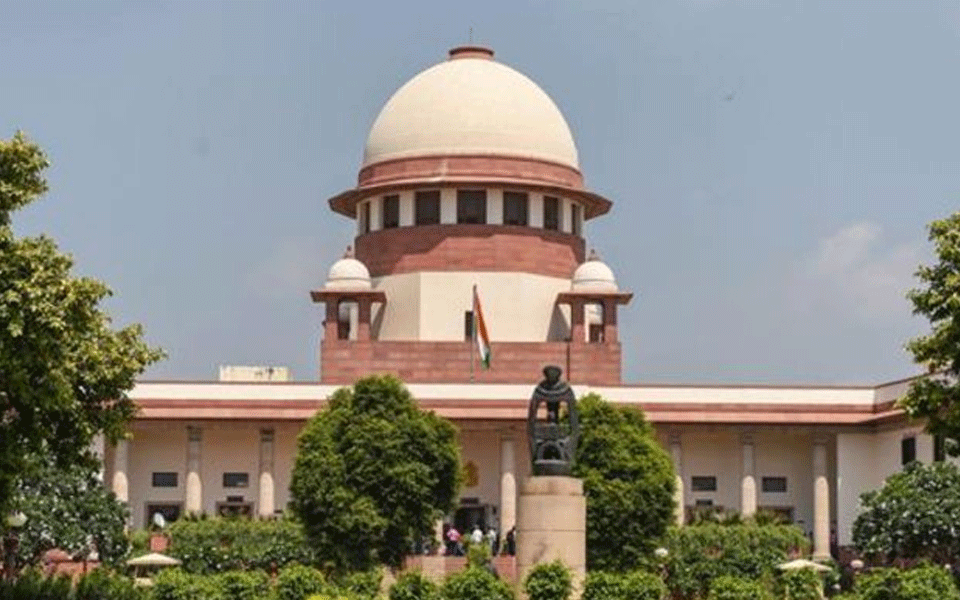
New Delhi, May 2: The Supreme Court asked the Election Commission on Thursday to pass "necessary orders" on a representation seeking advancing of the voting time to 5 AM from 7 AM for the remaining phases of the Lok Sabha polls due to heat wave conditions and onset of the holy month of Ramzan.
A plea in this regard was mentioned for urgent hearing before a bench headed by Chief Justice of India Ranjan Gogoi.
The bench, also comprising justices Deepak Gupta and Sanjiv Khanna, took the petition on board and said, "The Election Commission of India is directed to pass necessary orders. The writ petition is disposed of in the above terms."
The petition, filed by advocates Mohammad Nizamuddin Pasha and Asad Hayat, sought advancement of polling hours by two to two-and-a half hours, for voting to commence from 4.30 or 5 AM instead of 7 AM, in the remaining phases.
"The petitioners pray for a direction to the Election Commission of India to extend the polling hours during the fifth, sixth and seventh phases of the ongoing general elections, 2019 on May 6, May 12 and May 19, respectively, by 2-2.5 hours so as to commence at 4:30/5 AM (instead of the notified time of 7 AM) on account of the unprecedented heat waves prevailing in several parts of the country and the onset of the holy month of Ramzan," the plea said.
The plea said that Ramzan, the holy month of fasting for Muslims, is likely to commence from May 6, the day of fifth phase of voting in the Lok Sabha elections.
It said that during Ramzan, Muslims keep fast and do not consume food or water from one and a half hours before dawn till dusk every day.
The petitioners said they had given a representation to the Election Commission on Monday last in this regard, but the poll panel has not responded to it.
"On April 29, a representation was made to the respondent (EC) on this behalf bringing the aforesaid facts to its notice and requesting it to extend the polling hours in the fifth, sixth and seventh phases of the general elections 2019 so as to commence at 4.30 or 5 am instead of 7 am but no response has been received so far," the plea said.
It also said that Indian Meteorological Department has issued warnings indicating severe heat wave conditions over the next few days, with temperatures rising up to five degree celsius than normal in poll bound areas of Madhya Pradesh, Bihar, Haryana, Delhi, Chandigarh, Jharkhand, Rajasthan and Himachal Pradesh.
The plea said that the harsh weather conditions would make it difficult for Muslims to go out and vote.
"In the intense heat, it will be very difficult for Muslim voters to queue up at the poling booths during the day in the intense heat to exercise their franchise. During Ramzan, most practising Muslims stay up for an early morning meal and sleep after the morning prayer," it said.
"Thereafter, they avoid going out in the heat to the extent possible to avoid thirst, dehydration and the possibility of a heatstroke. Therefore, in the present weather conditions, a lot of Muslim will be unable to go out to exercise their franchise," the plea said.
Let the Truth be known. If you read VB and like VB, please be a VB Supporter and Help us deliver the Truth to one and all.
Sujit Nair raises concerns over speculation of DMK-AIADMK understanding to block TVK
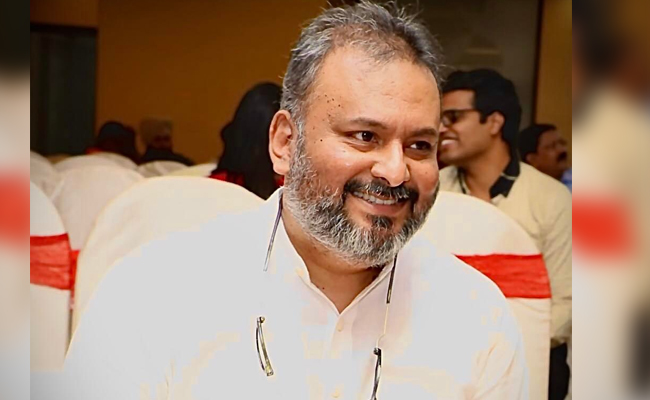
Chennai: Journalist and political commentator Sujit Nair has expressed concern over speculation that the Dravida Munnetra Kazhagam and the All India Anna Dravida Munnetra Kazhagam could explore a post-poll understanding to prevent Vijay-led Tamilaga Vettri Kazhagam from forming the government in Tamil Nadu.
In a social media post, Sujit Nair said the election verdict in Tamil Nadu reflected a clear public demand for political change and argued that the mandate should be respected irrespective of political preferences.
Referring to reports and political discussions surrounding a possible understanding between the DMK and AIADMK, he said he hoped such developments remained only speculative conversations and did not turn into reality.
Nair stated that if such an alliance were to take shape, it would raise serious questions about ideological politics in the country. He said TVK had emerged through a democratic electoral process and that the legitimacy to govern in a parliamentary democracy comes from the people’s verdict.
According to him, attempts to prevent an electoral winner from forming the government through unexpected political arrangements may be constitutionally valid, but many people could view them as politically opportunistic.
He further said that such a move could particularly affect the political image of the DMK, which has historically projected itself around ideology, social justice and opposition politics. Nair said that in ideological terms, the DMK appeared closer to TVK than to the AIADMK, and joining hands with its long-time political rival only to remain in power could weaken its broader political narrative.
He added that the same questions would apply to the AIADMK as well, as the party had spent decades positioning itself against the DMK and such an arrangement could create discomfort among its cadre and supporters.
Drawing a comparison with Maharashtra politics in 2019, Nair said he had expressed similar views when the Shiv Sena formed an alliance with the Indian National Congress and the Nationalist Congress Party after the Assembly elections.
He said post-poll alliances between long-standing political rivals often create a public perception that ideology and electoral mandates become secondary when political power equations come into play.
Nair also said such developments increase public cynicism towards politics and reinforce the belief among voters that ideology is often sidelined after elections.
He maintained that the Tamil Nadu verdict was emphatic and said respecting both the spirit and substance of the mandate was important for the credibility of democratic politics.