SC calls PIL on packaged drinking water standards ‘luxury litigation’
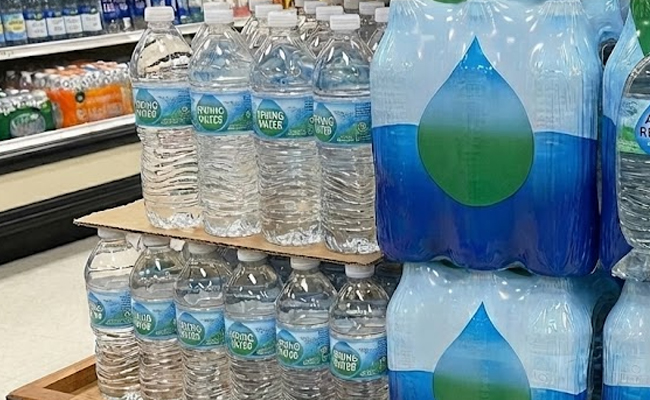
New Delhi: The Supreme Court on Thursday refused to hear a public interest litigation (PIL) that sought enforcement of international-quality standards for packaged drinking water in India, calling it an example of “luxury litigation” in a country where a large populace lacks access to basic drinking water.
A bench of Chief Justice Surya Kant and Justice Joymalya Bagchi questioned the relevance of the petition filed by Sarang Vaman Yadwadkar, who wanted Indian bottled-water norms to match those followed in countries such as the UK, Australia and Saudi Arabia, The New Indian Express reported.
“Where is the drinking water in this country, madam? People do not have drinking water; the quality of bottled water will come later on,” Chief Justice Surya Kant, who was sitting with Justice Joymalya Bagchi, said, adding that these are luxury litigations.
ALSO READ: Probe into Zubeen Garg's death ongoing, no foul play suspected yet: Singapore police
At the outset, the CJI questioned the very premise of the petition, observing that the court could not lose sight of broader realities faced by the country.
Senior advocate Anita Shenoy, appearing for the petitioner, argued that the issue concerned public health and consumer safety. She reportedly said the Food Safety and Standards Act, 2006 requires packaged drinking water to comply with specific safety norms, and citizens are entitled to clean, safe drinking water.
Suggesting to the petitioner to spare some time for India's to grow further, the bench allegedly said, Let India grow first. Nobody takes up the cause of the poor. This is all urban phobia.
The court also advised her to travel across the country and see the reality. “Mahatma Gandhi, when he returned from South Africa, travelled across rural areas to understand the plight of the people,” TNIE quoted the CJI as saying.
The court ultimately allowed the petitioner to withdraw the PIL, granting liberty to approach the Food Safety and Standards Authority of India (FSSAI) or other competent authorities to seek redressal.
Let the Truth be known. If you read VB and like VB, please be a VB Supporter and Help us deliver the Truth to one and all.
Maharashtra sets up state vaccination task force to strengthen immunisation programme

Mumbai (PTI): The Maharashtra government has set up a State Vaccination Task Force to strengthen the regular immunisation programme and review the progress of related campaigns, a health department official said on Monday.
The State Vaccination Task Force will comprise at least 29 members and will be headed by the administrative head of the health department, he informed.
The government has also constituted separate district-level and municipal vaccination task forces to improve implementation and address challenges at the grassroots level, he said.
Municipal task forces, chaired by respective civic commissioners, have been constituted in view of the vast urban population in Maharashtra and the role of civic bodies in implementing different health programmes.
The district-level task forces will function under the chairmanship of collectors.
"Complete immunisation of children at the appropriate age is an extremely simple, cost-effective and highly effective measure to reduce child mortality and the prevalence of diseases among kids. Immunisation is a powerful tool for reducing illness in children," maintained the official.
To ensure full vaccination of all children, the state government implements various campaigns from time to time as per the central government guidelines, he pointed out.
"Active participation and cooperation of other relevant government departments are essential (in making these campaigns successful)," according to the official.
The state-level body will review the regular immunisation programme, associated campaigns and vaccine-preventable diseases in detail. It will also conduct focused assessments of high-risk districts and municipal corporations, including vacancies at district, municipal and sub-district levels, availability of cold chain equipment, resource gaps and training requirements, he noted.
The state task force will review allocation and utilisation of funds for immunisation and ensure timely action by officers concerned based on reports from district and municipal task forces and state-level monitoring mechanisms, the official said.
It will also ensure active coordination and participation of other government departments in immunisation drives, while district and municipal task forces will carry out similar functions at their respective levels, the official added.